Category: Drone Surveying

  • The Future of Business: Top 7 Commercial Drone Applications Across Key Sectors

    The Future of Business: Top 7 Commercial Drone Applications Across Key Sectors

    For many people, drones are often seen as toys for hobbyists or even as threats to privacy and safety. Recent news about unidentified drones buzzing across the East Coast has sparked fears about espionage and airspace violations. These incidents make headlines, but they overshadow a much bigger story: the transformative potential of drones as tools for innovation, commerce, and safety in the United States.

    Instead of focusing solely on the risks, it’s time to recognize the critical role drones are playing in solving challenges that were once insurmountable. From revolutionizing agriculture to enhancing the response to disasters, such as the recent LA fires, drones are not just flying gadgets—they’re essential assets for building a more efficient and secure future.

    As a drone service provider, I’ve seen firsthand how this technology is being adopted across industries. While certain sectors may focus on specific applications—such as the Arts & Entertainment industry prioritizing photography—many industries are leveraging drones in diverse and unexpected ways. Here are the top industries using drones today and how they’re transforming their operations.
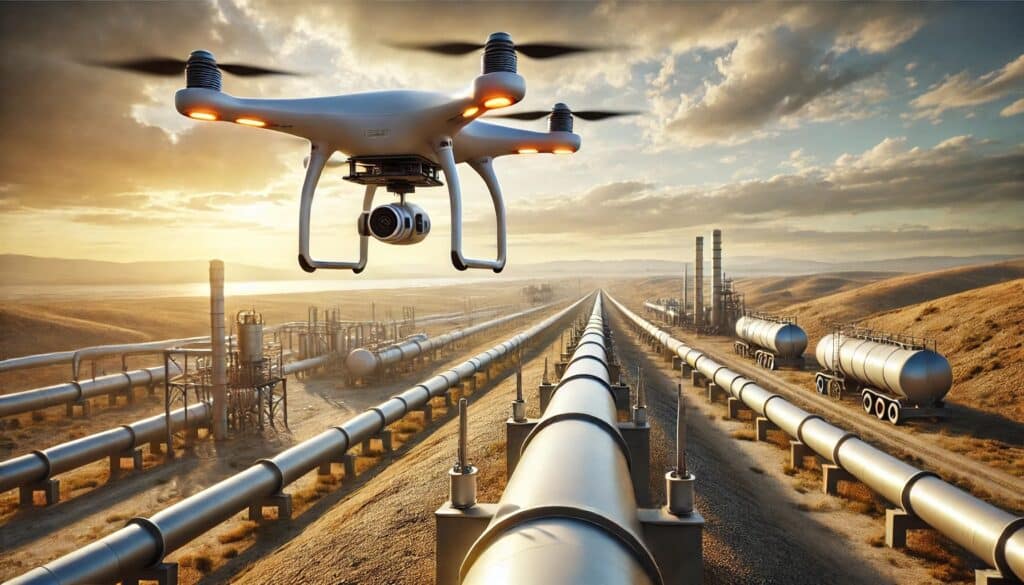
    Drone Surveying Oil Pipelines
    Inspecting wind turbines, solar panels, and miles of pipelines once demanded time-consuming and potentially dangerous efforts from workers.

    1. Energy: Inspections and More

    Inspecting wind turbines, solar panels, and extensive pipelines has traditionally been a labor-intensive and hazardous task for workers. The advent of drone technology has revolutionized this process, offering safer, more efficient, and cost-effective inspection methods.

    A notable example is the use of drones equipped with LiDAR (Light Detection and Ranging) technology for power line inspections. According to a case study by CHC Navigation, their AlphaAir 450 UAV LiDAR scanner has been employed to inspect power lines, providing high-precision data and reducing the time required for inspections. 

    In the solar energy sector, drones have significantly increased inspection efficiency. A case study by AgEagle Aerial Systems demonstrated that drone inspections of solar panels mirrored the results of manual inspections with 99% accuracy. However, the drone-based method completed the task in just two hours per site, compared to two days for manual inspections, resulting in a 97% increase in efficiency. 

    These examples highlight how drones are transforming industrial inspections, offering precise data collection while minimizing risks and operational costs.
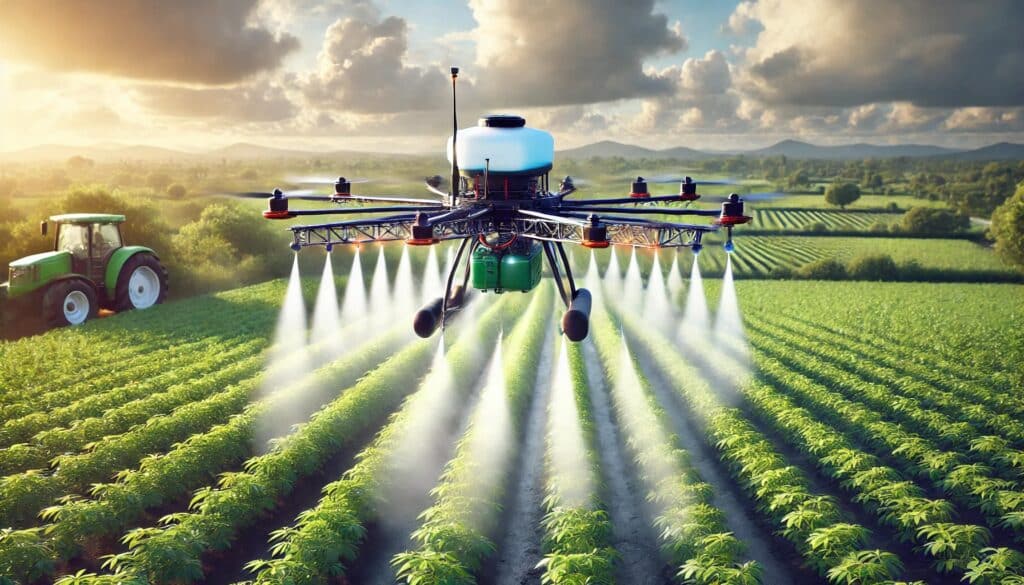
    agriculture drone spraying field
    Drones can efficiently and precisely apply pesticides, fertilizers, and even water, reducing environmental impact while swiftly covering expansive areas.

    2. Agriculture: Mapping, Monitoring, and Spraying

    Agriculture is one of the most dynamic industries for drone technology. Farmers use drones for mapping and surveying fields to detect crop stress, soil health, and pest infestations with pinpoint accuracy. This data helps optimize resource use and improve yields, giving farmers actionable insights they never had before.

    Spraying and dispensing are equally transformative. Drones can precisely apply pesticides, fertilizers, and even water, minimizing environmental impact while covering large areas quickly. For farms with challenging terrain or tight planting cycles, drones are the perfect solution to reduce labor costs and increase efficiency.

    3. Construction: Progress Tracking and Site Management

    In construction, drones are reshaping project management. Site surveys that once took weeks can now be completed in hours, offering real-time data to track progress and ensure quality. High-resolution imagery and 3D mapping enable better communication across teams and faster identification of potential issues.

    Drones also improve safety by inspecting hard-to-reach areas like scaffolding or high-rise structures, reducing risks to workers. For an industry driven by timelines and budgets, drones are becoming an indispensable tool.

    4. Public Administration and Emergency Services: Mapping, Tracking, and More

    Government agencies and emergency services rely heavily on drones for public safety and resource management. In public administration, drones are primarily used for mapping and surveying urban landscapes, aiding in smarter city planning and disaster preparedness.

    For emergency services, drones equipped with thermal imaging cameras have become life-saving tools. They can locate missing persons, assess damage during natural disasters, and deliver critical supplies to areas that are otherwise inaccessible. The ability to provide real-time visuals in crisis situations makes drones invaluable for saving lives.
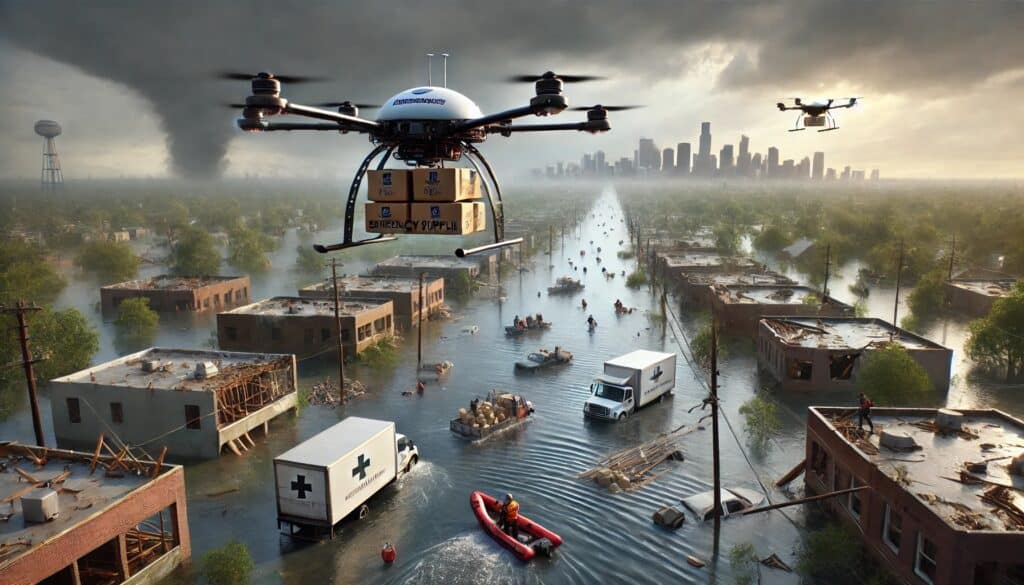
    Drones delivering supplies in disaster
    Drones can be an indispensable asset to public service agencies during natural disasters.

    5. Healthcare and Disaster Relief: Drone Deliveries

    The healthcare sector is at the forefront of integrating drone technology to expedite the delivery of critical medical supplies, especially in remote or disaster-stricken regions. Drones are now transporting defibrillators, vaccines, blood products, and essential medications, ensuring timely medical interventions when every second counts.

    A notable example is Zipline, a California-based company that has established the world’s largest medical drone delivery network. Operating primarily in Rwanda and Ghana, Zipline’s drones have completed over 1.3 million deliveries, covering nearly 100 million miles. These autonomous drones deliver whole blood, platelets, frozen plasma, and cryoprecipitate, significantly reducing delivery times compared to traditional methods. 

    In Rwanda, Zipline’s services have transformed the healthcare logistics landscape. The country’s mountainous terrain and limited infrastructure previously hindered timely medical deliveries. With Zipline’s drone network, medical facilities receive blood products and vaccines swiftly, drastically improving patient outcomes. By October 2020, Zipline had made over 70,000 medical deliveries across Rwanda and Ghana, demonstrating the scalability and reliability of drone delivery systems

    These case studies underscore the transformative potential of drones in healthcare logistics, offering rapid, reliable, and cost-effective delivery solutions that overcome geographical and infrastructural challenges.

    6. Safety & Security: Surveillance and Monitoring

    For security-focused industries, drones are revolutionizing surveillance. They are used to monitor sensitive infrastructure, manage crowds, and conduct large-area reconnaissance. Equipped with advanced cameras and sensors, drones provide a level of situational awareness that static security systems simply can’t match.

    7. Waste Management: Landfill Mapping

    Even industries like waste management are benefiting from drone technology. Landfills use drones to calculate capacity and identify inefficiencies, helping optimize waste management strategies. This reduces environmental impact and ensures compliance with regulatory standards.

    The Takeaway

    Drone technology is no longer a novelty or a luxury—it’s a necessity. Across industries, drones are improving efficiency, enhancing safety, and delivering unprecedented insights. For c-suite leaders, the message is clear: embracing drones isn’t just a technological upgrade; it’s a strategic move to stay competitive in an ever-evolving marketplace.

    Yes, challenges like privacy concerns and airspace safety must be addressed, but they shouldn’t distract us from the immense value drones bring to commerce and public safety. The future of drones is here, and it’s reshaping industries in ways we could only dream of a few years ago. If your business isn’t leveraging drones yet, the question isn’t if you will, but when. Let’s explore how drone technology can elevate your organization to new heights.

    From The Editor:

    Do you need to hire a professional drone service provider for your project?  To speak to an aerial data specialist, fill out a form, email us or for even faster response times, give us a call at (833) FLY-4YOU or (833) 359-4968.  Check out our transparent pricing at https://www.aerialdecisions.com/drone-photography-pricing/ and watch this space as we expand on the above topics and more over the coming weeks and months.  

    If you like this post, feel free to click the share button at the bottom of the page.  We appreciate you helping us by spreading the content we share on our blog.

    Drones and Construction podcast on Spotify
    Stream Drones and Construction podcast on your favorite listening platform.

    Showcase Your Company on the Drones and Construction Podcast! If you’d like to be a featured guest on our podcast, send us an email: info@aerialdecisions.com and one of our crew will get right back to you to share the details.

    About Aerial Decisions

    Aerial Decisions is a Los Angeles-based Drone Services Provider (DSP).  We specialize in providing cutting-edge drone data collection combined with industry leading software solutions tailored for the commercial construction industry. Our mission is to optimize the way enterprise construction projects are managed by offering precise aerial photography, detailed data analysis, and innovative software tools through a network of FAA-certified and insured drone pilots.  Aerial Decisions is not just a drone service provider; we are your strategic partner in commercial construction. Our hands-on approach to understanding your unique requirements and our dedication to excellence ensures that every flight and every data point is optimized for your success. Trust us to be the eyes in the sky that elevate your construction projects to new heights.
  • How Drones and Reality Data Capture are Transforming Construction Projects

    How Drones and Reality Data Capture are Transforming Construction Projects

    As a Drone Service Provider (DSP) focused on the construction industry, we’ve witnessed how drone reality data capture technology is transforming how we approach our clients critical construction projects. From pre-bid site analysis to final closeout inspections, reality capture technologies are collectively streamlining project workflows, enhancing safety, and providing deeper insights throughout each phase of construction. It still surprises me how often I hear industry professionals talk about drones in the limited scope of providing pretty pictures and videos. Nothing could be further from the truth.

    In this post, we explore how drones and reality capture technology are being used during the Pre-Bid & Pre-Construction phase, the active Construction phase, and the Inspection & Closeout phase.

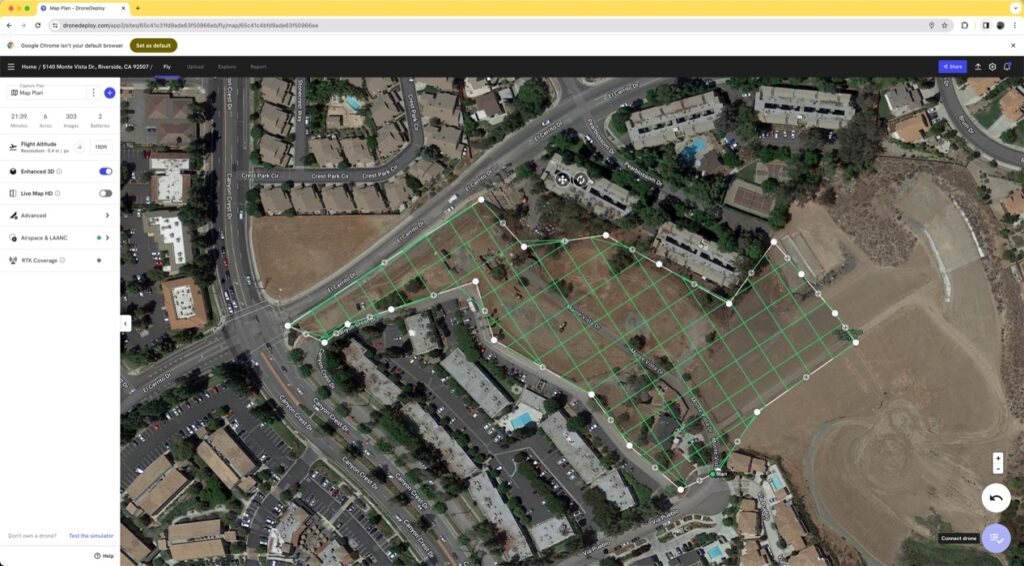
    Flight plan boundaries defined by mapping software
    Flight plan boundaries defined by mapping software

    Pre-Bid & Pre-Construction Phase

    Surveying and Concept & Design
    In the early stages of a project, having accurate and detailed site information is crucial for developing a reliable design. With aerial reality data capture, drones generate high-resolution topographic maps and 3D models that give construction teams an in-depth understanding of site conditions. These data help architects and engineers refine their designs early on, reducing the likelihood of costly revisions later.

    360 Reality Capture for Pre-Construction Planning
    Adding 360 reality capture to the pre-construction phase brings even more clarity to the planning process. By combining aerial drone surveys with 360 walkthroughs, stakeholders can virtually explore the entire site in an immersive, high-resolution format. This is especially useful for off-site team members, enabling them to inspect and interact with the site remotely. These virtual site visits allow for more informed decision-making during the bidding and design phases, while also helping construction managers anticipate potential challenges.

    Site Planning and Procurement
    In addition to design, accurate site data aids in efficient site planning and resource procurement. With real-time aerial data, construction teams can plan for infrastructure placement (e.g., utilities, drainage systems) based on the actual terrain. This information is also valuable for procurement teams, ensuring they order the right quantities of materials based on current site conditions. 360 reality capture offers another layer of transparency here, allowing procurement teams and project managers to virtually inspect site logistics and visualize how equipment and resources are deployed.

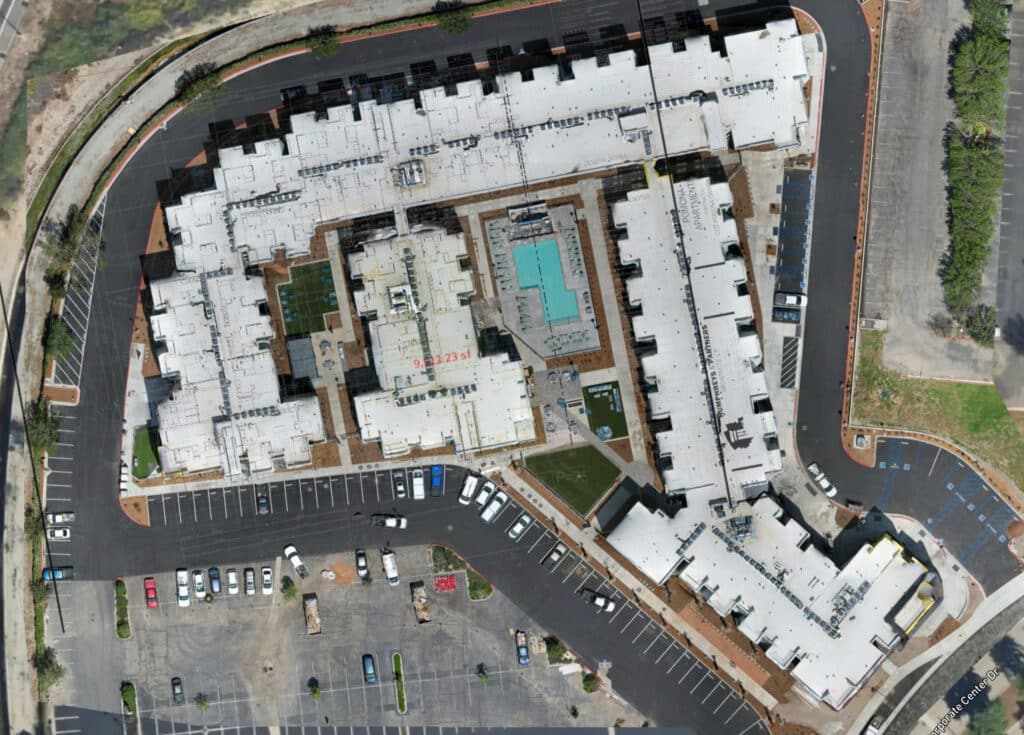
    Commercial construction project with floor plan layer
    Commercial construction project with floor plan layer

    Construction Phase

    Earthworks: Cut/Fill Analysis and Stockpile Measurements
    During the construction phase, drones are instrumental in managing earthworks. They perform cut/fill analysis quickly and with high precision, helping your team optimize earthmoving operations. Drones also assist in stockpile measurements, providing real-time data on material availability and consumption, which helps manage resources more effectively and prevents costly delays.

    Tracking Site Progress: As-Designed vs. As-Built
    Drones provide an easy and efficient way to monitor site progress, capturing aerial imagery and data at regular intervals. This allows project managers to compare as-built conditions with the original design, ensuring that the project stays on track and meets specifications. Drone data allows for early detection of deviations which prevents rework and helps you stay on schedule.

    360 Walkthroughs for Site Inspections (Exterior and Interior)
    Beyond aerial data, 360 reality capture offers an immersive experience that is extremely valuable for both exterior and interior site inspections. A 360-degree walkthrough allows team members and clients to virtually “walk” through the site at any time, offering a clear view of construction progress. This is particularly useful for off-site stakeholders who need to stay updated but cannot physically visit the project. These walkthroughs also serve as visual documentation for safety, quality control, and project updates, capturing every detail from various angles.

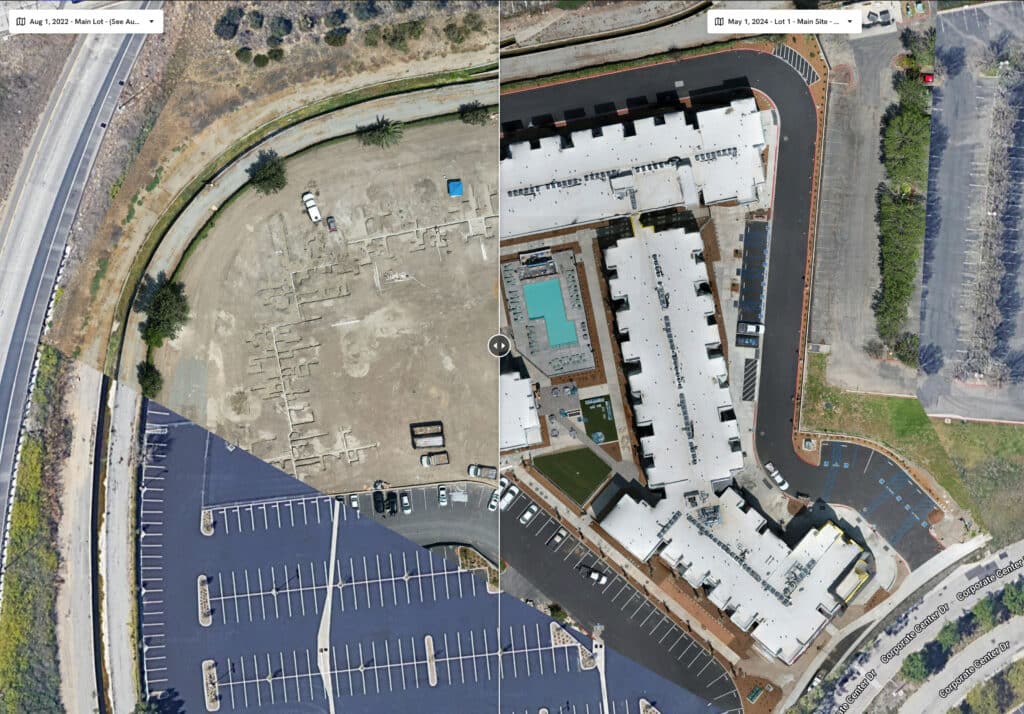
    Construction site before and after image
    Drone processing software provides time-based site progress comparisons.

    Inspection and Closeout Phase

    Drone Façade Inspections
    In the final stages of construction, inspections become critical to ensuring that all work meets quality standards. Traditionally, façade inspections—especially for tall or hard-to-reach areas—required scaffolding or other heavy equipment. Now, drones equipped with high-resolution cameras can conduct façade inspections more safely and efficiently. Drones capture detailed imagery of exterior surfaces, identifying any defects like cracks, leaks, or structural issues before project closeout.

    360 Reality Capture for Closeout and Inspections
    At the closeout phase, 360 walkthroughs provide an interactive record of the completed project. This is incredibly valuable for final inspections, as it allows stakeholders to review both exterior and interior spaces in detail without being on-site. This virtual documentation also aids in handing over the project to the client, ensuring that they have a comprehensive visual record of the completed work.

    Thermal Imaging for HVAC and Building Inspections
    Drones equipped with thermal imaging cameras are essential for inspecting HVAC systems and detecting heat loss or insulation issues. Thermal imaging ensures that the building is energy-efficient and that there are no hidden defects, such as leaks or poorly installed insulation, that could lead to costly repairs down the line.

    Documentation: 3D As-Builts and Digital Assets
    For closeout documentation, drones provide accurate 3D as-builts that serve as a permanent record of the completed structure. These models are invaluable for future renovations, facility management, and legal documentation. Additionally, 360 walkthroughs are used as digital assets for marketing purposes, which helps you showcase the finished project to future clients or in portfolio presentations.

    Liability Management and Warranty Fulfillment
    Another critical use case for drones and 360 reality capture is liability management. By providing high-resolution documentation of the completed project, you’ll have the necessary evidence to protect your company from insurance claims or disputes that might arise post-construction. This detailed documentation is also crucial for fulfilling warranties, ensuring that you have proof of the project’s condition at the time of handover.

    Summary of Benefits

    By combining the power of aerial reality data capture and 360 walkthrough technology, construction companies can gain significant advantages throughout every phase of the construction lifecycle. From precise surveying and virtual site visits during Pre-Bid & Pre-Construction, to monitoring site progress and streamlining inspections during the Construction phase, these technologies improve efficiency, reduce costs, and provide stakeholders with more transparency and control. Finally, during the Inspection and Closeout phase, drones and 360 walkthroughs ensure comprehensive documentation, helping manage liabilities and ensure warranty compliance.

    What Next?

    If you’re ready to integrate aerial reality data capture and 360 walkthroughs into your construction workflows, reach out to us at Aerial Decisions. We specialize in providing drone and 360 reality capture solutions tailored to your project’s needs. Contact one of our construction sales executives today to set up a free consultation and learn how these technologies can take your projects to the next level.

    About Aerial Decisions

    Aerial Decisions is a Los Angeles-based Drone Services Provider (DSP).  We specialize in providing cutting-edge drone data collection combined with industry leading software solutions tailored for the commercial construction industry. Our mission is to optimize the way enterprise construction projects are managed by offering precise aerial photography, detailed data analysis, and innovative software tools through a network of FAA-certified and insured drone pilots.  Aerial Decisions is not just a drone service provider; we are your strategic partner in commercial construction. Our hands-on approach to understanding your unique requirements and our dedication to excellence ensures that every flight and every data point is optimized for your success. Trust us to be the eyes in the sky that elevate your construction projects to new heights.
  • The Future of Drone Surveying and Mapping for the Construction Industry

    The Future of Drone Surveying and Mapping for the Construction Industry

    Drones are becoming increasingly popular in the construction industry, and for good reason. Drones offer a number of advantages over traditional surveying and mapping methods, including:

    • Speed and efficiency: Drones can survey and map large areas quickly and easily, which can save time and money.
    • Accuracy: Drones can collect high-resolution data that is highly accurate, even in difficult-to-access areas.
    • Safety: Drones are used to survey and map dangerous or inaccessible areas without putting workers at risk.
    • Cost-effectiveness: Drones can be a cost-effective way to survey and map construction sites, especially for large or complex projects.

    What is Drone Surveying and Mapping?

    Drone surveying and mapping is the process of using drones to collect data about a physical object or area. This data is then used to create maps, models, and other visualizations.

    Drone surveying and mapping is used for a variety of purposes in the construction industry, including:

    • Site planning and design
    • Progress monitoring
    • Quantity takeoff
    • As-built documentation
    • Safety inspections
    • Damage assessment
    • Environmental monitoring
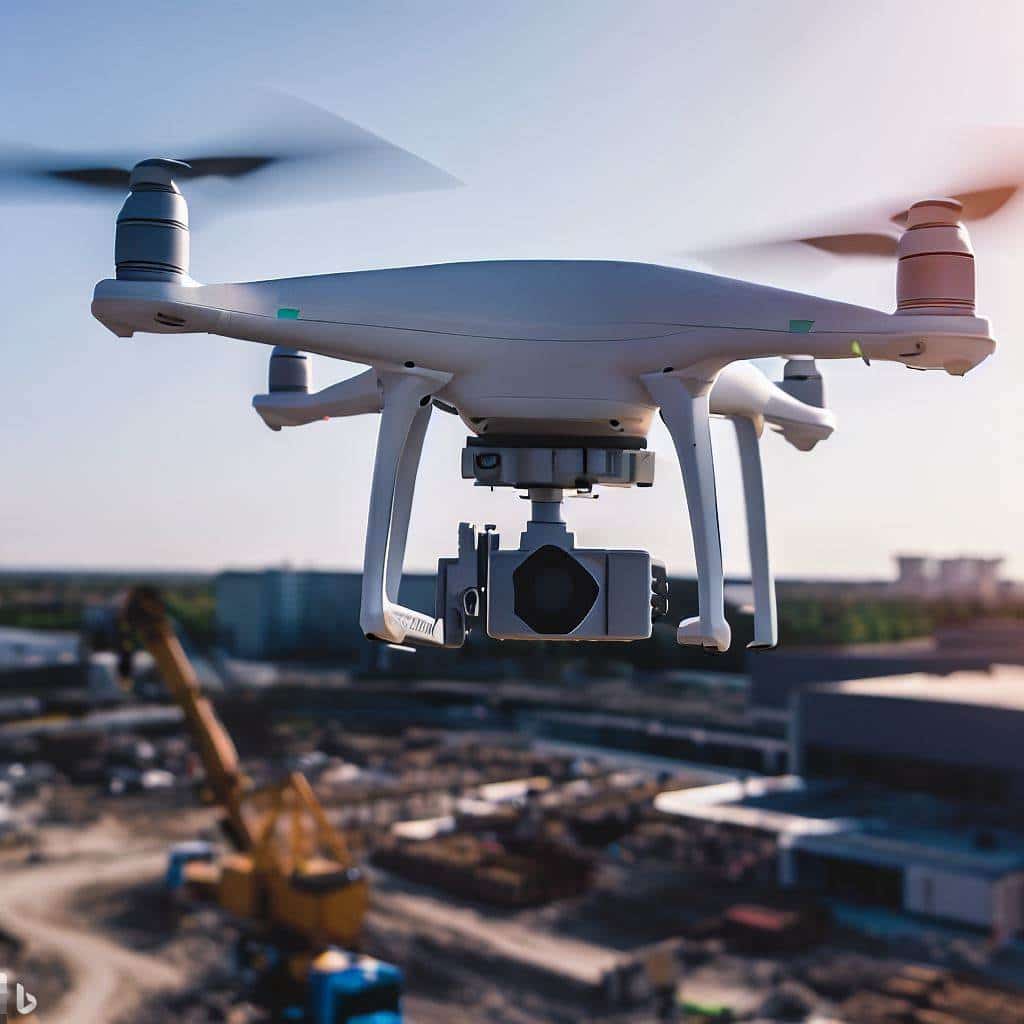
    Drone hovering over an active construction site
    Drones provide a variety of cost saving benefits to the construction industry

    How Construction Companies use Drones for Surveying and Mapping

    Here are a few examples of how today’s commercial construction companies are using drones for surveying and mapping missions:

    • Site planning and design: Drones are used to survey a construction site and create a 3D model of the area. These models used to plan the layout of the site, design the building, and estimate the cost of the project.  
    • Progress monitoring: Drones are used to track the progress of a construction project over time. This helps to ensure that the project is on schedule and within budget.  
    • Quantity takeoff: Drones are used to measure the volume of materials on a construction site. This information is used to create accurate estimates and ensure that the project is completed on time and within budget. 
    • As-built documentation: Drones are used to create a detailed record of a construction project as it is built. This documentation is used for future reference or to make changes to the project. 
    • Safety inspections: Drones are used to inspect construction sites for safety hazards. This helps to prevent accidents and injuries. 
    • Damage assessment: Drones are used to assess the damage to a construction site after an accident or natural disaster. This information is often used to make repairs and prevent further damage. 
    • Environmental monitoring: Drones are used to monitor the environmental impact of a construction project. This helps to ensure that the project is being conducted in an environmentally responsible manner. 
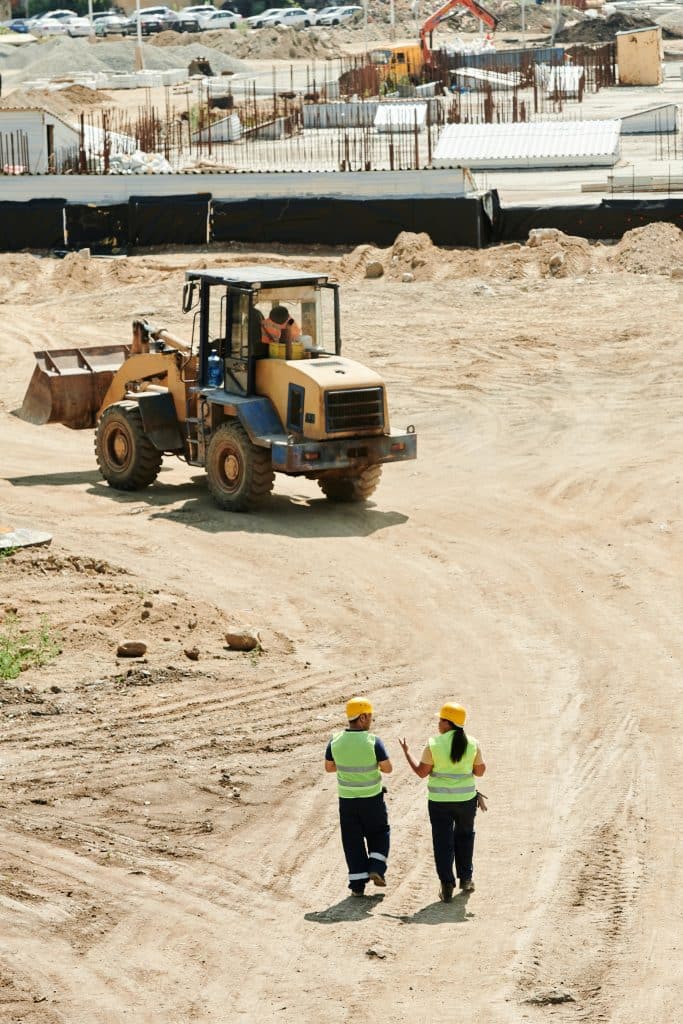
    Construction Site Walk-Through
    Construction Workers Walking a Job Site

    The Future of Drones for Surveying and Mapping for the Commercial Construction Industry

    The use of drones in surveying and mapping is rapidly expanding in the construction industry. As drone technology continues to develop, we can expect to see even more innovative and groundbreaking applications for drones in the years to come.

    Some of the potential future applications of drones in surveying and mapping for commercial construction include:

    • Real-time monitoring: Drones are used to monitor construction sites in real time, which helps to identify and address problems early on.
    • Automated data collection: Drones can be programmed to collect data automatically, which can free up workers to focus on other tasks.
    • 3D printing: Drones are often used to create 3D models of construction sites, which can then be used for 3D printing.

    In conclusion, the integration of drones into surveying and mapping processes has ushered in a new era for commercial construction. Companies like Skanska, Wingtra, and Environmental Works have demonstrated the immense potential of drones in improving efficiency, accuracy, and safety across construction projects. As a drone service provider, I am excited about the limitless possibilities and advancements that lie ahead in this rapidly evolving field. The future of drones in surveying and mapping for commercial construction is bound to be even more remarkable, and Aerial Decisions is excited to continue delivering surveying and mapping services to the industry.

    From The Editor

    Do you need to hire a professional drone service provider for your project?  To speak to an aerial data specialist, fill out a form, email us or for even faster response times, give us a call at (833) FLY-4YOU or (833) 359-4968.  Check out our transparent pricing at https://aerialdecisions.com/drone-photography-pricing/ and watch this space as we expand on the above topics and more over the coming weeks and months.  

    If you like this post, feel free to click the share button at the bottom of the page.  We appreciate you helping us by spreading the content we share on our blog.