Category: Pilot Training

  • 5 Benefits of Documented Drone Service Operations for Effective Flight and Aircraft Management

    5 Benefits of Documented Drone Service Operations for Effective Flight and Aircraft Management

    1. Commercial drone pilots are being stopped while in the field by FAA officials. Often from local FSDOs (flight standards district offices) for spot checks. The officials asked the pilots to show their part 107 certification cards as well as their flight logs and maintenance records. For example, records of how often they change out their rotor blades. Spot checks like this are also called “ramp checks” which are unscheduled checks and/or surveillance made by FAA officials to ensure that flights are being made safely and in compliance with regulations.
    2. This is a requirement and responsibility under Part 107 rules. “A remote pilot in command must make available to the FAA upon request the small UAS for inspection or testing and any associated documents/records required to be kept under the rule.” —FAA’s Part 107 rules summary document
    3. Although ramp checks may not have happened much in the past for commercial drone pilots, it seems they will be happening more and more. So if you’re wondering whether your drone service provider needs to keep the items on this list with them while conducting commercial drone operations, the answer is: Yes, they definitely do.
    4. Preparation is a major way a drone pilot can avoid the wrath of the FAA!
    5. Drone pilots should use a preflight checklist before every flight.  Preflight checklists should include identifying info, date/time/location of the flight, drone information, weather forecast check, purpose, check air space/get authorization/LAANC/waivers. Also, an inspection of the drone and components for good working condition, check firmware updates, calibrate if prompted, and set RTH Altitude (setting higher than the highest obstacle). UAS pilots should also keep a good maintenance record. This record shows the regular routine the pilot has for inspecting their drone for mechanical defects.  Maintenance activities like calibration of sensors and replacement of parts need to be done periodically to make sure that the drone is always in tip-top condition. Keeping track of these is difficult without writing them down, thus the need to include them in drone flight logs.
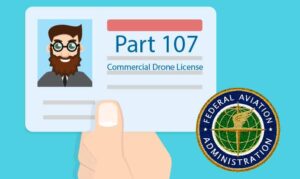
    Image of Part License
    FAA Part 107 License

    When a pilot ensures they have this basic documentation on hand and can show it to the FAA when requested, on-site, it demonstrates to them that the drone service provider is consciously making an effort to fly safely and properly working within the FAA’s guidelines and laws.

    A drone in many ways is like a tiny black box, all the flight data is being recorded and could be accessed by the FAA at any time.  If the drone pilot isn’t considered safe the FAA could not allow them to fly the mission and even fine them.

    List of Documents a Commercial Drone Pilot Should Always Have on Hand:

    (best if most of this stuff is kept all together in a trusty three-ring binder)

    • Part 107 certificate
    • Driver’s license
    • Insurance verification form
    • Aircraft registration number and certificate
    • Summary of FAA Part 107 Rules
    • Drone flight log
    • Flight operations manual
    • Chart supplements for nearby airports (demonstrates knowledge of airport comm frequencies, traffic patterns, etc.)
    • TFRs and NOTAMs at or near mission location
    • LAANC authorization number (if applicable for airspace at mission location) Having this shows the FAA the pilot is making every attempt to have a safe and legal flight
    Maintenance log (demonstrates aircraft maintenance practices)

    From The Editor:

    Do you need to hire a professional drone service provider?  To speak to an aerial data specialist, fill out a form, email us or for even faster response times, give us a call at (833) FLY-4YOU or (833) 359-4968.  Check out our transparent pricing at Drone Photography Pricing and watch this space as we expand on the above topics and more over the coming weeks and months.  If you like this post, feel free to click the share button at the bottom of the page.  We appreciate you helping us by spreading the content we share on our blog.

  • Drone Photography Demo Reel Tips for the Newbie

    Drone Photography Demo Reel Tips for the Newbie

    So you’ve just passed your FAA Part 107,  purchased your new DJI Mavic Pro 3 Fly More Combo and you are ready to start earning money as a drone service company.   Slow your roll for a second and let’s first establish some priorities.

    Image of Portfolio X
    The Tools of the Photography Portfolio

    One of the first things any photographer does before launching their professional career is to create a portfolio that includes examples of their own creative work.  Whether packaged in a physical artwork folder or digitally maintained online, the professional photographers portfolio is their professional calling card and an absolute necessity.

    Although, as aerial photographers, we refer to our work samples as a “reel”, the same thing applies to us as well.

    As a fledgling drone service company, it’s important not to underestimate the importance of having quality footage to show a prospective client.  In fact it’s the first question every client prospect asks us before agreeing to meet with one of our crew in our drone pilot network.  Without one, it’s a conversation non-starter.

    Image of Chick And Egg X
    The reel or your first gig, which comes first?

    The biggest question we hear from many a new pilot is, “if I haven’t done any professional work, what do I use for my reel?”.  Much like the proverbial chicken and egg metaphor, many new to our industry don’t know where to start.

    If you are asking the same question, then this blog post is for you.

    Absent having many (if any) paid professional gigs to count on for work samples, drone pilots need to get creative.

    Here are top-five tips to source great drone footage for what may be your very first professional reel:

    1. Shoot Aerial Footage of Your Home: your own home is a perfect place to start, especially if you are looking to start your career in aerial photography for real estate.  There’s no one to ask permission and as long as you are clear to fly in your area, there’s no better place to grab your first residential footage.
    2. Ask a Neighbor Who’s Selling Their Home: See a “for sale” sign in your neighborhood?  Ask your neighbor if they’d allow you to shoot some aerial footage of their home and that you’ll give them a copy of the footage (for free!).   They may already have an agent who has provided them aerial footage of their home but it never hurts to have additional shots they can share with family and friends on their own social network.  Tell them you are just getting started with your new business and many people will be happy to help.  And, remember to share your shots on your own social media with a link to their online listing.
    3. Ask a Real Estate Friend for Help: Your real estate friend is likely already using a drone photographer through their brokerage firm.  Your intention (at least initially) is not to replace their current provider but to ask to practice on a home they may be listing.  Again, promise to give them a copy of the footage you shoot and let them know you will give them attribution when you post your shots to your own social media account.  For them, the additional footage and free publicity alone is worth the price of admission.  By the way, we’ve heard countless stories of drone pilots who’ve started this way and ended up winning the agent as a regular client (or better yet, win a new client via a referral).
    4. Head to a Local Strip Mall: Want to start working in commercial real estate?  There’s no better place to start than shooting aerial footage of your local retail center.   One thing to note about shooting commercial real estate is that it requires some additional knowledge and specialized skills.  We recommend doing some research on the topic prior to heading out.  Also, look for a future post on this topic as we dive deeper into aerial photography for commercial real estate.
    5. Enroll in a Community College Drone Pilot Training Program: Aerial photography classes are fast becoming a staple at local community colleges and many new pilots have obtained extensive material in the course of earning their certificates.  We work with several in our neck of the woods including Grossmont College’s Drone Technology Program led by UAS industry veteran, Skip Fredricks.

    The key takeaway I hope everyone leaves with is your reel is the most important and first thing you should consider working on after obtaining your Part 107 license.  Doing so will help you to avoid significant frustration and help you to overcome many of the challenges that drive newer pilots from continuing to pursue a professional career in drone photography.

    If you feel I have missed an important one, hit us up on Social Media and let us know what you think (Twitter, Facebook, Instagram).

    From The Editor:

    Do you need to hire a professional drone service provider?  To speak to an aerial data specialist, fill out a form, email us or for even faster response times, give us a call at (833) FLY-4YOU or (833) 359-4968.  Check out our transparent pricing at Drone Photography Pricing and watch this space as we expand on the above topics and more over the coming weeks and months.  If you like this post, feel free to click the share button at the bottom of the page.  We appreciate you helping us by spreading the content we share on our blog.

  • 5 Benefits of Including a Visual Observer for Aerial Photographers

    5 Benefits of Including a Visual Observer for Aerial Photographers

    The primary role in every aerial photography mission is owned by the drone pilot-in-charge (PIC), however, the unsung hero of the drone flight crew is the visual observer.  Although the drone pilot must always maintain the capability to see the drone in flight, utilizing one or more visual observers allows the pilot to conduct other mission-critical duties while still ensuring situational awareness of the drone.  

    What, exactly, does the visual observer do?  The role of the visual observer is that he or she maintains constant visual contact with the drone, scans for other aircraft and hazards in the area, and communicates to the pilot any instructions required to keep him or her advised on the Drone’s status during flight operations.

    Why should any of this matter to real estate agents? 

    Here are 5 key benefits of having a visual observer on every aerial photo shoot:

    Image of Crew
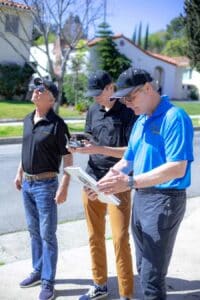
    Visual Observer Assisting Pilot and Drone Operator

    1. Mitigate Risk

    Before and during each mission, drone pilots have a tremendous amount on their plate.  A visual observer helps to keep the pilot focused on the safe outcome of each mission.  

    2. Higher Quality Production

    An experienced visual observer can also be helpful in setting up important shots by directing the best position and angle for the pilot to photograph the target.

    3. Pilot Redundancy

    There’s nothing more disappointing than discovering the primary pilot is unable to participate in the mission due to a last-minute emergency.  When this happens, a visual observer, who also happens to be Part 107 Certified, can act as a back-up to the primary pilot.  Since we feel “the show must go on”, Aerial Decisions always strives to staff each aerial photography mission with this type of redundancy.  

    4. Scene Management

    In the case of smaller productions, the visual observer may also serve as the scene manager, fielding questions from bystanders and dealing with any issues that may negatively impact the pilot’s ability to focus their attention to the safety and control of the aircraft.  This is one less thing the real estate agents needs to worry about.

    5. Safety

    A visual observer keeps the pilot advised on the drone’s location, attitude, altitude, and direction of flight.  He or she also notifies the pilot of the position of other aircraft or hazards in the immediate airspace.  Finally, the visual observer ensures that the drone does not endanger the life or property of another.

    Despite the fact the use of a visual observer is optional when operating under FAA Part 107 rules, they should always be considered an integral part of any aerial photography project. 

    From The Editor:

    Do you need to hire a professional drone service provider?  To speak to an aerial data specialist, fill out a form, email us or for even faster response times, give us a call at (833) FLY-4YOU or (833) 359-4968.  Check out our transparent pricing at Drone Photography Pricing and watch this space as we expand on the above topics and more over the coming weeks and months.  If you like this post, feel free to click the share button at the bottom of the page.  We appreciate you helping us by spreading the content we share on our blog.
  • 5 Reasons for Drone Service Providers to Log their Flight Time

    5 Reasons for Drone Service Providers to Log their Flight Time

    Why do drone pilots log their flight time?

    1. The FAA Recommends that Drone Pilots Log Maintenance and Inspections

    Although the FAA does not require drone pilots to log flight data, they strongly recommend it – primarily for the purpose of tracking the flight time accumulated by each drone, along with maintenance and inspection records. Paragraph 7.3.5 of FAA Advisory Circular 107-2 states: “ . . . Recordkeeping of documented maintenance and inspection events reinforces owner/operator responsibilities for airworthiness through systematic condition for safe flight determinations . . .”

    2. Enhanced Overall Safety of Drone Operations

    Further, § 7.3.5 of FAA Advisory Circular 107-2 states that “. . . Maintenance and inspection recordkeeping provides retrievable empirical evidence of vital safety assessment data defining the condition of safety-critical systems and components supporting the decision to launch”.

    Image of Safety Shield X
    Aerial Decisions: The Benefits of the Shield!

    3. Legal Compliance

    When applying for a Part 107 waiver, you may be asked to show documentation of flight training and experience to demonstrate risk mitigation. Additionally, in the unfortunate event of an accident, you may be asked to provide aircraft maintenance logs to show that the aircraft was properly maintained. 

    4. Competitive Advantage

    In order to differentiate yourself from the ever-increasing field of Drone Service Providers, it is important to leverage experience and capabilities that give you a competitive advantage. One way of standing out from the crowd is to document and highlight your flight hours. This can be easily done by maintaining a log entry for each flight – whether for practice flights or actual missions – in a hard copy or electronic flight log.

    5. Reduced insurance Premiums

    Insurance underwriters often consider a pilot’s flight experience and safety record when pricing liability policies for drone pilots. Those with well-documented processes and recordkeeping systems in place – and the flight data to back it up – may find themselves rewarded with reduced insurance premiums.

    Conclusion

    Yes – keeping flight logs does add to the list of things that a drone pilot must do. However, proper recordkeeping of flight logs and aircraft maintenance can provide many benefits for commercial drone operators, including regulatory/legal compliance, cost avoidance and competitive advantage.

    From The Editor:

    Do you need to hire a professional drone service provider?  To speak to an aerial data specialist, fill out a form, email us or for even faster response times, give us a call at (833) FLY-4YOU or (833) 359-4968.  Check out our transparent pricing at Drone Photography Pricing and watch this space as we expand on the above topics and more over the coming weeks and months.  If you like this post, feel free to click the share button at the bottom of the page.  We appreciate you helping us by spreading the content we share on our blog.
  • Top 15 Most Common Drone Industry Acronyms

    Top 15 Most Common Drone Industry Acronyms

    If you’re like me, you may sometimes wonder if the English language has been reduced to words containing only 3-4 letters.  We often see it in almost every industry we’ve encountered in our professional lives.  

    What am I talking about?

    Acronyms.    

    Image of Drone Plants X
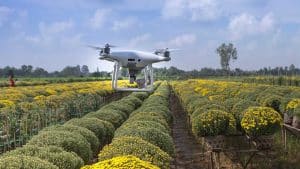
    Drone Flying Over Vegetation

    For those of us in the drone industry, it’s no different.  In fact, given the relatively early stage of our industry’s evolution, it can be quite daunting to keep up with the latest drone industry acronyms.  You’re probably saying, here comes yet another 3 letter word I have to learn.  OMG!

    Well, I thought it would be a great idea to gather a few of the most common drone industry acronyms and provide a definition for each.

    Without further ado, here are my Top 15 Most Common Drone Industry Acronyms (in alphabetical order):

    AGL – Above Ground Level: In aviation, the term AGL generally refers to the height of an object above ground level.  As it relates to Part 107, a drone pilot cannot fly an sUAS (see below) higher than 400 feet Above Ground Level.  The only exception to that rule is if the drone is flown within a 400-foot radius of a structure and does not fly higher than 400 feet above the highest, permanently attached, point of the structure.

    ATC – Air Traffic Control: is a service provided by ground-based air traffic controllers to direct aircraft on the ground and through controlled airspace and can provide advisory services to aircraft in non-controlled airspace. The primary purpose of ATC worldwide is to prevent collisions, organize and expedite the flow of air traffic, and provide information and other support for pilots.

    BVLOS – Beyond Visual Line of Site: BVLOS is a term relating to the operation of UAVs (unmanned aerial vehicles) and drones at distances outside the normal visible range of the pilot.

    COTS  Commercial Off the Shelf (Drone): COTS is an acronym that refers to commercially available drones but is more recently associated with a COTs drones’ inter-operability with “Drone-in-the-Box” remote charging solutions for BVLOS applications.  The industry is collectively working towards developing charging solutions that are drone manufacturer agnostic and can be used to charge a variety of popular commercially available off-the-shelf drones.

    eVTOL – electric Vertical Take-Off & Landing: eVTOL is a type of aircraft that uses electric power to hover, take off, and land vertically.  In the drone industry, eVTOL is often associated with metropolitan airbus transportation and UAM (see below).

    FAA – Federal Aviation Administration: The Federal Aviation Administration is the largest modern transportation agency and a governmental body of the United States with powers to regulate all aspects of civil aviation in that nation as well as over its surrounding international waters.

    NAS  National Air Space: The NAS is airspace that is regulated by the FAA and can be either controlled or uncontrolled airspace.

    NTSB – National Transportation Safety Board: The NTSB is an independent U.S. government investigative agency responsible for civil transportation safety and accident investigation.

    OAS – Obstacle Avoidance System: An integral on-board software and optical system that enables unmanned drones to “see and avoid” obstacles to minimize mid-air collisions.  You will often hear OAS mentioned in conjunction with BVLOS as it is a critical function to enable safe autonomous flight planning initiatives. 

    sUAS – Small Unmanned Aircraft System: Similar to UAS, there are many terms for UAS technology such as Drone, Unmanned Aerial Vehicle (UAV), Unmanned Aircraft (UA), Unmanned Aircraft System (UAS) and small Unmanned Aircraft System (sUAS). These acronyms are often used interchangeably in industry circles.

    UA – Unmanned aircraft: this term refers to drones, or any aircraft, that are designed to operate autonomously or to be piloted remotely without a pilot on board.

    UAM – Urban Air Mobility: UAM refers to air traffic systems that are designed to transport people by air.  Unlike modern airspace rules that guide commercial aircraft at higher altitudes, UAM is designed for commercial eVTOL air transportation at lower altitudes within urban and suburban areas.

    UAS – Unmanned Aircraft System: Unmanned aircraft system (UAS) typically refers to an unmanned drone and its related equipment that enables a remote operator to allow the drone to operate autonomously.

    UATM – Urban Air Traffic Management: Often referred to in connection to UTM (see below), Urban Air Traffic Management represents a highly coordinated system of urban air traffic management for autonomous drones.

    UTM – Unmanned Traffic Management: Unmanned Aircraft System Traffic Management (UTM) is an air traffic management ecosystem that creates defined “rules of the road” for uncontrolled airspace below 400 feet AGL.

    Clearly, I have only touched the surface of the acronyms you will see in our industry.  As the drone industry continues to evolve, there will no doubt be more to come!  If you feel I have missed an important one, hit us up on Social Media and let us know what you think (Twitter, Facebook, Instagram).

    From The Editor:

    Do you need to hire a professional drone service provider?  To speak to an aerial data specialist, fill out a form, email us or for even faster response times, give us a call at (833) FLY-4YOU or (833) 359-4968.  Check out our transparent pricing at Drone Photography Pricing and watch this space as we expand on the above topics and more over the coming weeks and months.  If you like this post, feel free to click the share button at the bottom of the page.  We appreciate you helping us by spreading the content we share on our blog.