Tis the season to be droning so let’s toast to some Holiday Drone Humor. As we sip hot cocoa and deck the halls with boughs of holly, let’s take a moment to reflect on why this winter holiday season is extra special for us drone enthusiasts. Gather ’round the virtual fireplace, folks, because this is a tale of joy, gratitude, and a touch of high-flying hilarity!
First off, can we talk about the gift that keeps on buzzing? Yes, you guessed it – drones!
This year has seen some mind-blowing advancements in the drone industry. It’s like our beloved flying robots have been hitting the gym, taking on a sleeker and smarter persona. It’s as if they’ve been sipping on a special drone elixir that’s turned them into the James Bond of the tech world.
Remember those days when drones were all about capturing breathtaking landscapes? Well, now they’re making headlines for being our very own airborne couriers. Move over, Santa – the sky’s the new sleigh! Just imagine a drone whizzing through the air, delivering holiday cheer faster than you can say “jingle all the way.” If that’s not the true spirit of Christmas, I don’t know what is.
And let’s not forget the drone enthusiasts’ equivalent of mistletoe – the much-anticipated Drone Under the Tree (DUTT) tradition! Rumor has it that 2023 has been a record-breaking year for DUTT surprises. Families are exchanging knowing glances, wondering if their loved ones have hidden a DJI under the tinsel or perhaps a Parrot in the stockings. It’s a season of suspense, surprise, and the sweet sound of rotors slicing through wrapping paper.
But beyond the laughter and drone-filled dreams, this season has given us something even more precious – a sense of community. Drone enthusiasts across the globe have formed virtual clubs, sharing tips on how to fend off rogue snowflakes and swapping stories about the ultimate drone fails. It’s heartwarming to know that, in the vast winter wonderland of the internet, there’s a cozy corner for drone aficionados to share their tales of triumph and, let’s be honest, the occasional crash and burn.
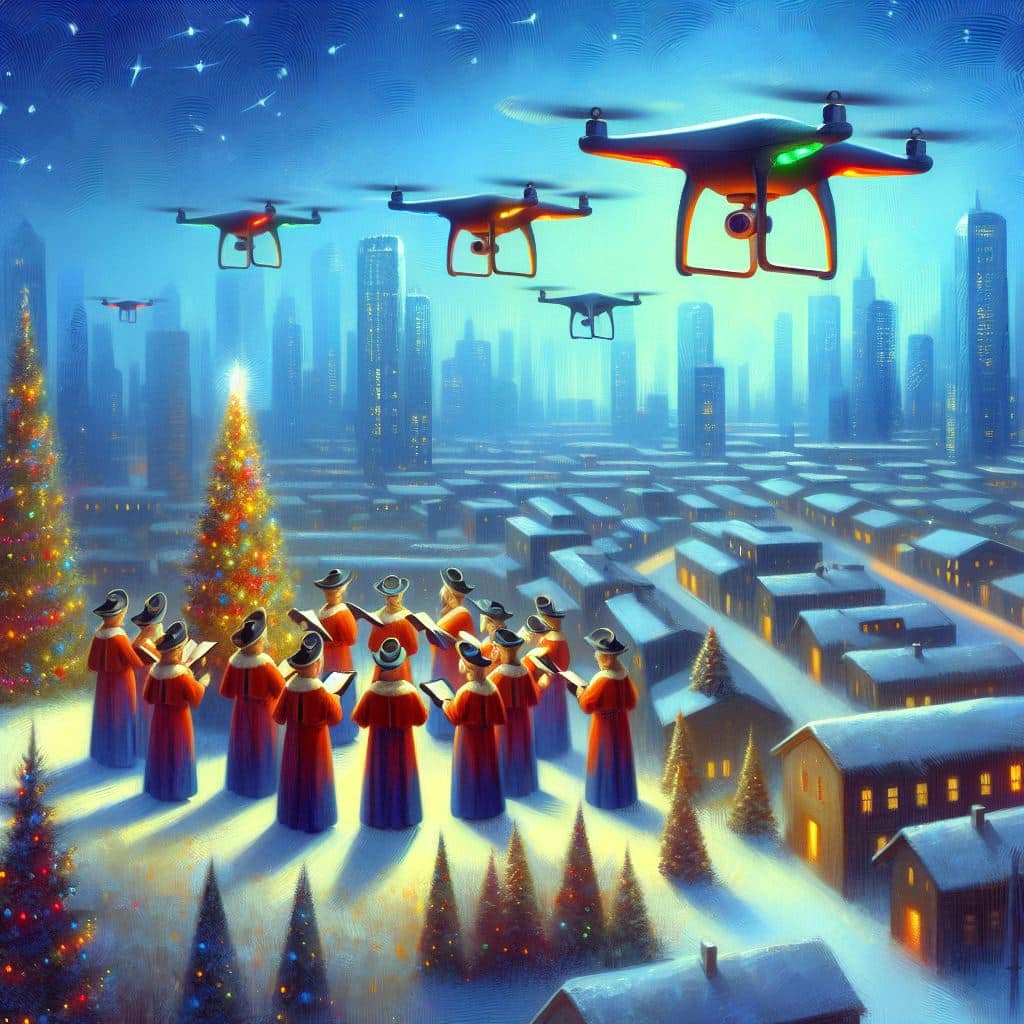
Christmas Carolers Serenade a Fleet of Drones. Image courtesy of MS AI Image Creator
Now, let’s take a moment to express gratitude for the brilliant minds in the drone industry who’ve gifted us with innovations we didn’t know we needed. From obstacle-dodging algorithms to drones with built-in carol singers (okay, maybe not that last one, but we can dream, right?), these geniuses have transformed our hobby into a high-flying adventure.
So, as we celebrate the season with joy in our hearts and a drone in hand, let’s raise a toast to the drone industry, where the skies are limitless, and the only limit is the charge in our batteries. May your holidays be filled with laughter, love, and the unmistakable hum of a drone overhead, reminding us that the season of joy is also the season of grateful buzzing. Cheers to droning into the new year with high hopes and even higher altitudes!
From The Editor:
Do you need to hire a professional drone service provider for your project? To speak to an aerial data specialist, fill out a form, email us or for even faster response times, give us a call at (833) FLY-4YOU or (833) 359-4968. Check out our transparent pricing at https://aerialdecisions.com/drone-photography-pricing/ and watch this space as we expand on the above topics and more over the coming weeks and months.
If you like this post, feel free to click the share button at the bottom of the page. We appreciate you helping us by spreading the content we share on our blog.

How risky is it to hire just any drone service provider?
Drones have the potential to be dangerous. When used inappropriately, drones can pose a threat to personal safety, both to that of the pilot and bystanders, as well as damage to property. Drones can cause injuries because of their quick movements, rotating parts, and edges. Injuries may happen not just to the user, but to anyone else in the area. But, when flown with care and caution, with their intended use, and in adherence to safety regulations, and good standard operating procedures, drones can be flown safely. These are just a few of the reasons why your drone service provider must incorporate safety procedures.
In addition, your drone service provider must follow a detailed procedural checklist that can help reduce risk and prioritize safe operations for every flight. The Standard Operating Procedure (SOP) for a reputable drone service provider will address not only best practices for the Remote Pilot in Command (RPIC) to follow during the flight but also pre-flight and post-flight protocols to ensure the highest level of safety.
What should a drone service provider do before takeoff?
Even small, lightweight drones require regular upkeep. Batteries can fail to hold a charge, propellers can become damaged or loose, the drone can develop cracks, the gimbal can get stuck, etc. A comprehensive preflight checklist will require a Remote Pilot In Command to inspect all equipment carefully, batteries are fully charged, and the latest firmware updates have been installed for the drone, controllers, and monitors. And it’s best if it’s safely flight-tested before the mission.
Depending on the nature and location of the work, many drone service providers also complete a pre-flight report. This might include information about the type of project, altitude to be flown, and planned flight time, as well as contact information for the landowner or emergency services, and the closest airport. Regardless of whether a pre-flight report is used, the RPIC should assess the winds and other weather conditions prior to leaving for the mission to confirm that the weather is conducive to flight. Once at the mission location, the RPIC should communicate the flight plan to any members of the flight crew, such as a visual observer, and note any potential obstacles or restricted areas. As part of the flight plan, the pilot should establish not only the designated locations for take-off and landing but also an area for an emergency landing, if needed.
What does a safe drone service provider do during a flight?
After takeoff and before commencing the planned flight mission, the pilot should verify that all systems are a go, confirm active satellite and GPS connections, and double-check that the batteries still indicate a full charge. If a visual observer is present, they should verify that they have the drone in sight. Before landing, the RPIC should scan the landing area for potential obstacles and communicate any concerns, including elevated wind speeds, to the visual observer. As soon as the drone is on the ground, the aircraft should be powered down to avoid potential injury from the propellers or accidental takeoff.
What does a great drone service provider do post-flight?
Running through a detailed checklist after flying a mission can help promote safe and efficient operations for the next flight. Before packing up the drone and other equipment, the RPIC should review the mission notes to confirm that all objectives were met, and verify the image data was captured successfully while transferring to a laptop or other storage device. Assuming the mission is complete, batteries and camera equipment should be removed and stored safely, and the aircraft inspected for noticeable wear or damage. This also may be an appropriate time to update flight and battery logs. A comprehensive SOP will also address issues like training, emergency procedures, and accident reporting, among other protocols.
Before hiring a drone service provider, vet them by asking about their SOP. Although small in size, drones occupy the same airspace as traditional aircraft, and drone pilots must follow stringent guidelines established by the FAA. Creating a set of best practices as an additional reference can ensure that drone missions go smoothly, and help protect you, the drone service provider, and the public at large.
RPIC should utilize the checklist to ensure the highest level of safety. At a minimum, this pre-flight checklist should contain the following:
1. Required documentation, Pilots Certificate, Required Waivers and/or Permits, Drone Registration, UAS Flight Manual, Proof of Insurance. 2. Weather conditions suitable. 3. Check the drone for cracks and check all screws are tight. 4. Propeller(s)/Rotor(s) not damaged and tightly fixed. 5. Propulsion system mounting(s) secure. 6. Batteries fully charged and securely mounted. 7. Communications (datalink) check. 8. Ensure the GPS module (if any) has GPS “fix.” 9. Check the mission flight plan. 10. “Return Home” and/or “Emergency Landing” locations (if supported by the particular UAS) are selected, located appropriately, and loaded to the GCS and aircraft. 11. Ensure sensors are calibrated and that the right setting is loaded. 12. Complete flight crew briefing. 13. Ensure the launch site is free of obstacles. 14. Recheck wind direction before launch. 15. Confirm the phone number for the nearest Air Traffic Control facility in event of an emergency.
When considering hiring a drone service provider make sure they adhere to good safety procedures and protocols.
If not, you could be putting yourself at risk. An unsafe RPIC could cause severe damage and set a project way back. Save time and money and have peace of mind knowing the drone service provider you are hiring knows how to properly follow FAA rules and regulations and ensures safety first. And a good drone service provider knows how to manage their crew in such a way that will mitigate risks, and liability, and ensure the project is completed safely and on schedule. When you hire a great drone service provider you’re also hiring a great RPIC that has a proven safety record.
From The Editor:
Do you need to hire a professional drone service provider?To speak to an aerial data specialist, fill out a form, email us or for even faster response times, give us a call at (833) FLY-4YOU or (833) 359-4968.Check out our transparent pricing at Drone Photography Pricing and watch this space as we expand on the above topics and more over the coming weeks and months. If you like this post, feel free to click the share button at the bottom of the page. We appreciate you helping us by spreading the content we share on our blog.
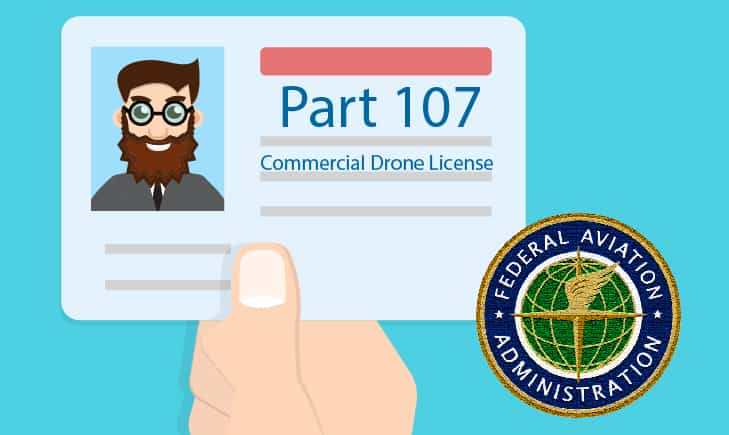
With the recent growth of unmanned aircraft into the commercial drone sector, many companies have found themselves in the position of needing to create new jobs for FAA Part 107 Certificated Remote Pilots. Considering the relative infancy of commercial small Unmanned Aircraft Systems (sUAS) operations, this has created a limited, yet rapidly growing pool of applicants that all share one basic qualification – an FAA airman certificate or “drone pilot license.”
FAA Part 107 License
A drone pilot license to fly a sUAS under Part 107 of the Federal Aviation Regulations (FARs) does not take much time to obtain. This typically requires that the applicant be 16 years of age or older and able to pass a 60 question, multiple-choice exam, known as the Part 107 exam. As a result, many employers are now left wondering, what other qualities and experience should we be looking for in a commercial drone service provider?
In no particular order, here are 12 of the most important qualities of a drone service provider:
Detail Oriented
A commercial drone pilot needs to be detail oriented. To be a safe sUAS pilot, an individual should use checklists, create safety procedures, and be very alert to changes in weather or situational safety. The equipment also requires a tremendous amount of time and effort to keep the drone and the software maintained. A person who skips steps and cuts corners is not likely to be a very effective and safe commercial drone pilot.
Situational awareness means being Prepared, Organized and Alert
Socially Skilled
Drone pilots are constantly approached by the public and asked questions about their equipment, how to fly, and what they are doing. Drone service providers must learn to be comfortable in a situation where people are watching them complete a difficult task and bombarding them with questions. That may require a friendly yet tactful response (said with a smile) such as, “I’d love to answer your questions and show you my footage, but due to safety reasons I can’t talk while I’m flying so let’s talk after I land in a few minutes.”
Cool, Calm and Collected
Not only are interruptions from the public and performing in front of an audience challenging, there are other conditions that can also cause flying a drone to be stressful. Many things can go wrong when flying a drone. Firmware updates, wind, rain, snow, extreme cold, extreme heat, fog and the like can cause hardware, software and drone malfunctions. Not to mention other hazards like aggressive angry birds, air traffic, ground traffic, advisories from the air traffic control tower, restricted airspaces, geo fences, etc. are among the many obstacles a drone service provider must navigate while remaining cool, calm, and collected to stay safe and complete the mission in the best way possible. Even if everything goes wrong, they stay composed, especially in front of the client.
Disciplined
A commercial drone pilot needs to be able to fully understand and comprehend the consequences of their actions. A drone is considered an aircraft by the FAA. An excellent drone service provider does not break the rules or cut corners and takes the time to consider the consequences. A drone pilot that breaks FAA laws and/or regulations will be subject to fines and/or possibly have their license revoked.
Punctual
In many instances, an aerial image is being collected to gather data or an image at a specific point in time. A safe drone service provider will arrive on site early enough to conduct a thorough site survey and weather assessment, scout the area, identify potential hazards, and test their equipment, and other important safety procedures. If a drone pilot arrives late to the site, they could rush through important steps and be more likely to cause an accident.
Pilots often perform simple test flights prior to the actual mission
Organized
To fully maintain procedural discipline and to gain the utmost levels of safety and consistency in performance under a range of both normal and challenging conditions, many drone service providers will meticulously create a plan for each mission as well as a plan to maintain, organize, label, and store their equipment.
Humility
Flying a drone can include many costly risks. Companies need to protect themselves by ensuring that their drone service providers are competent, safe, extensively trained, licensed, and insured. A pilot who thinks him or herself invincible and above the law will be more likely to cause an accident or damage. A good drone service provider will understand that accidents are possible and will not overestimate their abilities, take necessary precautions, but still be confident enough to successfully conduct a mission. Or if conditions are too unsafe or hazardous to complete the mission, they will humbly call off the mission.
Dedicated
The sUAS industry is still in its infancy and evolving rapidly. Dedicated drone service providers are ready and willing to seek and give help, build, and strengthen their drone community, and continuously learn, hone skills, and refine their craft. They are passionately involved and enjoy the fast-moving speed of this new tech and art form.
Inquiring
Much like the autonomous drones they fly, good drone service providers are data collectors. They inquisitively ask questions to gain perspective on a situation. Part of being a good drone service provider is being able to assess a flight location, gather information on a variety of factors, and make final decisions related to the specifics of the appropriate plan. A drone service provider that takes the time to properly prep and gather relevant information has a much better chance of conducting safe and successful missions. Good drone service provider often asks the client a lot of questions during an interview. By nature, they are curious and prefer to gather information to paint a clearer perspective of the bigger picture, like a bird’s eye drone view.
Drone service providers are professionals who are experts at operating different types of drones
Situational and Self Awareness
Excellent drone service providers modestly know their strengths, weaknesses, and personal limits. They will also possess situational awareness and be able to analyze a situation and know when not to fly. When the pressure is on to conduct a flight, a discerning drone service provider focused on safety will be able to call off the mission and explain why.
Team Leader
A good drone service provider must understand their position as the Remote Pilot in Command (RPIC). The RPIC is ultimately the decision maker and is held responsible by the FAA for any decisions that they or their crew carry out. Knowing how to manage the crew, make proper decisions and when to set limitations or boundaries on a mission is key. A great drone service provider must have the ability to step up as the leader and guide their crew to completing a safe mission.
Integrity and Professionalism
Above all an excellent drone service provider will uphold the highest standards of honesty, integrity, quality, hard work, courtesy, and professionalism. The client of a drone service provider of this caliber will breathe easier knowing they are taken care of, and they will have not only the highest quality valuable assets, but also a safe and enjoyable experience.
Do you need to hire a professional drone service provider? To speak to an aerial data specialist, fill out a form, email us or for even faster response times, give us a call at (833) FLY-4YOU or (833) 359-4968. Check out our transparent pricing at Drone Photography Pricing and watch this space as we expand on the above topics and more over the coming weeks and months. If you like this post, feel free to click the share button at the bottom of the page. We appreciate you helping us by spreading the content we share on our blog.
The primary role in every aerial photography mission is owned by the drone pilot-in-charge (PIC), however, the unsung hero of the drone flight crew is the visual observer.Although the drone pilot must always maintain the capability to see the drone in flight, utilizing one or more visual observers allows the pilot to conduct other mission-critical duties while still ensuring situational awareness of the drone.
What, exactly, does the visual observer do?The role of the visual observer is that he or she maintains constant visual contact with the drone, scans for other aircraft and hazards in the area, and communicates to the pilot any instructions required to keep him or her advised on the Drone’s status during flight operations.
Why should any of this matter to real estate agents?
Here are 5 key benefits of having a visual observer on every aerial photo shoot:
Visual Observer Assisting Pilot and Drone Operator
1. Mitigate Risk
Before and during each mission, drone pilots have a tremendous amount on their plate.A visual observer helps to keep the pilot focused on the safe outcome of each mission.
2. Higher Quality Production
An experienced visual observer can also be helpful in setting up important shots by directing the best position and angle for the pilot to photograph the target.
3. Pilot Redundancy
There’s nothing more disappointing than discovering the primary pilot is unable to participate in the mission due to a last-minute emergency.When this happens, a visual observer, who also happens to be Part 107 Certified, can act as a back-up to the primary pilot.Since we feel “the show must go on”, Aerial Decisions always strives to staff each aerial photography mission with this type of redundancy.
4. Scene Management
In the case of smaller productions, the visual observer may also serve as the scene manager, fielding questions from bystanders and dealing with any issues that may negatively impact the pilot’s ability to focus their attention to the safety and control of the aircraft.This is one less thing the real estate agents needs to worry about.
5. Safety
A visual observer keeps the pilot advised on the drone’s location, attitude, altitude, and direction of flight.He or she also notifies the pilot of the position of other aircraft or hazards in the immediate airspace.Finally, the visual observer ensures that the drone does not endanger the life or property of another.
Despite the fact the use of a visual observer is optional when operating under FAA Part 107 rules, they should always be considered an integral part of any aerial photography project.
From The Editor:
Do you need to hire a professional drone service provider?To speak to an aerial data specialist, fill out a form, email us or for even faster response times, give us a call at (833) FLY-4YOU or (833) 359-4968.Check out our transparent pricing at Drone Photography Pricing and watch this space as we expand on the above topics and more over the coming weeks and months. If you like this post, feel free to click the share button at the bottom of the page. We appreciate you helping us by spreading the content we share on our blog.
If you’re like me, you may sometimes wonder if the English language has been reduced to words containing only 3-4 letters.We often see it in almost every industry we’ve encountered in our professional lives.
What am I talking about?
Acronyms.
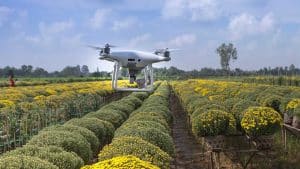
Drone Flying Over Vegetation
For those of us in the drone industry, it’s no different.In fact, given the relatively early stage of our industry’s evolution, it can be quite daunting to keep up with the latest drone industry acronyms.You’re probably saying, here comes yet another 3 letter word I have to learn.OMG!
Well, I thought it would be a great idea to gather a few of the most common drone industry acronyms and provide a definition for each.
Without further ado, here are my Top 15 Most Common Drone Industry Acronyms (in alphabetical order):
AGL – Above Ground Level: In aviation, the term AGL generally refers to the height of an object above ground level. As it relates to Part 107, a drone pilot cannot fly an sUAS (see below) higher than 400 feet Above Ground Level. The only exception to that rule is if the drone is flown within a 400-foot radius of a structure and does not fly higher than 400 feet above the highest, permanently attached, point of the structure.
ATC – Air Traffic Control: is a service provided by ground-based air traffic controllers to direct aircraft on the ground and through controlled airspace and can provide advisory services to aircraft in non-controlled airspace. The primary purpose of ATC worldwide is to prevent collisions, organize and expedite the flow of air traffic, and provide information and other support for pilots.
BVLOS – Beyond Visual Line of Site: BVLOS is a term relating to the operation of UAVs (unmanned aerial vehicles) and drones at distances outside the normal visible range of the pilot.
COTS –Commercial Off the Shelf (Drone): COTS is an acronym that refers to commercially available drones but is more recently associated with a COTs drones’ inter-operability with “Drone-in-the-Box” remote charging solutions for BVLOS applications. The industry is collectively working towards developing charging solutions that are drone manufacturer agnostic and can be used to charge a variety of popular commercially available off-the-shelf drones.
eVTOL – electric Vertical Take-Off & Landing: eVTOL is a type of aircraft that uses electric power to hover, take off, and land vertically. In the drone industry, eVTOL is often associated with metropolitan airbus transportation and UAM (see below).
FAA – Federal Aviation Administration: The Federal Aviation Administration is the largest modern transportation agency and a governmental body of the United States with powers to regulate all aspects of civil aviation in that nation as well as over its surrounding international waters.
NAS –National Air Space: The NAS is airspace that is regulated by the FAA and can be either controlled or uncontrolled airspace.
NTSB – National Transportation Safety Board: The NTSB is an independent U.S. government investigative agency responsible for civil transportation safety and accident investigation.
OAS – Obstacle Avoidance System: An integral on-board software and optical system that enables unmanned drones to “see and avoid” obstacles to minimize mid-air collisions.You will often hear OAS mentioned in conjunction with BVLOS as it is a critical function to enable safe autonomous flight planning initiatives.
sUAS – Small Unmanned Aircraft System: Similar to UAS, there are many terms for UAS technology such as Drone, Unmanned Aerial Vehicle (UAV), Unmanned Aircraft (UA), Unmanned Aircraft System (UAS) and small Unmanned Aircraft System (sUAS). These acronyms are often used interchangeably in industry circles.
UA – Unmanned aircraft: this term refers to drones, or any aircraft, that are designed to operate autonomously or to be piloted remotely without a pilot on board.
UAM – Urban Air Mobility: UAM refers to air traffic systems that are designed to transport people by air. Unlike modern airspace rules that guide commercial aircraft at higher altitudes, UAM is designed for commercial eVTOL air transportation at lower altitudes within urban and suburban areas.
UAS – Unmanned Aircraft System: Unmanned aircraft system (UAS) typically refers to an unmanned drone and its related equipment that enables a remote operator to allow the drone to operate autonomously.
UATM – Urban Air Traffic Management: Often referred to in connection to UTM (see below), Urban Air Traffic Management represents a highly coordinated system of urban air traffic management for autonomous drones.
UTM – Unmanned Traffic Management: Unmanned Aircraft System Traffic Management (UTM) is an air traffic management ecosystem that creates defined “rules of the road” for uncontrolled airspace below 400 feet AGL.
Clearly, I have only touched the surface of the acronyms you will see in our industry.As the drone industry continues to evolve, there will no doubt be more to come!If you feel I have missed an important one, hit us up on Social Media and let us know what you think (Twitter, Facebook, Instagram).
From The Editor:
Do you need to hire a professional drone service provider?To speak to an aerial data specialist, fill out a form, email us or for even faster response times, give us a call at (833) FLY-4YOU or (833) 359-4968.Check out our transparent pricing at Drone Photography Pricing and watch this space as we expand on the above topics and more over the coming weeks and months. If you like this post, feel free to click the share button at the bottom of the page. We appreciate you helping us by spreading the content we share on our blog.
Just like commercial airline pilots use a checklist before each flight, drone pilots use pre-flight checklists to ensure their operations are safe and legal. In addition to ensuring aircraft readiness and considering things like weather, site safety and crew briefings, checklists also help pilots ensure compliance with FAA, state and local regulations that govern the commercial use of drones.
2. Redundancy = Consistency
Checklists augment pilot memory to ensure that all required actions are performed in an orderly manner and without omission. When properly implemented, checklists are used redundantly and consistently before every flight, regardless of how many times the pilot has flown a particular aircraft or mission.
3. Complacency = Missed Steps
The aim of implementing a checklist is not simply to read through and check off items. Rather, the objective is to prevent complacency by methodically following every step. Forcing oneself to read each checklist item may seem awkward and time-consuming to a drone pilot who has flown a particular aircraft many times before. However, if a pilot scans the items to be checked quickly due to time pressures, versus taking time to consider each step, missed or incorrect steps can result in disaster.
4. They’re Not Just for Pilots
The pre-flight checklist is an integral part of effective Crew Resource Management, which enhances teamwork, increases communication and transforms operational hierarchy to improve safety and reduce risk. When used effectively, the checklist is key to ensuring that the entire flight crew is on the same page and properly briefed for every mission.
5. They’re Not Just for Pre-Flight
Pre-flight, in-flight and post-flight procedures are all part of a comprehensive checklist. Best practices should include, but not be limited to, these high-level considerations:
Pre-flight
– Airspace restrictions and weather considerations
– Pilot and crew mental and physical fitness
– Site inspection and mission walk through
– Take-off, landing, safety perimeter and emergency abort zones established
– Crew and bystander briefing
– Aircraft, payload and flight system inspection
In-Flight
– Take-off procedure
– Maintain visual line of sight with aircraft
– Maintain safe operating distance from people and obstavles
– Monitor airspace for other aircraft
– Maintain “sterile cockpit” to avoid pilot distraction
Post-Flight
– Landing procedure
– Power down sequence
– Data acquisition procedure
– Post-flight aircraft inspection
– Flight logging
Conclusion
Replacing human error with a strong safety culture and reliance on proven procedures is paramount to the success of any drone services provider. Aviation safety studies have shown that consistent and methodical use of checklists reduces risk by virtually eliminating mistakes and oversights. A strong emphasis on team intelligence and effective procedures like operational reports and checklists can ensure teams are on the same page and operating at peak effectiveness.
Bottom Line: Take the time to do it right – or don’t fly
From The Editor:
Do you need to hire a professional drone service provider?To speak to an aerial data specialist, fill out a form, email us or for even faster response times, give us a call at (833) FLY-4YOU or (833) 359-4968.Check out our transparent pricing at Drone Photography Pricing and watch this space as we expand on the above topics and more over the coming weeks and months. If you like this post, feel free to click the share button at the bottom of the page. We appreciate you helping us by spreading the content we share on our blog.
This is the first in a series of “Five Reasons” articles. Over the next several months, we’ll explore key areas for consideration, what to look for and questions to ask when hiring a commercial drone service provider to fly your important mission.
5 Reasons to Insist that Your Drone Service Provider is an FAA-Certified Remote Pilot
1. Flying a Drone for Commercial Purposes Without FAA Part 107 Certification is Illegal
The civil penalties for flying a commercial drone without an FAA remote pilot’s certificate are up to $32,666 for each incidence. After the violator receives a letter of warning letter from the FAA, this fine may be charged per day for continual illegal use of a drone for commercial purposes. The FAA may also impose criminal sanctions, which include a fine of up to $250,000 and/or a prison sentence of up to three years upon conviction (49 U.S.C. § 46306(b) and (d)).
2. Hiring an Unlicensed Commercial Drone Service Provider is Illegal
Federal statute (49 U.S. Code § 46306(b)(8)) declares that “a person shall be fined (up to $250,000) under title 18, imprisoned for not more than 3 years, or both, if the person . . . knowingly and willfully employs for service or uses in any capacity . . . an individual who does not have an airman’s certificate authorizing the individual to serve in that capacity”
A Safe Bet: Certified and insured drone service providers
3. Aviation Knowledge and Regulatory Compliance
A commercial drone pilot has a primary responsibility to follow all regulations established by the FAA to keep our national air space safe for everyone. A certified commercial drone pilot will understand where, when and how high they can fly and, if needed, they’ll know how to get permission to fly in different classes of air space.
4. Safety
Flying a drone is relatively simple and straightforward, but flying safely is an entirely different matter. Licensed drone pilots spend many hours learning FAA drone regulations – rules that are designed to keep people, property and air space safe. They understand how wind speed, visibility, clouds and other conditions can affect flights; and make safety a priority by adhering to crew resource management and medical guidelines while following proven risk management protocols and procedures.
5. Professionalism
A licensed drone pilot should be expected to demonstrate professionalism through an unwavering commitment to FAA regulatory compliance, safety procedures, respect for privacy, and legal and ethical operations. Additionally, it’s important to factor in their level of experience and ability to capture the high-quality aerial data required for your important project.
Conclusion
As the drone industry transitions from nascent to mainstream, demand for FAA-Certified Remote Pilots continues to grow as well, and it becomes more important than ever to protect yourself from personal and professional liability. When hiring a drone service provider, ask to see their FAA Remote Pilot credentials, insurance, and preflight checklists to ensure that you are working with someone who is truly committed to professionalism and regulatory compliance.
From The Editor:
Do you need to hire a professional drone service provider? To speak to an aerial data specialist, fill out a form, email us or for even faster response times, give us a call at (833) FLY-4YOU or (833) 359-4968. Check out our transparent pricing at Drone Photography Pricing and watch this space as we expand on the above topics and more over the coming weeks and months. If you like this post, feel free to click the share button at the bottom of the page. We appreciate you helping us by spreading the content we share on our blog.
The number of providers offering drone-based commercial aerial photography, videography and data gathering services is rapidly increasing. Unfortunately, not all drone service providers are created equal. Selection of a qualified provider breaks down into two major categories:
1) Regulatory
Many drone operators, as well as their prospective Clients, are unaware that FAA regulations specifically govern the safe use of this technology and prohibit the use of drones for commercial purposes unless a) the drone is registered with the FAA and b) the pilot holds a Remote Pilot Certificate with an sUAS rating. Clients should verify pilot credentials and aircraft registration before hiring a drone service provider.
2) Safety, Ethics, Experience and Professionalism
Even if they are Certified Remote Pilots, many operators lack the necessary insurance and competence to operate drones safely, ethically and professionally. The quality of the final deliverable often depends on the skills and artistry of the operator – and these skills can vary widely. Here too, Clients should verify qualifications by asking to see samples of an operator’s work before hiring them, as well as verifying safety practices and procedures, business license and insurance credentials.
Certification and Documentation – Ask to See It!
FAA Remote Pilot Certificate with a small Unmanned Aerial System (sUAS) rating
FAA Certificate of Aircraft Registration
Business License
Insurance policy declarations and endorsements
Pre-flight Checklist, Flight Operations Manuals, Aircraft Operations Manuals, Flight and Maintenance Logs, etc.
Equipment
A properly-equipped operator will have multiple sUAS, providing backup and redundancy for any on-location equipment issues that may arise
Crew and Roles
FAA-certified pilot required
Visual Observer highly recommended to help manage manned aircraft right-of-way, proximity to people, power lines, guy lines and other hazards
Safety and Operating Procedures
Go/No-Go procedures (personal minimums such as wind conditions, cloud cover, visibility, etc.)
What safety precautions will they utilize for your specific project and location?
Pre-flight planning and risk management processes?
Area and environment – proximity to airports and airspace restrictions, hazards, weather and bystanders?
Public awareness – notify nearby property owners and residents of flight date, time, location, duration, etc.?
Contingency planning and emergency procedures for safe exit routes in case of system failure of lost link, etc.?
Experience (as both pilot and photographer)
Pilot:
How many hours does the pilot have?
Are they current on the aircraft that they will be flying?
Photographer:
What, if any, are the provider’s professional photography credentials?
Do they possess the skills and artistry to deliver quality results?
Overall Professionalism
Does your pilot demonstrate professionalism and a commitment to FAA regulatory compliance, safety procedures, legal and ethical operations, respect for privacy, etc.?
In this inaugural blog from Aerial Decisions, we’ve provided an overview of questions to ask your drone service provider. We’d love to hear your thoughts on these issues. Please check our website at and watch this space as we expand on the above issues and more over the coming weeks and months.