Category: Drone Service Providers

  • Elevating Construction Project Management with Drone Data: What Owners Actually Care About

    Elevating Construction Project Management with Drone Data: What Owners Actually Care About

    Introduction: Construction Owners Don’t Want Pretty Drone Videos — They Want Certainty

    In today’s commercial construction environment, margins are tighter, schedules are compressed, and stakeholder scrutiny is higher than ever.

    While drone footage has become common on job sites, most construction project owners don’t care about cinematic flyovers.

    They care about three things:

    • Are we on schedule?
    • Are we exposed to risk?
    • What changed since last month?

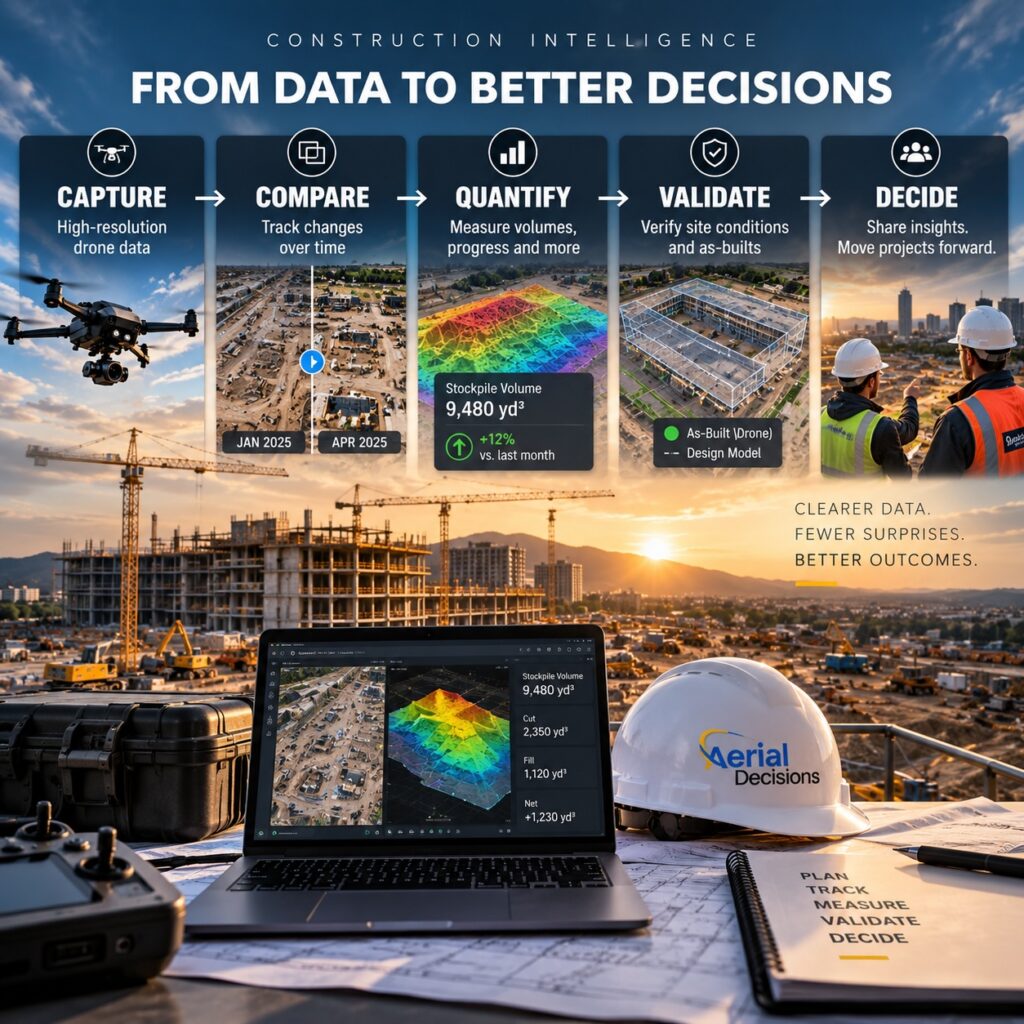
    Modern drone progress monitoring and orthomosaic mapping answer these questions with measurable, defensible data.

    1. Understanding Construction Owner Priorities

    Owners and developers prioritize:

    • Schedule validation
    • Risk identification
    • Scope change documentation
    • Pay application verification
    • Capital protection

    Drone technology becomes valuable only when it directly supports those outcomes.

    A properly structured drone data workflow provides:

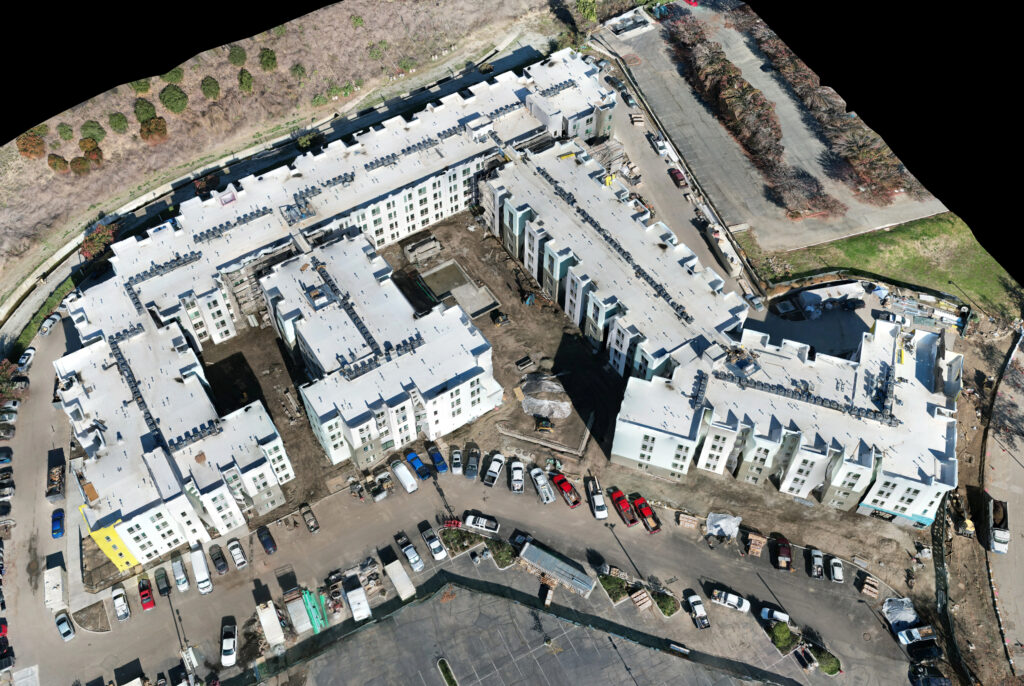
    • Weekly or monthly site-wide orthomosaic maps
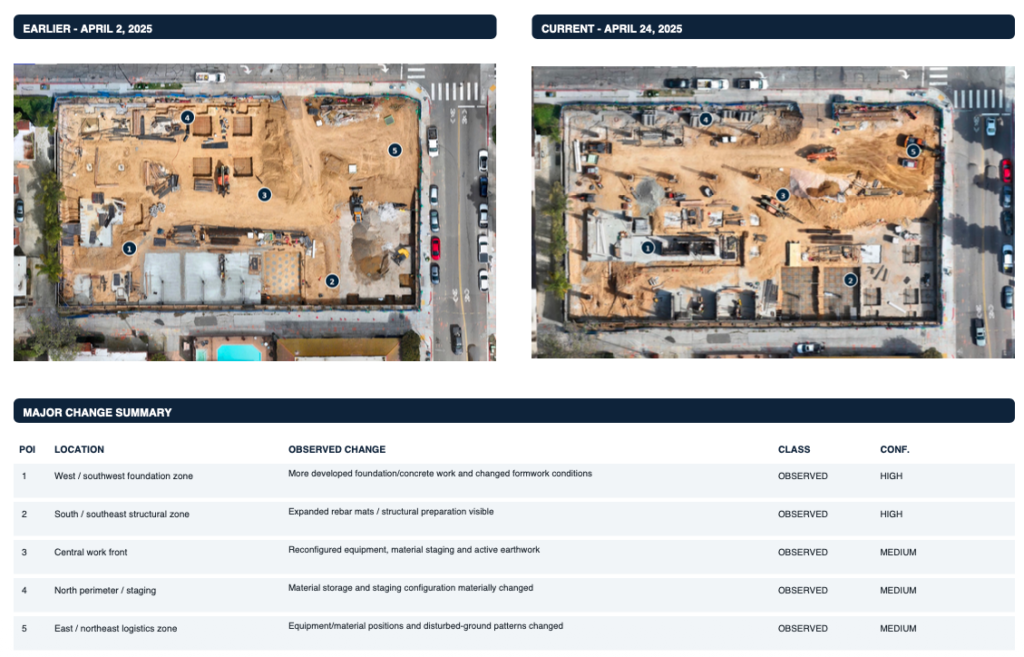
    • Change detection over time
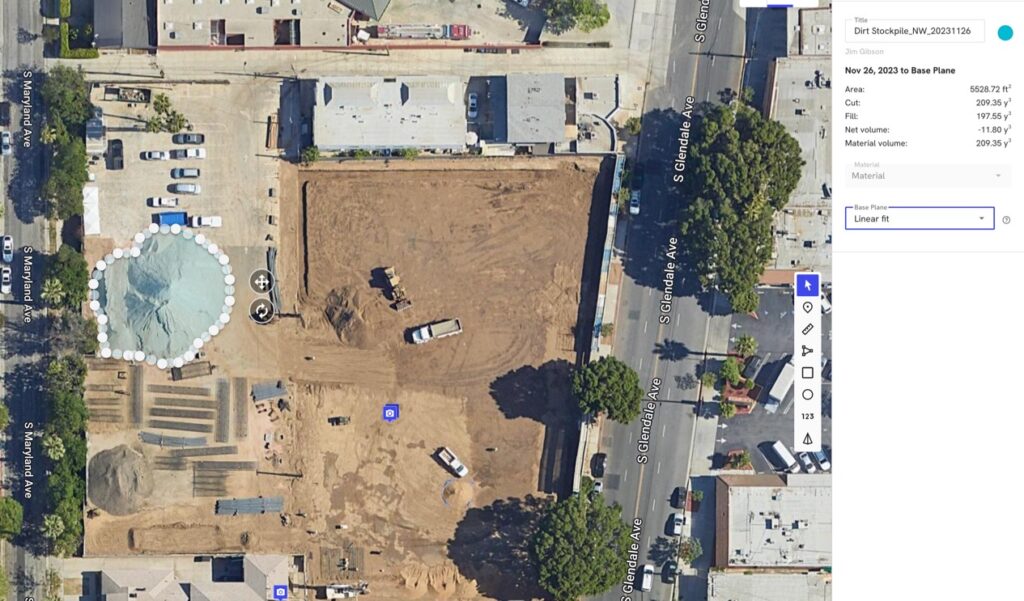
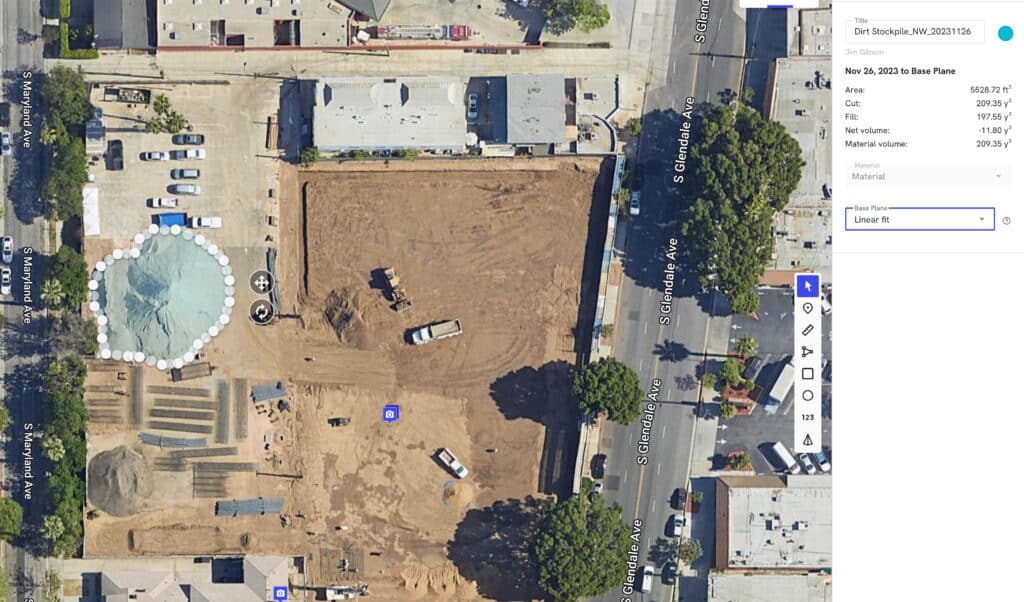
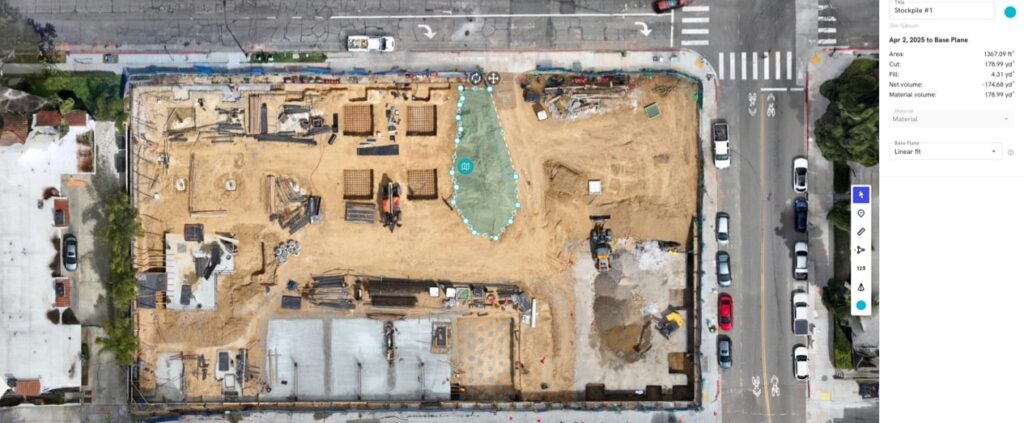
    • Volume and stockpile measurements
    • High-resolution documentation
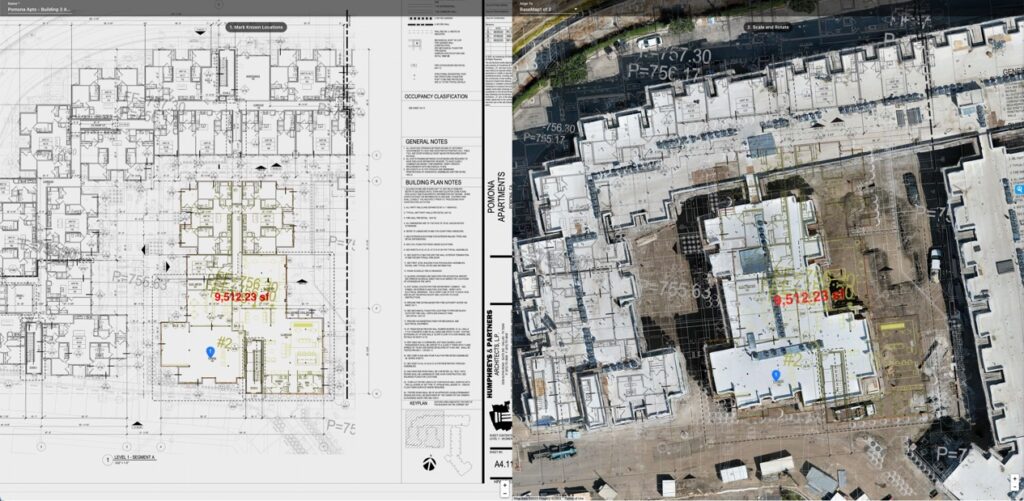
    • Visual overlays aligned with plans

    Instead of “look at this footage,” the conversation shifts to:

    “Here is where progress stands compared to last cycle.”

    That shift changes everything.

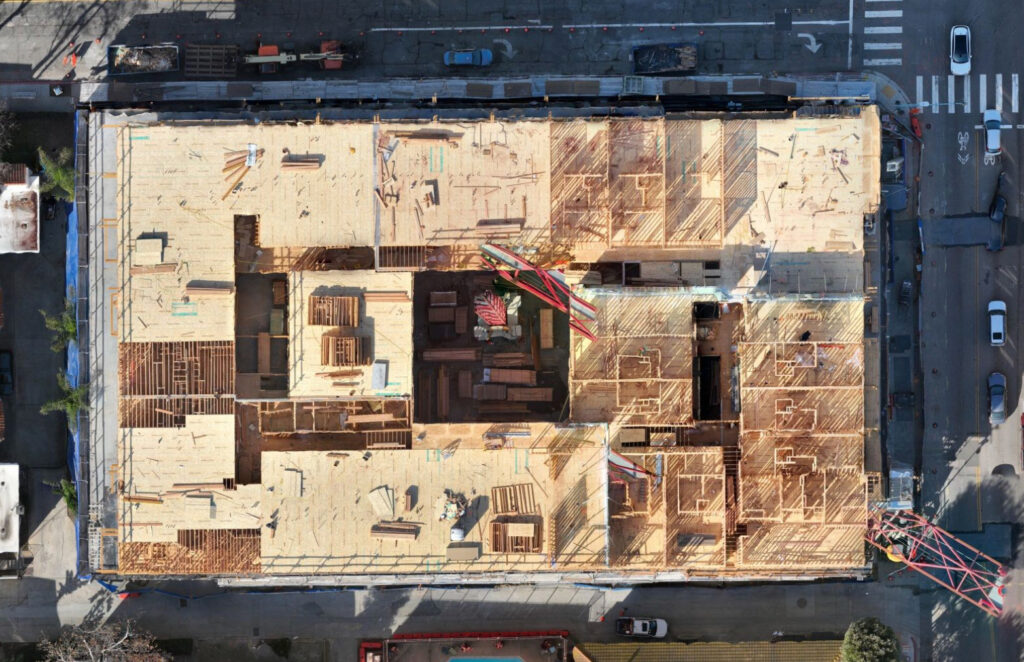
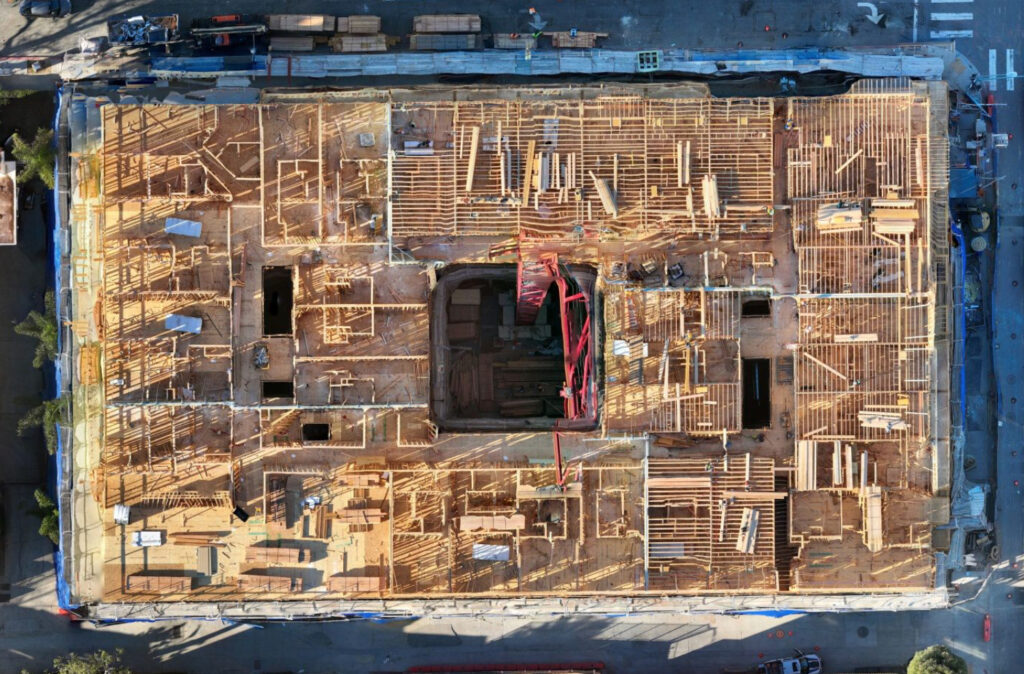
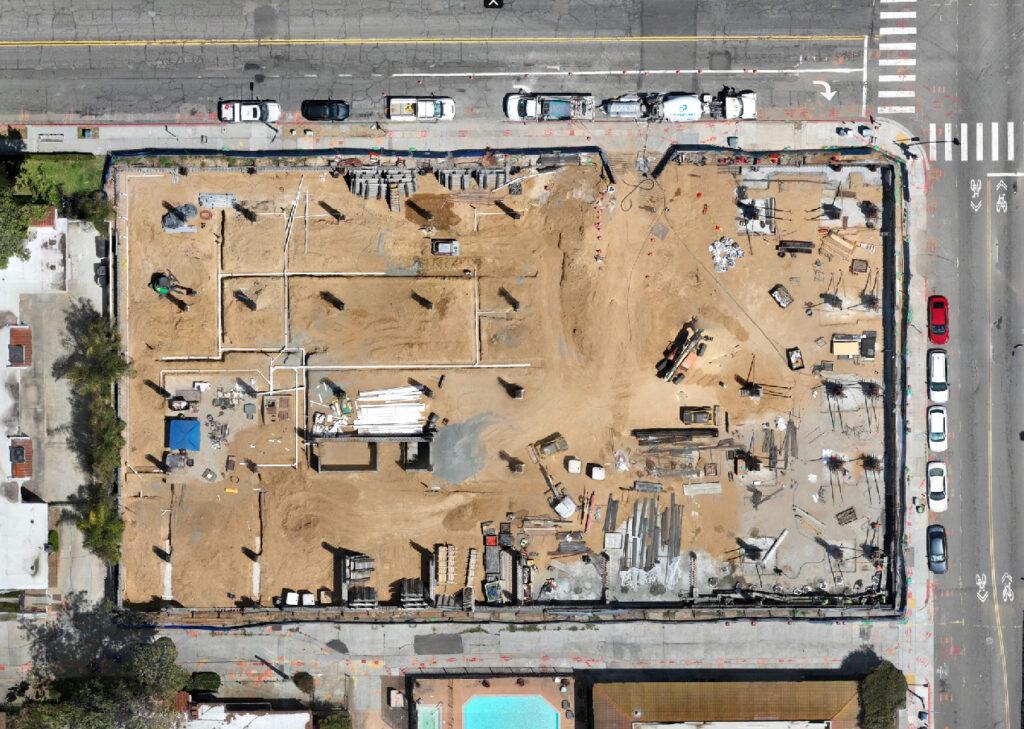
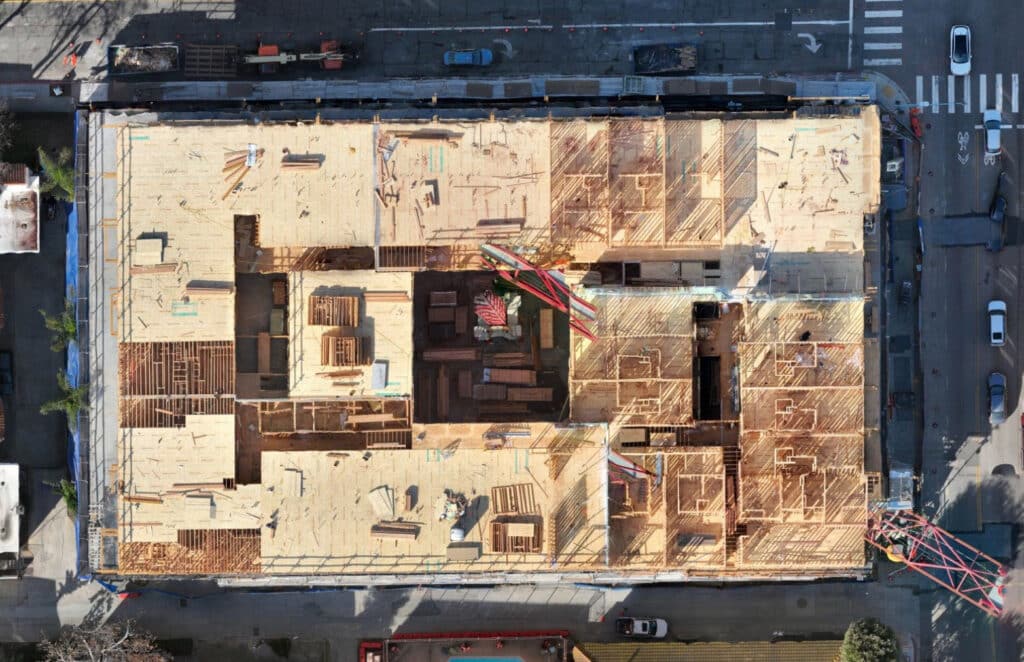
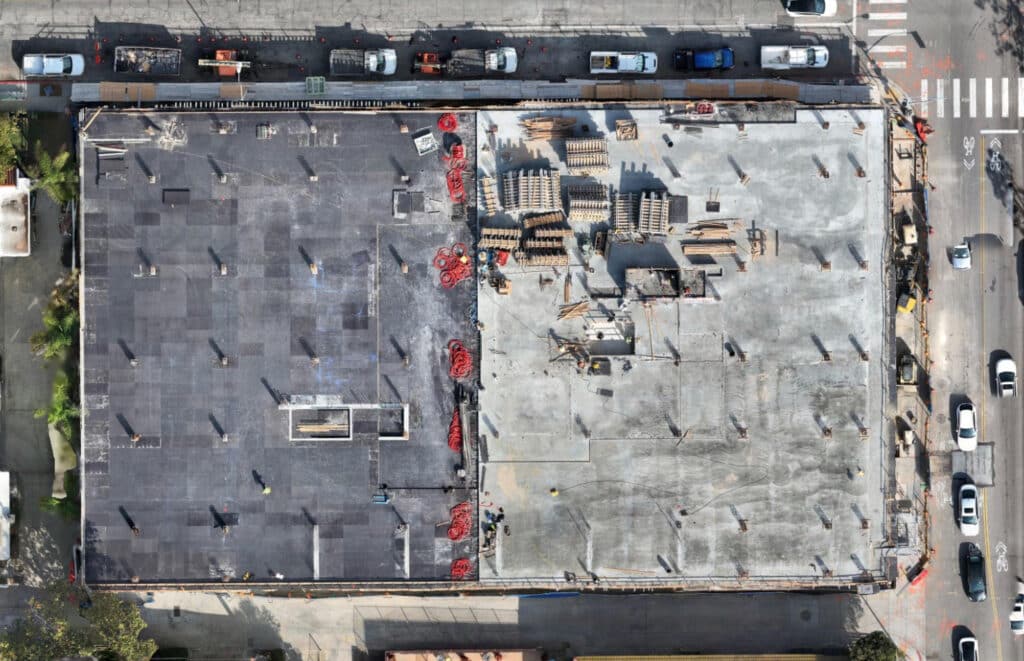
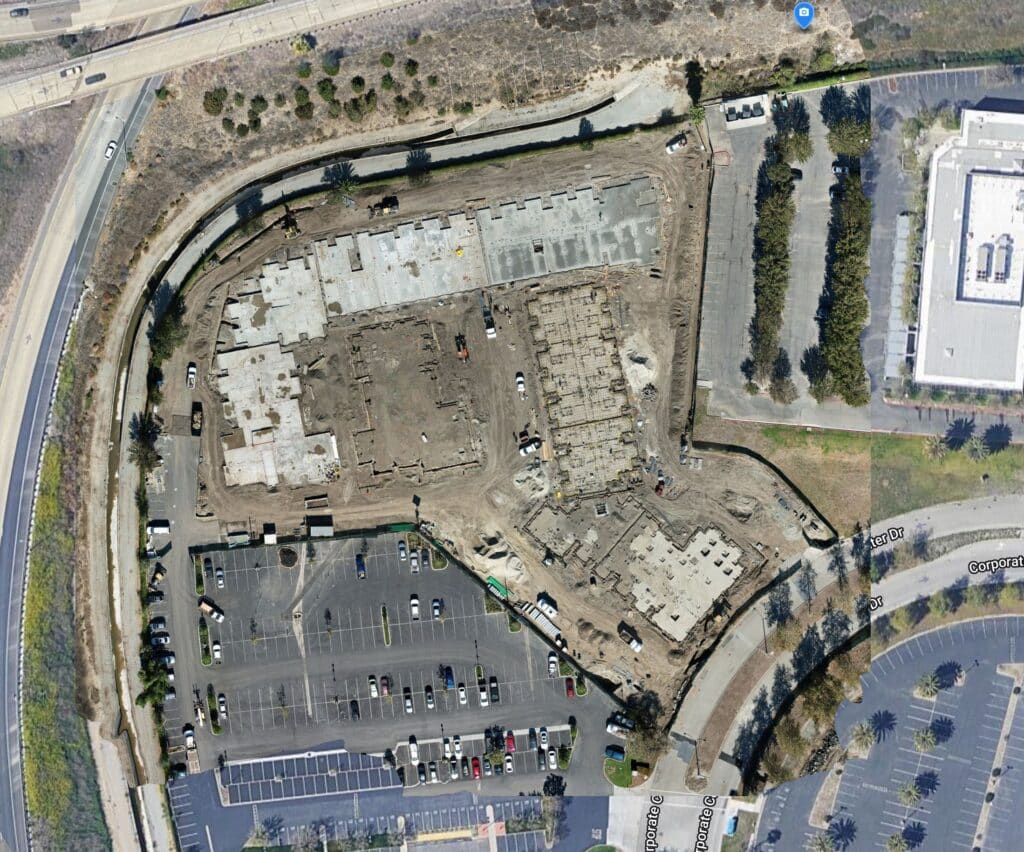
    Orthomosaic Map

    2. Why Orthomosaic Drone Mapping Delivers More Value Than Video

    A clean, georeferenced orthomosaic map provides far more operational value than cinematic drone video.

    What is an Orthomosaic?

    An orthomosaic is a high-resolution aerial map created by stitching hundreds of drone images together and correcting for distortion so it can be measured accurately.

    Why It Matters:

    • Enables precise distance and area measurements
    • Allows side-by-side time comparison
    • Documents change conditions
    • Supports dispute resolution
    • Improves stakeholder reporting

    In contrast, video footage is emotional.
    Orthomosaic data is defensible.

    For commercial construction stakeholders, defensible wins.

    3. Drone Data Reduces Risk and Protects Margins

    Construction delays, rework, and scope creep erode profitability.

    Drone data supports:

    • Early identification of sequencing issues
    • Material staging inefficiencies
    • Safety exposure zones
    • Improper installations
    • Earthwork miscalculations

    When project managers can see accurate, measurable site conditions, they reduce guesswork.

    And reduced guesswork means:

    • Fewer RFIs
    • Faster decision cycles
    • Cleaner owner conversations
    • Stronger documentation for claims

    That’s where drone ROI in construction becomes real.

    4. Turning Drone Deliverables Into Executive-Level Reporting Tools

    Drone data should not sit in a folder.

    It should be structured as:

    • Time-stamped progress reports
    • Monthly executive dashboards
    • Overlay comparisons (Month 1 vs Month 4)
    • Measurable progress validation

    When structured correctly, drone data improves communication between:

    • Owners
    • Developers
    • General Contractors
    • Lenders
    • Municipal stakeholders

    This isn’t about aerial photography.
    It’s about informed decision-making.

    5. How Drone Progress Monitoring Improves Construction Project Management

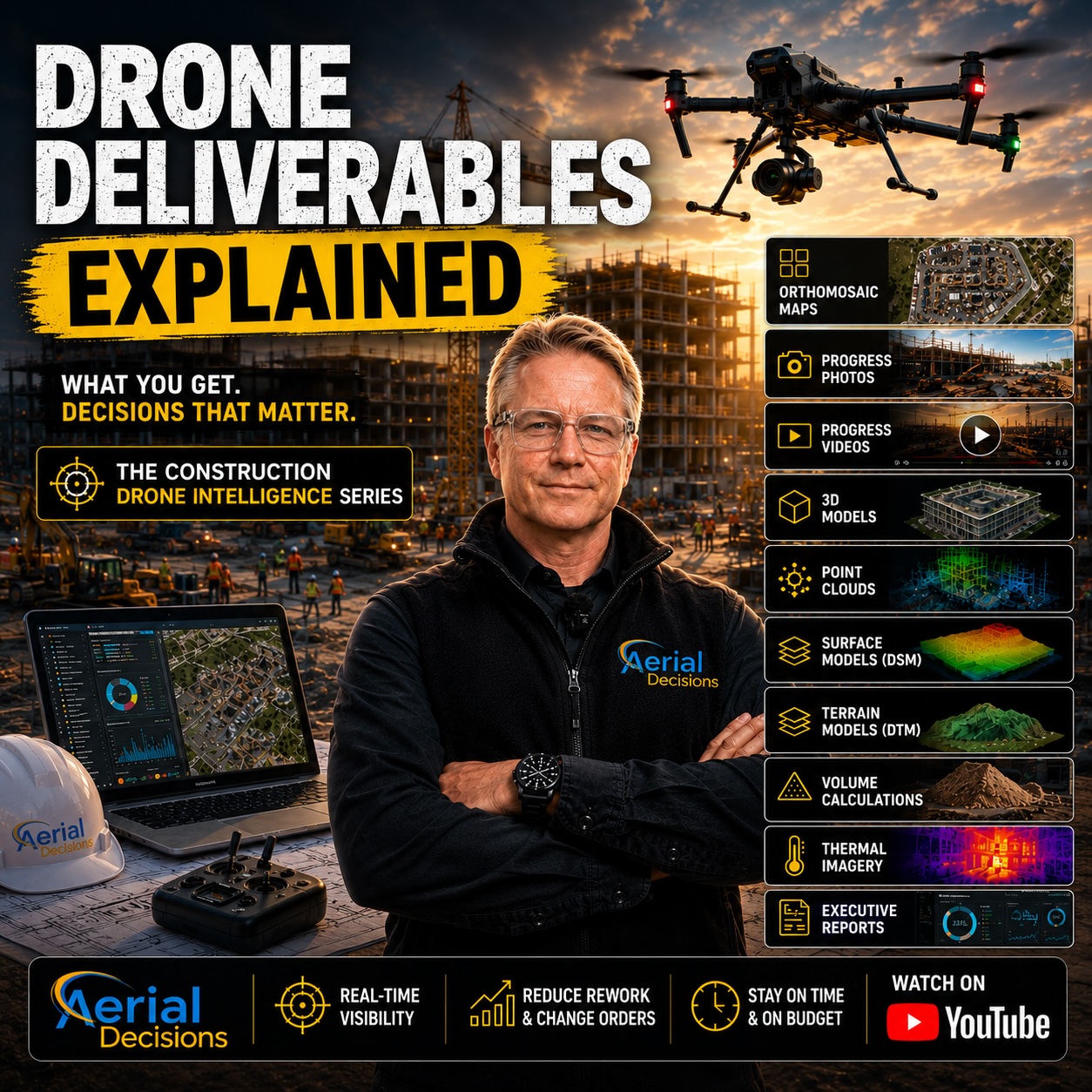
    Modern drone workflows support:

    • 2D orthomosaic mapping
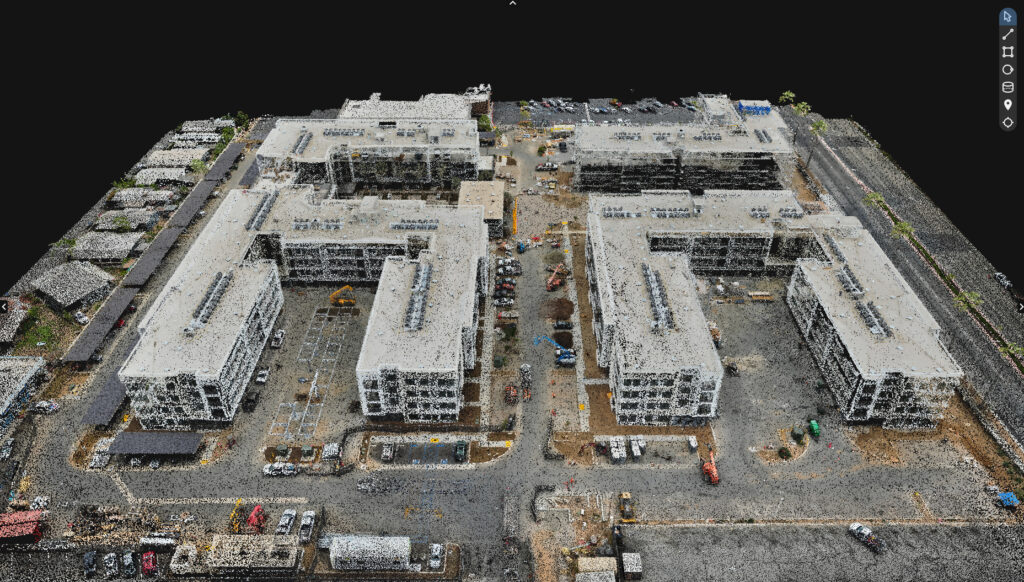
    • 3D site models
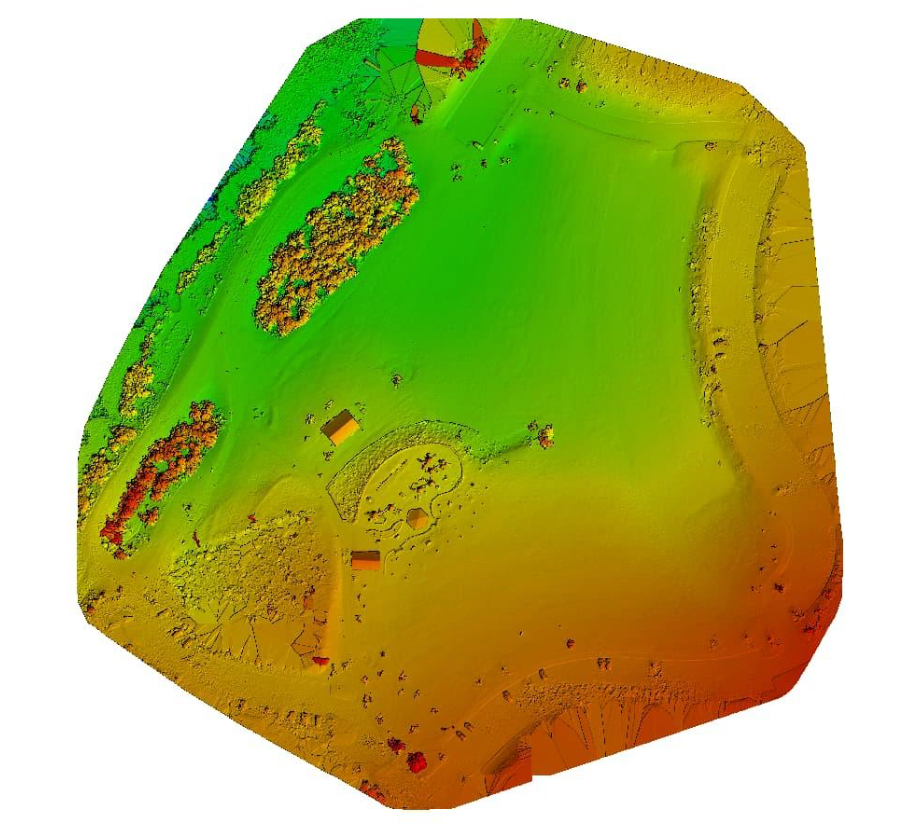
    • Digital terrain models (DTM)
    • Volume calculations
    • Timeline-based progress comparisons

    For commercial projects, this becomes a repeatable intelligence layer across the lifecycle of the build.

    6. Protecting the Bottom Line with Drone Construction Services

    Owners don’t invest in drone services for visuals.

    They invest in:

    • Cost control
    • Schedule visibility
    • Risk reduction
    • Improved reporting confidence

    When framed correctly, drone services become a financial protection tool, not a marketing expense.

    At Aerial Decisions, we focus on:

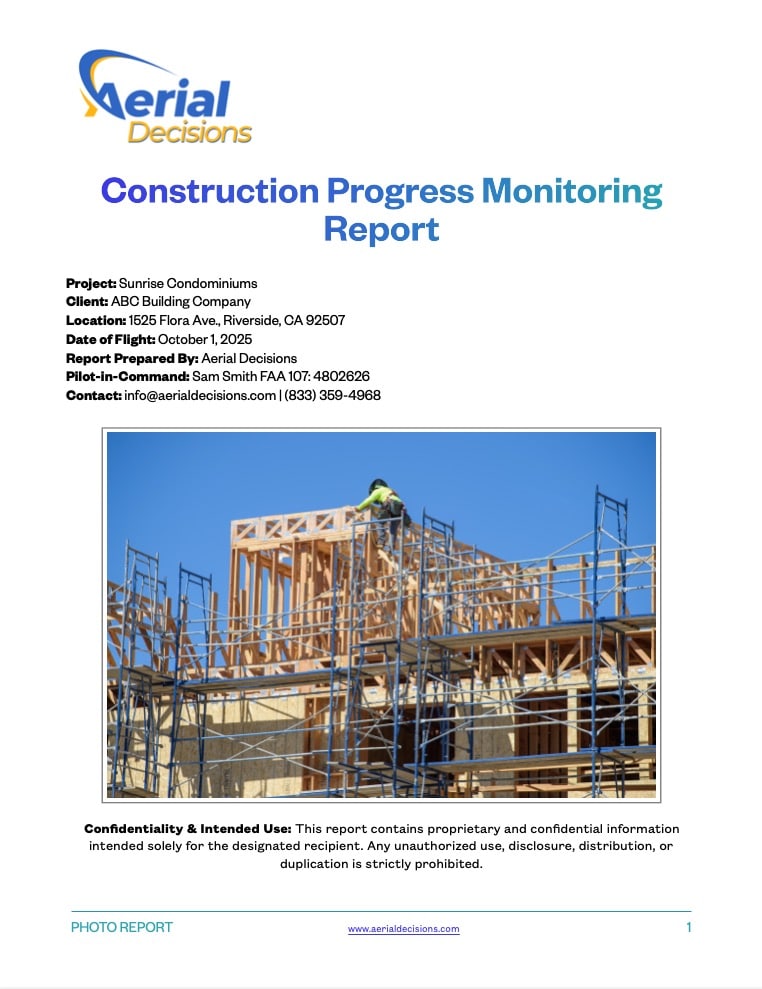
    • Commercial construction progress monitoring
    • Infrastructure site mapping
    • Data-driven reporting
    • Measurable deliverables aligned with executive priorities

    Key Takeaways

    • Construction owners prioritize certainty, not aesthetics.
    • Orthomosaic drone mapping provides measurable, defensible data.
    • Drone progress monitoring reduces risk and protects margins.
    • Properly structured drone deliverables improve executive communication.
    • Data-driven drone services create real ROI in commercial construction.

    FAQ – Construction Drone Services

    What are drone services in construction?

    Drone services in construction involve using unmanned aerial systems to capture site data, including orthomosaic maps, 3D models, progress documentation, and volumetric measurements to improve project management and risk mitigation.

    How do drones improve construction project management?

    Drones improve project management by providing accurate site-wide visibility, measurable mapping data, and time-based comparisons that reduce uncertainty and improve decision-making.

    What is an orthomosaic map in construction?

    An orthomosaic map is a high-resolution aerial map created from multiple drone images that are stitched together and corrected for distortion. It allows for accurate measurements and progress tracking across a construction site.

    Are drone services worth the investment for commercial construction?

    Yes. When structured around measurable reporting and risk mitigation, drone services help reduce rework, improve schedule adherence, and provide defensible documentation—protecting overall project margins.

    How often should construction drone progress monitoring be conducted?

    Most commercial projects benefit from bi-weekly or monthly drone mapping flights, depending on project complexity, schedule pace, and stakeholder reporting requirements.

    Can drone data help reduce construction disputes?

    Yes. Time-stamped aerial documentation provides objective evidence of site conditions, helping resolve disputes related to delays, installation errors, or scope changes.

    From The Editor:

    Do you need to hire a professional drone service provider for your project?  To speak to an aerial data specialist, fill out a form, email us or for even faster response times, give us a call at (833) FLY-4YOU or (833) 359-4968.  Check out our transparent pricing at https://aerialdecisions.com/drone-photography-pricing/ and watch this space as we expand on the above topics and more over the coming weeks and months.  

    If you like this post, feel free to click the share button at the bottom of the page.  We appreciate you helping us by spreading the content we share on our blog.

    Drones and Construction podcast on Spotify
    Stream Drones and Construction podcast on your favorite listening platform.

    Showcase Your Company on the Drones and Construction Podcast! If you’d like to be a featured guest on our podcast, send us an email: info@aerialdecisions.com and one of our crew will get right back to you to share the details.

    About Aerial Decisions

    Aerial Decisions is a Los Angeles-based Drone Services Provider (DSP).  We specialize in providing cutting-edge drone data collection combined with industry leading software solutions tailored for the commercial construction industry. Our mission is to optimize the way enterprise construction projects are managed by offering precise aerial photography, detailed data analysis, and innovative software tools through a network of FAA-certified and insured drone pilots.  Aerial Decisions is not just a drone service provider; we are your strategic partner in commercial construction. Our hands-on approach to understanding your unique requirements and our dedication to excellence ensures that every flight and every data point is optimized for your success. Trust us to be the eyes in the sky that elevate your construction projects to new heights.

  • The Future of Business: Top 7 Commercial Drone Applications Across Key Sectors

    The Future of Business: Top 7 Commercial Drone Applications Across Key Sectors

    For many people, drones are often seen as toys for hobbyists or even as threats to privacy and safety. Recent news about unidentified drones buzzing across the East Coast has sparked fears about espionage and airspace violations. These incidents make headlines, but they overshadow a much bigger story: the transformative potential of drones as tools for innovation, commerce, and safety in the United States.

    Instead of focusing solely on the risks, it’s time to recognize the critical role drones are playing in solving challenges that were once insurmountable. From revolutionizing agriculture to enhancing the response to disasters, such as the recent LA fires, drones are not just flying gadgets—they’re essential assets for building a more efficient and secure future.

    As a drone service provider, I’ve seen firsthand how this technology is being adopted across industries. While certain sectors may focus on specific applications—such as the Arts & Entertainment industry prioritizing photography—many industries are leveraging drones in diverse and unexpected ways. Here are the top industries using drones today and how they’re transforming their operations.

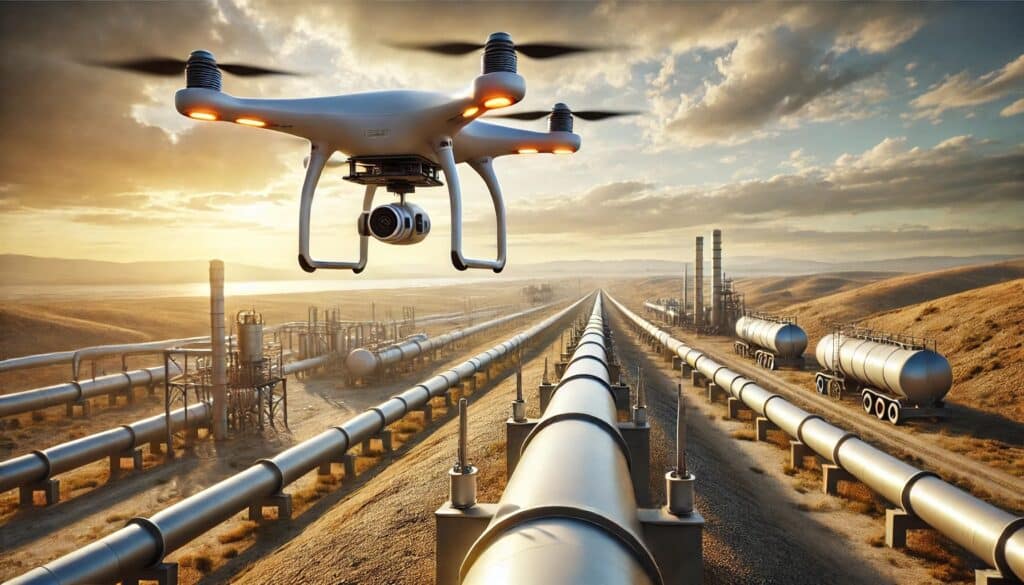
    Drone Surveying Oil Pipelines
    Inspecting wind turbines, solar panels, and miles of pipelines once demanded time-consuming and potentially dangerous efforts from workers.

    1. Energy: Inspections and More

    Inspecting wind turbines, solar panels, and extensive pipelines has traditionally been a labor-intensive and hazardous task for workers. The advent of drone technology has revolutionized this process, offering safer, more efficient, and cost-effective inspection methods.

    A notable example is the use of drones equipped with LiDAR (Light Detection and Ranging) technology for power line inspections. According to a case study by CHC Navigation, their AlphaAir 450 UAV LiDAR scanner has been employed to inspect power lines, providing high-precision data and reducing the time required for inspections. 

    In the solar energy sector, drones have significantly increased inspection efficiency. A case study by AgEagle Aerial Systems demonstrated that drone inspections of solar panels mirrored the results of manual inspections with 99% accuracy. However, the drone-based method completed the task in just two hours per site, compared to two days for manual inspections, resulting in a 97% increase in efficiency. 

    These examples highlight how drones are transforming industrial inspections, offering precise data collection while minimizing risks and operational costs.

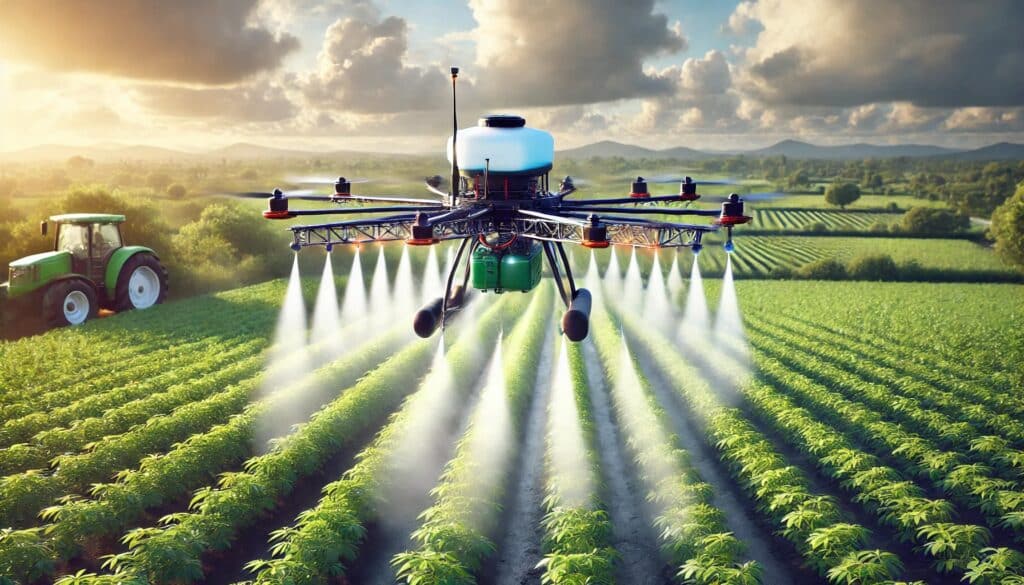
    agriculture drone spraying field
    Drones can efficiently and precisely apply pesticides, fertilizers, and even water, reducing environmental impact while swiftly covering expansive areas.

    2. Agriculture: Mapping, Monitoring, and Spraying

    Agriculture is one of the most dynamic industries for drone technology. Farmers use drones for mapping and surveying fields to detect crop stress, soil health, and pest infestations with pinpoint accuracy. This data helps optimize resource use and improve yields, giving farmers actionable insights they never had before.

    Spraying and dispensing are equally transformative. Drones can precisely apply pesticides, fertilizers, and even water, minimizing environmental impact while covering large areas quickly. For farms with challenging terrain or tight planting cycles, drones are the perfect solution to reduce labor costs and increase efficiency.

    3. Construction: Progress Tracking and Site Management

    In construction, drones are reshaping project management. Site surveys that once took weeks can now be completed in hours, offering real-time data to track progress and ensure quality. High-resolution imagery and 3D mapping enable better communication across teams and faster identification of potential issues.

    Drones also improve safety by inspecting hard-to-reach areas like scaffolding or high-rise structures, reducing risks to workers. For an industry driven by timelines and budgets, drones are becoming an indispensable tool.

    4. Public Administration and Emergency Services: Mapping, Tracking, and More

    Government agencies and emergency services rely heavily on drones for public safety and resource management. In public administration, drones are primarily used for mapping and surveying urban landscapes, aiding in smarter city planning and disaster preparedness.

    For emergency services, drones equipped with thermal imaging cameras have become life-saving tools. They can locate missing persons, assess damage during natural disasters, and deliver critical supplies to areas that are otherwise inaccessible. The ability to provide real-time visuals in crisis situations makes drones invaluable for saving lives.

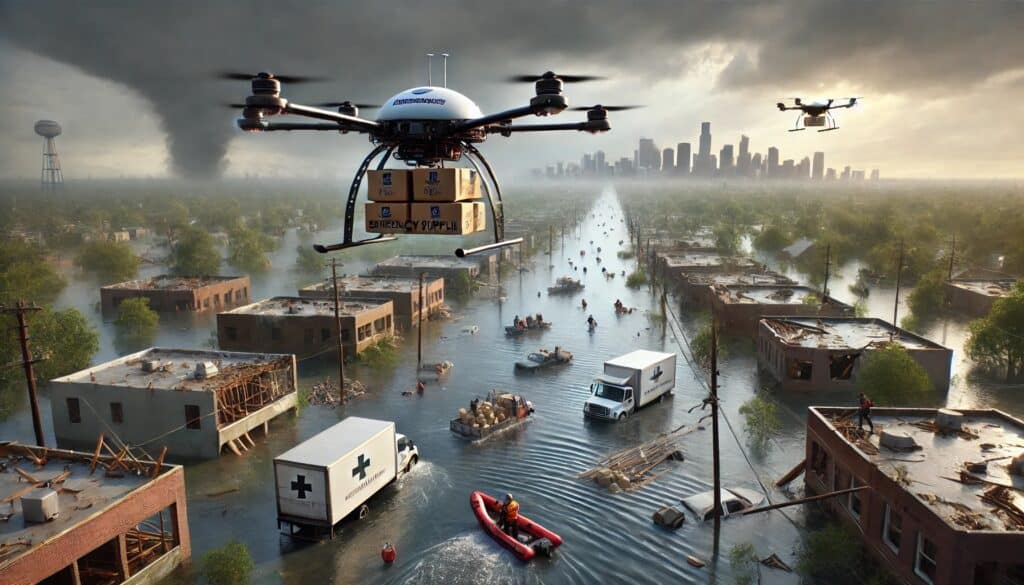
    Drones delivering supplies in disaster
    Drones can be an indispensable asset to public service agencies during natural disasters.

    5. Healthcare and Disaster Relief: Drone Deliveries

    The healthcare sector is at the forefront of integrating drone technology to expedite the delivery of critical medical supplies, especially in remote or disaster-stricken regions. Drones are now transporting defibrillators, vaccines, blood products, and essential medications, ensuring timely medical interventions when every second counts.

    A notable example is Zipline, a California-based company that has established the world’s largest medical drone delivery network. Operating primarily in Rwanda and Ghana, Zipline’s drones have completed over 1.3 million deliveries, covering nearly 100 million miles. These autonomous drones deliver whole blood, platelets, frozen plasma, and cryoprecipitate, significantly reducing delivery times compared to traditional methods. 

    In Rwanda, Zipline’s services have transformed the healthcare logistics landscape. The country’s mountainous terrain and limited infrastructure previously hindered timely medical deliveries. With Zipline’s drone network, medical facilities receive blood products and vaccines swiftly, drastically improving patient outcomes. By October 2020, Zipline had made over 70,000 medical deliveries across Rwanda and Ghana, demonstrating the scalability and reliability of drone delivery systems

    These case studies underscore the transformative potential of drones in healthcare logistics, offering rapid, reliable, and cost-effective delivery solutions that overcome geographical and infrastructural challenges.

    6. Safety & Security: Surveillance and Monitoring

    For security-focused industries, drones are revolutionizing surveillance. They are used to monitor sensitive infrastructure, manage crowds, and conduct large-area reconnaissance. Equipped with advanced cameras and sensors, drones provide a level of situational awareness that static security systems simply can’t match.

    7. Waste Management: Landfill Mapping

    Even industries like waste management are benefiting from drone technology. Landfills use drones to calculate capacity and identify inefficiencies, helping optimize waste management strategies. This reduces environmental impact and ensures compliance with regulatory standards.

    The Takeaway

    Drone technology is no longer a novelty or a luxury—it’s a necessity. Across industries, drones are improving efficiency, enhancing safety, and delivering unprecedented insights. For c-suite leaders, the message is clear: embracing drones isn’t just a technological upgrade; it’s a strategic move to stay competitive in an ever-evolving marketplace.

    Yes, challenges like privacy concerns and airspace safety must be addressed, but they shouldn’t distract us from the immense value drones bring to commerce and public safety. The future of drones is here, and it’s reshaping industries in ways we could only dream of a few years ago. If your business isn’t leveraging drones yet, the question isn’t if you will, but when. Let’s explore how drone technology can elevate your organization to new heights.

    From The Editor:

    Do you need to hire a professional drone service provider for your project?  To speak to an aerial data specialist, fill out a form, email us or for even faster response times, give us a call at (833) FLY-4YOU or (833) 359-4968.  Check out our transparent pricing at https://www.aerialdecisions.com/drone-photography-pricing/ and watch this space as we expand on the above topics and more over the coming weeks and months.  

    If you like this post, feel free to click the share button at the bottom of the page.  We appreciate you helping us by spreading the content we share on our blog.

    Drones and Construction podcast on Spotify
    Stream Drones and Construction podcast on your favorite listening platform.

    Showcase Your Company on the Drones and Construction Podcast! If you’d like to be a featured guest on our podcast, send us an email: info@aerialdecisions.com and one of our crew will get right back to you to share the details.

    About Aerial Decisions

    Aerial Decisions is a Los Angeles-based Drone Services Provider (DSP).  We specialize in providing cutting-edge drone data collection combined with industry leading software solutions tailored for the commercial construction industry. Our mission is to optimize the way enterprise construction projects are managed by offering precise aerial photography, detailed data analysis, and innovative software tools through a network of FAA-certified and insured drone pilots.  Aerial Decisions is not just a drone service provider; we are your strategic partner in commercial construction. Our hands-on approach to understanding your unique requirements and our dedication to excellence ensures that every flight and every data point is optimized for your success. Trust us to be the eyes in the sky that elevate your construction projects to new heights.

  • From Over-Ordering to Supplier Accountability: How Drones Redefine Stockpile Management

    From Over-Ordering to Supplier Accountability: How Drones Redefine Stockpile Management

    Having spent years in the commercial construction industry, I’ve seen firsthand how the integration of drone technology and advanced post-processing software has revolutionized site management. Accurate stockpile measurements are essential for staying on schedule and within budget, but the real game-changer isn’t just the drones collecting data—it’s the sophisticated software that processes it into precise, actionable insights.

    Construction Supervisor Taking Materials Inventory
    Managing materials stockpiles can be a time-consuming and error-prone process.

    Traditionally, managing materials stockpiles was a manual, time-consuming and error-prone process. Workers had to physically measure stockpiles, often with basic tools or outdated equipment, and then calculate volumes manually. While functional, this method left room for costly errors. Human oversight, difficult terrain, and sheer site complexity made inaccuracies inevitable. But with the advent of drones and cutting-edge software, we’re solving this problem at its core.

    The Limitations of Traditional Stockpile Management

    A few years ago, a construction manager I worked with discovered a significant discrepancy between their manual stockpile measurements and actual inventory. This discrepancy wasn’t caught until midway through a critical phase, leading to a materials shortfall. Rushed orders from a supplier not only cost a premium but also caused delays that rippled across the schedule. On top of that, the supplier had overbilled them in the past—errors they didn’t realize until after adopting drone-based measurements.

    Construction Subcontractor Holding Clipboard
    Rush orders from a supplier not only cost a premium but also caused delays that rippled across the schedule.

    This is a common scenario in construction. Without accurate and timely data, it’s difficult to spot errors or hold suppliers accountable. Over- or underestimating stockpile volumes can lead to either overordering, which ties up capital and space, or underordering, which disrupts progress. Either way, the project suffers.

    How Drones and Software Work Together

    Drones bring speed and efficiency to data collection. They can quickly fly over a site, capturing high-resolution aerial imagery of stockpiles from multiple angles. But the real magic happens in the post-processing phase. Using advanced software, this imagery is transformed into orthographic images—highly accurate, to-scale maps of the site. From these images, the software generates precise 3D models and calculates stockpile volumes with unparalleled accuracy.

    This process eliminates the guesswork. Instead of relying on rough estimates, project managers now have a reliable, detailed view of their materials inventory. The combination of drones and post-processing software ensures that every measurement is precise, helping teams make informed decisions about ordering and allocation.

    The Benefits Go Beyond Accuracy

    Regular drone flights, coupled with software processing, also create a digital timeline of site progress. This visual record allows project managers to monitor the movement and depletion of materials over time. It also provides stakeholders with transparent updates, fostering trust and collaboration.

    Moreover, the post-processed data isn’t just useful for measuring materials. The orthographic images and 3D models can be integrated into broader project management tools, helping teams plan and coordinate everything from equipment placement to site safety measures.

    A Smarter Approach to Construction

    One of the most rewarding aspects of my work is seeing the tangible benefits of these technologies. I’ve worked with teams that saved thousands of dollars by identifying discrepancies in supplier invoices using drone-generated data. Others have avoided costly delays by catching stockpile shortages early.

    The combination of drone technology and post-processing software is transforming construction site management. It’s not just about having the latest tools—it’s about empowering project managers with the information they need to make smarter decisions.

    If your site is struggling with inaccurate stockpile measurements, delays, or supplier disputes, it’s time to consider a more advanced approach. Drones and software don’t just make the process easier—they make it better. Let’s put them to work on your next project.

    From The Editor:

    Do you need to hire a professional drone service provider for your project?  To speak to an aerial data specialist, fill out a form, email us or for even faster response times, give us a call at (833) FLY-4YOU or (833) 359-4968.  Check out our transparent pricing at https://www.aerialdecisions.com/drone-photography-pricing/ and watch this space as we expand on the above topics and more over the coming weeks and months.  

    If you like this post, feel free to click the share button at the bottom of the page.  We appreciate you helping us by spreading the content we share on our blog.

    Drones and Construction podcast on Spotify
    Stream Drones and Construction podcast on your favorite listening platform.

    Showcase Your Company on the Drones and Construction Podcast! If you’d like to be a featured guest on our podcast, send us an email: info@aerialdecisions.com and one of our crew will get right back to you to share the details.

    About Aerial Decisions

    Aerial Decisions is a Los Angeles-based Drone Services Provider (DSP).  We specialize in providing cutting-edge drone data collection combined with industry leading software solutions tailored for the commercial construction industry. Our mission is to optimize the way enterprise construction projects are managed by offering precise aerial photography, detailed data analysis, and innovative software tools through a network of FAA-certified and insured drone pilots.  Aerial Decisions is not just a drone service provider; we are your strategic partner in commercial construction. Our hands-on approach to understanding your unique requirements and our dedication to excellence ensures that every flight and every data point is optimized for your success. Trust us to be the eyes in the sky that elevate your construction projects to new heights.

  • Beyond GPS: Mastering Drone Mapping Accuracy

    Beyond GPS: Mastering Drone Mapping Accuracy

    As a drone pilot, I’ve always been fascinated by the incredible perspective a drone provides. It’s like having a bird’s eye view with the ability to freeze time and dissect every detail below. But beyond the stunning visuals, drones are powerful tools for creating maps that are more than just pretty pictures—they’re accurate, data-driven representations of the world. Let me guide you through the world of drone mapping, keeping it simple and fun.

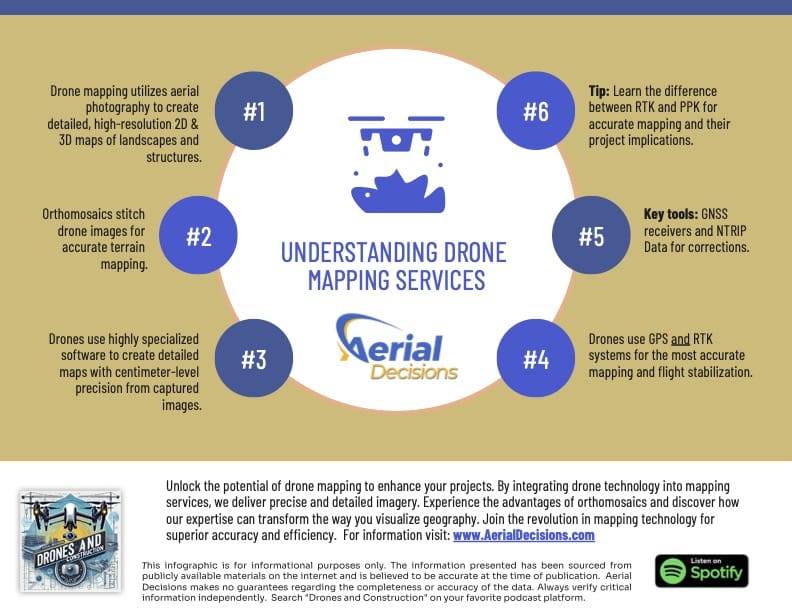
    UNDERSTANDING DRONE MAPPING SERVICES INFOGRAPHIC
    Understanding the Key Principles of Drone Mapping is Essential to Delivering Accurate Maps.

    What Is Drone Mapping?

    Imagine you’re putting together a jigsaw puzzle, but instead of individual pieces, you have photos taken from the sky. Drone mapping stitches these photos together to create a seamless, detailed picture of the land below. This is what we call an orthomosaic. It’s like a high-tech quilt made from aerial images, corrected for perspective and distortion, so everything lines up perfectly.

    Drone mapping isn’t just about making maps; it’s about precision and accuracy. Whether you’re in construction, agriculture, or environmental monitoring, a well-made map is like a crystal ball, revealing insights that help you make better decisions.

    Orthomosaics are ortho-rectified images
    Orthomosaics are ortho-rectified images that minimize the impact of the earth’s natural curvature.

    What Are Orthomosaics, and Why Are They Important?

    Orthomosaics are the bread and butter of drone mapping. Think of them as the difference between a hand-drawn treasure map and a detailed GPS-enabled city map. While the treasure map might get you in the ballpark, the city map ensures you find the exact address.

    These stitched-together images are incredibly accurate, allowing you to measure areas, calculate volumes, and even identify small changes over time. For example, in construction, orthomosaics help track progress and ensure everything is on track—literally and figuratively.

    How Are Drone Maps Created?

    Creating a drone map is like baking a cake. You need the right ingredients, tools, and a good recipe. The first ingredient is, of course, the drone. Most drones come with GPS systems that help them fly accurately and stay stable in the air. It’s like the autopilot on an airplane, ensuring a smooth ride. GPS alone, however, is like baking a cake without measuring the ingredients—it might look okay, but it won’t be precise.

    This is where additional tools come in. Drones equipped with RTK (Real-Time Kinematic) modules are game-changers. RTK acts like a kitchen scale, measuring everything down to the gram. It provides real-time corrections to the drone’s position, ensuring centimeter-level accuracy. But even RTK isn’t enough without Ground Control Points (GCPs). These are like the landmarks on your treasure map, anchoring your data to the real world.

    To make everything work together, you also need a GNSS receiver and, in most cases, access to an NTRIP (Networked Transport of RTCM via Internet Protocol) subscription. It’s a mouthful, I know, but think of NTRIP as your recipe’s secret ingredient—a little extra something that makes your map exceptionally accurate.

    RTK vs. PPK: What’s the Difference?

    RTK and PPK (Post-Processed Kinematic) are like two chefs with different cooking styles. RTK is all about instant results. It’s like cooking with a pressure cooker, delivering fast, accurate data corrections in real time. PPK, on the other hand, is more like slow cooking. You gather the data during your flight and process it later for even more refined accuracy.

    Both methods have their strengths. RTK is ideal for real-time applications, while PPK shines when you need the highest level of precision. The choice between the two depends on your project’s needs, much like choosing between quick weeknight meals and a gourmet weekend feast.

    A Word of Caution: Accuracy vs. Survey-Grade

    Here’s a crucial point for drone pilots and service providers: avoid claiming that your maps are “survey-grade” unless you’re a licensed surveyor. It’s like calling a home-cooked meal a Michelin-starred dish. While your maps might be highly accurate, using the term “survey-grade” can lead to legal trouble with government agencies and professional surveyors. Instead, focus on highlighting your maps’ precision and practical applications.

    Why Accuracy Matters

    Accurate maps are more than just a nice-to-have; they’re the foundation for decision-making. Imagine a construction site where measurements are off by even a few inches. Those inches could translate into costly mistakes. With tools like RTK, PPK, and GCPs, we ensure our maps are as accurate as possible, providing our clients with reliable data they can trust.

    Final Thoughts

    Drone mapping is an incredible blend of art and science. It’s about taking raw data from the sky and transforming it into actionable insights. By understanding tools like RTK and PPK and embracing best practices, we can create maps that are not only accurate but also impactful.

    To my fellow drone pilots, remember that accuracy is key, but honesty is just as important. Always communicate clearly about what your maps can and cannot do. And to anyone considering drone mapping services, know that you’re not just getting a map—you’re getting a tool to unlock the potential of your project.

    Thanks for joining me on this journey into drone mapping. Whether you’re a seasoned pro or just starting out, I hope this has given you a clearer picture of what’s possible. Fly safe and map responsibly!

    From The Editor:

    Do you need to hire a professional drone service provider for your project?  To speak to an aerial data specialist, fill out a form, email us or for even faster response times, give us a call at (833) FLY-4YOU or (833) 359-4968.  Check out our transparent pricing at https://www.aerialdecisions.com/drone-photography-pricing/ and watch this space as we expand on the above topics and more over the coming weeks and months.  

    If you like this post, feel free to click the share button at the bottom of the page.  We appreciate you helping us by spreading the content we share on our blog.

    Drones and Construction podcast on Spotify
    Stream Drones and Construction podcast on your favorite listening platform.

    Showcase Your Company on the Drones and Construction Podcast! If you’d like to be a featured guest on our podcast, send us an email: info@aerialdecisions.com and one of our crew will get right back to you to share the details.

    About Aerial Decisions

    Aerial Decisions is a Los Angeles-based Drone Services Provider (DSP).  We specialize in providing cutting-edge drone data collection combined with industry leading software solutions tailored for the commercial construction industry. Our mission is to optimize the way enterprise construction projects are managed by offering precise aerial photography, detailed data analysis, and innovative software tools through a network of FAA-certified and insured drone pilots.  Aerial Decisions is not just a drone service provider; we are your strategic partner in commercial construction. Our hands-on approach to understanding your unique requirements and our dedication to excellence ensures that every flight and every data point is optimized for your success. Trust us to be the eyes in the sky that elevate your construction projects to new heights.

  • Outsourcing vs. Building Your Own Construction Drone Team

    Outsourcing vs. Building Your Own Construction Drone Team

    Drones and Construction: What’s Best for Your Construction Business?

    The construction industry is complex, with tight schedules, high costs, and significant safety risks. To thrive in this environment, companies need tools that streamline workflows, enhance safety, and improve decision-making. Enter drones. These high-tech tools are no longer futuristic gadgets—they’re becoming a must-have for construction companies looking to stay competitive. Here’s why:

    Drones and Construction
    Drones, or Unmanned Aerial Vehicles (UAVs), are revolutionizing the construction industry by providing innovative solutions for surveying, monitoring, and managing construction projects.

    Enhanced Progress Monitoring

    Drones provide a bird’s-eye view of your project, offering real-time progress reports. Weekly drone flights can capture high-resolution imagery that’s easy to compare against project timelines and goals. This kind of transparency keeps teams accountable and ensures everyone is on the same page—reducing delays and miscommunication.

    Accurate and Efficient Surveying

    Traditional surveying methods are time-consuming and prone to human error. Drones, equipped with advanced sensors like LiDAR or photogrammetry software, can survey large sites in minutes instead of days. They deliver centimeter-level accuracy, making them ideal for creating topographic maps, calculating volumes of materials, or marking out boundaries.

    Improved Safety

    Construction sites are inherently risky, but drones help minimize hazards by performing tasks that would otherwise put workers in danger. For instance, instead of sending a worker to inspect a roof or monitor progress in a hazardous area, a drone can gather the necessary data remotely. This reduces the likelihood of accidents and ensures compliance with safety regulations.

    Cost Savings

    While drones require an initial investment, they save money in the long run. By streamlining workflows, reducing delays, and preventing costly errors, drones can significantly lower operational costs. According to industry reports, companies using drones for site management have reported up to 20% savings in project costs.

    Better Decision-Making

    Drones deliver high-quality data that empowers construction managers to make informed decisions. From 3D models and thermal imaging to site progress videos, drones offer actionable insights that help optimize resources, reduce waste, and improve project outcomes.

    Faster Documentation and Reporting

    Clients and stakeholders often want detailed updates on project progress. Drones make it easy to create visual reports with aerial imagery, videos, and progress data. These polished updates not only impress stakeholders but also build trust and transparency.

    Competitive Advantage

    Finally, drones are becoming a differentiator in the construction industry. Companies that adopt drone technology gain a competitive edge, showcasing their commitment to innovation, safety, and efficiency.

    Drones have reshaped the construction industry by enhancing progress monitoring, surveying, mapping, and safety management. But if you’re an executive in construction, the question isn’t if you should adopt drone technology—it’s how. Should you outsource services to a professional provider or build an internal team? Let’s break down both options in detail to help you decide.

    Outsourcing Drone Services

    Immediate Expertise at Your Fingertips

    When outsourcing, you’re hiring professionals who are already certified, experienced, and equipped with the latest drone technology. These providers specialize in delivering construction-focused services, such as photogrammetry, thermal imaging, or volumetric calculations, and they know how to interpret the data to improve workflows.

    You don’t have to worry about FAA regulations, insurance, or troubleshooting technical glitches—providers handle all of this for you.

    Cost-Effectiveness Without Sacrificing Quality

    Outsourcing eliminates hefty upfront investments in drones, software, and training. With predictable fees, it’s easier to budget for project-specific needs. Plus, you don’t incur hidden costs like equipment depreciation or re-certifying employees when regulations change.

    Operational Flexibility and Scalability

    Need high-resolution maps for one project and thermal scans for another? Outsourcing allows you to adjust services on-demand. This scalability ensures you’re paying only for what you need when you need it.

    The Downsides

    However, outsourcing does have its limitations. You’ll have less control over drone operations and data handling. In some cases, you may face delays if the service provider has limited availability or their processes don’t align perfectly with your project timelines.

    Building an Internal Drone Team

    Control and Customization

    By creating your own drone team, you gain full control over operations, ensuring workflows are tailored to your specific needs. Your team can design data collection processes that integrate seamlessly with existing systems, such as project management software.

    Developing Internal Expertise

    Your team’s expertise grows over time, fostering innovation and knowledge specific to your company’s unique challenges. An in-house team can adapt faster to on-the-ground needs without waiting for third-party availability.

    Costs: Upfront and Recurring

    This is where it gets tricky. The initial setup includes purchasing drones (often $10,000+ per unit for professional models), software licenses, training programs, and certifications. Add recurring expenses for maintenance, insurance, and staying compliant with FAA regulations.

    For example, each FAA Part 107 certification for your pilots requires fees and renewals, and software licenses can run thousands annually. Long-term, the costs could balance out—but only if your drones are in constant use.

    Operational Challenges

    Building an in-house team requires not just money but time. Hiring, training, and integrating drone operations into your workflow can take 6–12 months. Furthermore, technology evolves rapidly. Keeping up with hardware upgrades and software updates becomes your responsibility.

    Build or Buy Analysis
    Should you outsource services to a professional provider or build an internal team?

    Making the Decision

    Frequency of Drone Use: If your projects require frequent drone operations, building a team could save money in the long term. For occasional needs, outsourcing is far more practical.

    Budget Considerations: For companies without significant upfront capital or the desire to take on ongoing expenses, outsourcing is the smarter choice.

    Control Needs: If data security and operational customization are critical to your business, an in-house team might be worth the investment.

    Scalability: Outsourcing provides unmatched flexibility. Need 10 drones for one project and none the next? No problem.

    Summary: The Pros and Cons

    Outsourcing Drone Services

    Pros: Cost-effective, fast setup, high expertise, flexible scaling.

    Cons: Less control, potential delays, data security risks.

    Building an Internal Drone Team

    Pros: Total control, customized workflows, internal expertise.

    Cons: High upfront costs, long setup time, resource-intensive maintenance.

    Final Thoughts

    There’s no one-size-fits-all answer to the “build or buy” question. Instead, the right choice depends on your company’s priorities, project frequency, and budget. If you’re not ready for the steep learning curve and investment of an in-house team, start by outsourcing. As your drone needs grow, you can always revisit the idea of building your internal team. With a strategic approach, you’ll maximize the ROI of this game-changing technology, no matter which path you take.

    From The Editor:

    Do you need to hire a professional drone service provider for your project?  To speak to an aerial data specialist, fill out a form, email us or for even faster response times, give us a call at (833) FLY-4YOU or (833) 359-4968.  Check out our transparent pricing at https://www.aerialdecisions.com/drone-photography-pricing/ and watch this space as we expand on the above topics and more over the coming weeks and months.  

    If you like this post, feel free to click the share button at the bottom of the page.  We appreciate you helping us by spreading the content we share on our blog.

    About Aerial Decisions

    Aerial Decisions is a Los Angeles-based Drone Services Provider (DSP).  We specialize in providing cutting-edge drone data collection combined with industry leading software solutions tailored for the commercial construction industry. Our mission is to optimize the way enterprise construction projects are managed by offering precise aerial photography, detailed data analysis, and innovative software tools through a network of FAA-certified and insured drone pilots.  Aerial Decisions is not just a drone service provider; we are your strategic partner in commercial construction. Our hands-on approach to understanding your unique requirements and our dedication to excellence ensures that every flight and every data point is optimized for your success. Trust us to be the eyes in the sky that elevate your construction projects to new heights.

  • How Drones and Reality Data Capture are Transforming Construction Projects

    How Drones and Reality Data Capture are Transforming Construction Projects

    As a Drone Service Provider (DSP) focused on the construction industry, we’ve witnessed how drone reality data capture technology is transforming how we approach our clients critical construction projects. From pre-bid site analysis to final closeout inspections, reality capture technologies are collectively streamlining project workflows, enhancing safety, and providing deeper insights throughout each phase of construction. It still surprises me how often I hear industry professionals talk about drones in the limited scope of providing pretty pictures and videos. Nothing could be further from the truth.

    In this post, we explore how drones and reality capture technology are being used during the Pre-Bid & Pre-Construction phase, the active Construction phase, and the Inspection & Closeout phase.

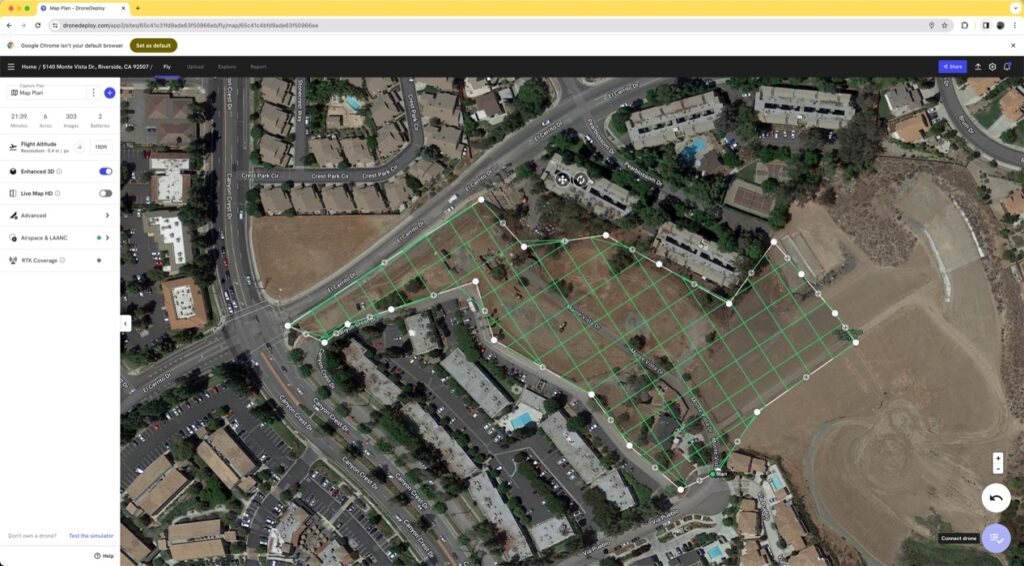
    Flight plan boundaries defined by mapping software
    Flight plan boundaries defined by mapping software

    Pre-Bid & Pre-Construction Phase

    Surveying and Concept & Design
    In the early stages of a project, having accurate and detailed site information is crucial for developing a reliable design. With aerial reality data capture, drones generate high-resolution topographic maps and 3D models that give construction teams an in-depth understanding of site conditions. These data help architects and engineers refine their designs early on, reducing the likelihood of costly revisions later.

    360 Reality Capture for Pre-Construction Planning
    Adding 360 reality capture to the pre-construction phase brings even more clarity to the planning process. By combining aerial drone surveys with 360 walkthroughs, stakeholders can virtually explore the entire site in an immersive, high-resolution format. This is especially useful for off-site team members, enabling them to inspect and interact with the site remotely. These virtual site visits allow for more informed decision-making during the bidding and design phases, while also helping construction managers anticipate potential challenges.

    Site Planning and Procurement
    In addition to design, accurate site data aids in efficient site planning and resource procurement. With real-time aerial data, construction teams can plan for infrastructure placement (e.g., utilities, drainage systems) based on the actual terrain. This information is also valuable for procurement teams, ensuring they order the right quantities of materials based on current site conditions. 360 reality capture offers another layer of transparency here, allowing procurement teams and project managers to virtually inspect site logistics and visualize how equipment and resources are deployed.

    Commercial construction project with floor plan layer
    Commercial construction project with floor plan layer

    Construction Phase

    Earthworks: Cut/Fill Analysis and Stockpile Measurements
    During the construction phase, drones are instrumental in managing earthworks. They perform cut/fill analysis quickly and with high precision, helping your team optimize earthmoving operations. Drones also assist in stockpile measurements, providing real-time data on material availability and consumption, which helps manage resources more effectively and prevents costly delays.

    Tracking Site Progress: As-Designed vs. As-Built
    Drones provide an easy and efficient way to monitor site progress, capturing aerial imagery and data at regular intervals. This allows project managers to compare as-built conditions with the original design, ensuring that the project stays on track and meets specifications. Drone data allows for early detection of deviations which prevents rework and helps you stay on schedule.

    360 Walkthroughs for Site Inspections (Exterior and Interior)
    Beyond aerial data, 360 reality capture offers an immersive experience that is extremely valuable for both exterior and interior site inspections. A 360-degree walkthrough allows team members and clients to virtually “walk” through the site at any time, offering a clear view of construction progress. This is particularly useful for off-site stakeholders who need to stay updated but cannot physically visit the project. These walkthroughs also serve as visual documentation for safety, quality control, and project updates, capturing every detail from various angles.

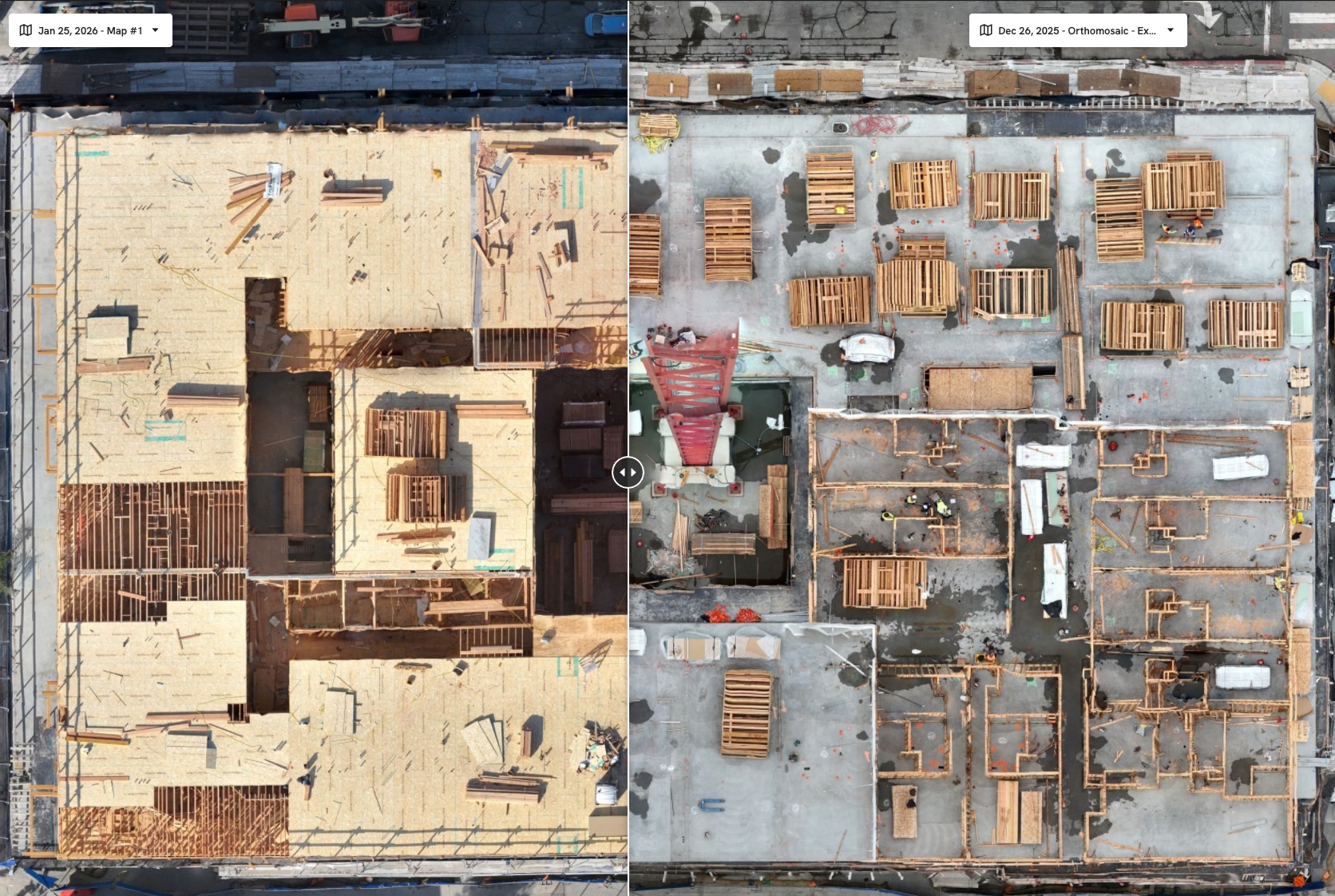
    Construction site before and after image
    Drone processing software provides time-based site progress comparisons.

    Inspection and Closeout Phase

    Drone Façade Inspections
    In the final stages of construction, inspections become critical to ensuring that all work meets quality standards. Traditionally, façade inspections—especially for tall or hard-to-reach areas—required scaffolding or other heavy equipment. Now, drones equipped with high-resolution cameras can conduct façade inspections more safely and efficiently. Drones capture detailed imagery of exterior surfaces, identifying any defects like cracks, leaks, or structural issues before project closeout.

    360 Reality Capture for Closeout and Inspections
    At the closeout phase, 360 walkthroughs provide an interactive record of the completed project. This is incredibly valuable for final inspections, as it allows stakeholders to review both exterior and interior spaces in detail without being on-site. This virtual documentation also aids in handing over the project to the client, ensuring that they have a comprehensive visual record of the completed work.

    Thermal Imaging for HVAC and Building Inspections
    Drones equipped with thermal imaging cameras are essential for inspecting HVAC systems and detecting heat loss or insulation issues. Thermal imaging ensures that the building is energy-efficient and that there are no hidden defects, such as leaks or poorly installed insulation, that could lead to costly repairs down the line.

    Documentation: 3D As-Builts and Digital Assets
    For closeout documentation, drones provide accurate 3D as-builts that serve as a permanent record of the completed structure. These models are invaluable for future renovations, facility management, and legal documentation. Additionally, 360 walkthroughs are used as digital assets for marketing purposes, which helps you showcase the finished project to future clients or in portfolio presentations.

    Liability Management and Warranty Fulfillment
    Another critical use case for drones and 360 reality capture is liability management. By providing high-resolution documentation of the completed project, you’ll have the necessary evidence to protect your company from insurance claims or disputes that might arise post-construction. This detailed documentation is also crucial for fulfilling warranties, ensuring that you have proof of the project’s condition at the time of handover.

    Summary of Benefits

    By combining the power of aerial reality data capture and 360 walkthrough technology, construction companies can gain significant advantages throughout every phase of the construction lifecycle. From precise surveying and virtual site visits during Pre-Bid & Pre-Construction, to monitoring site progress and streamlining inspections during the Construction phase, these technologies improve efficiency, reduce costs, and provide stakeholders with more transparency and control. Finally, during the Inspection and Closeout phase, drones and 360 walkthroughs ensure comprehensive documentation, helping manage liabilities and ensure warranty compliance.

    What Next?

    If you’re ready to integrate aerial reality data capture and 360 walkthroughs into your construction workflows, reach out to us at Aerial Decisions. We specialize in providing drone and 360 reality capture solutions tailored to your project’s needs. Contact one of our construction sales executives today to set up a free consultation and learn how these technologies can take your projects to the next level.

    About Aerial Decisions

    Aerial Decisions is a Los Angeles-based Drone Services Provider (DSP).  We specialize in providing cutting-edge drone data collection combined with industry leading software solutions tailored for the commercial construction industry. Our mission is to optimize the way enterprise construction projects are managed by offering precise aerial photography, detailed data analysis, and innovative software tools through a network of FAA-certified and insured drone pilots.  Aerial Decisions is not just a drone service provider; we are your strategic partner in commercial construction. Our hands-on approach to understanding your unique requirements and our dedication to excellence ensures that every flight and every data point is optimized for your success. Trust us to be the eyes in the sky that elevate your construction projects to new heights.

  • Regulations for Using Drones on Construction Sites in 2024

    Regulations for Using Drones on Construction Sites in 2024

    As a commercial drone pilot, I’ve seen firsthand how drones can revolutionize construction projects. From site surveys to progress tracking, drones offer unparalleled efficiency and accuracy. However, integrating drones into your construction workflow isn’t as simple as buying the latest technology. Understanding and adhering to 2024 FAA drone regulations is crucial to avoid legal and safety issues.

    Understanding FAA Drone Regulations

    The Federal Aviation Administration (FAA) regulates all drone operations in the U.S., and construction companies must navigate these regulations to operate drones legally and safely. Key FAA regulations include restrictions on flying in controlled airspace, maintaining a maximum altitude of 400 feet, and keeping the drone within the operator’s line of sight. These rules are designed to ensure that drones do not interfere with other air traffic and to minimize the risk of accidents.

    The FAA also requires that drones used for commercial purposes, such as on construction sites, must be registered, and the operator must hold a Remote Pilot Certificate under Part 107. This certification ensures that the operator understands the airspace regulations, weather patterns, and other critical factors that impact safe drone operation. The FAA’s Aloft Air Control app is a valuable tool for checking local airspace restrictions before any flight.

    Part 107 Test Center
    The Part 107 certification is an integral first step to learning the FAA’s drone rules of the road.

    The Importance of Part 107 Certification

    Part 107 certification is more than just a legal requirement; it’s a badge of professionalism and safety. To obtain this certification, operators must pass a knowledge test covering topics like airspace classifications, aviation weather, and emergency procedures. This certification demonstrates that the operator has the necessary knowledge to conduct safe and compliant drone operations.

    For construction companies, hiring a Part 107-certified operator means you’re working with someone who understands the complexities of drone flight. It also protects your company from potential legal repercussions, as operating without proper certification can result in fines or other penalties from the FAA. The FAA’s Part 107 Guide offers detailed information on the certification process.

    Drone fine letter
    No one wants to receive a fine letter from the FAA.

    Penalties and Risks of Non-Compliance

    Operating a drone without adhering to 2024 FAA drone regulations can result in significant penalties. Fines can reach up to $27,500 for civil violations and $250,000 for criminal violations, not to mention potential jail time. But the risks extend beyond legal penalties. Non-compliant drone operations can lead to accidents, putting your workers and the public at risk. This, in turn, can lead to lawsuits and increased insurance premiums.

    Moreover, many insurance providers require proof of FAA compliance before they’ll cover drone operations. Operating outside the law could invalidate your insurance coverage, leaving your company exposed to financial risk in the event of an accident. While there are many commercial drone insurance options to choose from, one I personally use is Droneinsurance.com (now part of Skywatch.ai). I like them for their simple plans (annual, monthly or pay as you go) and their helpful customer service. For more information on drone insurance, check out DroneInsurance.com.

    Ongoing Changes in Drone Regulation

    The drone regulation landscape is continually evolving as technology advances and drone usage increases. Staying informed about these changes is critical for maintaining compliance. The FAA regularly updates its regulations, and new rules can impact where and how you can operate drones. It’s essential to regularly review FAA updates and participate in continuous education to ensure your operations remain compliant. You can stay updated by visiting the FAA’s UAS Newsroom.

    Risk vs. Reward: DIY Drone Operation in a Commercial Setting

    It might be tempting to handle drone operations in-house to save on costs, but the risks often outweigh the rewards. While DIY drone operation may appear cost-effective initially, the potential legal liabilities, safety concerns, and insurance complications can lead to significant unforeseen expenses. In contrast, professional drone service providers invest heavily in understanding and adhering to all 2024 drone regulations and safety protocols, minimizing risks to your company.

    The Value of Professional Drone Service Providers (DSPs)

    As a professional drone service provider, I’ve invested time and resources into obtaining the necessary certifications and staying abreast of regulatory changes. This expertise allows me to navigate the complex regulatory landscape, ensuring that your construction projects benefit from drone technology without the associated risks.

    Professional providers bring experience and specialized knowledge that can prevent costly mistakes, making them a valuable partner in integrating drones into your construction workflow.

    Conclusion

    There is no doubt integrating drones into your construction projects can offer significant benefits, but it requires a deep understanding of the 2024 FAA drone regulations and compliance. The risks of operating without this knowledge are too great to ignore. That’s why I always recommend consulting with an established drone service provider who can help you navigate these complexities, ensuring your operations are safe, legal, and efficient.

    For the latest information on drone regulations and how to integrate drones into your construction workflows, consider reaching out to a professional drone service provider. It’s an investment in peace of mind and project success.
    From The Editor:

    Do you need to hire a professional drone service provider for your project?  To speak to an aerial data specialist, fill out a form, email us or for even faster response times, give us a call at (833) FLY-4YOU or (833) 359-4968.  Check out our transparent pricing at https://www.aerialdecisions.com/drone-photography-pricing/ and watch this space as we expand on the above topics and more over the coming weeks and months.  

    If you like this post, feel free to click the share button at the bottom of the page.  We appreciate you helping us by spreading the content we share on our blog.

  • What is the Future of Drones in Construction?

    What is the Future of Drones in Construction?

    In the rapidly evolving landscape of commercial construction, drone technology has emerged as a game-changer. The adoption of drones in project management is no longer a novelty but a growing necessity, driven by the need for enhanced efficiency, safety, and cost-effectiveness. But just how prevalent is this technology in the construction industry today, and what are the implications of adopting—or delaying—the use of drones?

    The First Time I Saw Drones in Construction

    I remember the first time I saw a drone zip through the air over a construction site. It was like watching a sci-fi movie—except this was real, and it wasn’t just about impressing the crowd. That little gadget was gathering data faster than I could finish my second cup of coffee. It mapped the site, identified potential issues, and even gave us a live feed that made me feel like I was in a high-stakes video game. I thought, “This is it. This is the future.”

    Turns out, I wasn’t the only one thinking this way. By 2024, about 20% of the big construction firms had jumped on the drone bandwagon. Why? Because these flying machines are changing the game. The construction drone market is expected to hit $6.99 billion by the end of this year, and experts are predicting it’ll soar to $12.27 billion by 2028. That’s some serious growth.

    Features and Benefits Driving Early Drone Adoption

    Early adopters of drone technology in construction have been quick to leverage its many advantages. Drones provide real-time aerial footage and comprehensive site mapping, which are invaluable for pre-planning, progress tracking, and safety inspections. For instance, drones can create 3D maps and orthomosaic images that offer precise measurements and detailed visual data. This capability allows project managers to identify potential issues before they escalate, ultimately reducing the risk of costly delays and rework.

    Additionally, drones improve site safety by minimizing the need for workers to enter hazardous areas. Instead of sending a worker to inspect the edge of a sinkhole or the roof of a condemned building, a drone can perform the task safely from the air. This not only protects workers but also ensures that safety inspections are thorough and frequent.

    The Cost of Ignoring the Future

    Here’s where it gets serious, though. If you’re dragging your feet on adopting drones for construction, you might want to reconsider. Sure, traditional methods have worked fine for years, but the cost of sticking to the old ways is creeping up. Drones cut down on labor, reduce the need for expensive equipment like cranes, and can survey a site faster than I can finish that aforementioned cup of coffee (seriously, coffee is a theme here).

    But the real kicker? The opportunity cost. If you’re not using drones, your competitors probably are, and they’re reaping the benefits—better project timelines, improved safety records, and lower costs. Meanwhile, you’re stuck with outdated methods and probably a bit more mud on your boots than necessary.

    Looking Ahead: The Future of Drones in Construction

    As a Drone Service Provider (DSP), I’m excited about the future of this technology in the construction industry. The rapid growth of the construction drone market is a clear indication that drones are not just a passing trend but a fundamental shift in how projects are managed and executed.

    Construction Worker Measuring Rebar
    Construction worker evaluates stockpile needs

    For construction companies looking to maintain a competitive edge, the integration of drone services is no longer optional—it’s essential. The ability to deliver real-time, accurate data, enhance safety, and reduce costs makes drones an invaluable asset on any construction site.

    In the coming years, I anticipate that we’ll see even more innovative applications of drone technology in construction, from AI-driven analytics to fully automated site monitoring. The sky, quite literally, is the limit.

    If you’re in the construction industry and haven’t yet explored how drones can benefit your projects, now is the time to start. The future is here, and it’s flying high.

    From The Editor:

    Do you need to hire a professional drone service provider for your project?  To speak to an aerial data specialist, fill out a form, email us or for even faster response times, give us a call at (833) FLY-4YOU or (833) 359-4968.  Check out our transparent pricing at www.aerialdecisions.com and watch this space as we expand on the above topics and more over the coming weeks and months.  

    If you like this post, feel free to click the share button at the bottom of the page.  We appreciate you helping us by spreading the content we share on our blog.

  • The Future of Drones in Building Information Modeling (BIM)

    The Future of Drones in Building Information Modeling (BIM)

    Hey there! I’m always excited to share with you how drones are making waves in the construction industry, especially when it comes to Building Information Modeling (BIM). As a Drone Service Provider (DSP), We’ve seen firsthand the incredible impact these flying marvels have on project planning, design, and management. Let’s dive into how drones are currently being used to integrate with BIM software and why this synergy is a game-changer for construction.
    Understanding BIM

    First things first, let’s talk about BIM. Building Information Modeling (BIM) is an intelligent, model-based process that gives you insights and tools to plan, design, construct, and manage buildings and infrastructure more efficiently. Think of it as a super-detailed digital blueprint that helps everyone involved in a project stay on the same page. The beauty of BIM is that it integrates diverse data to facilitate better decision-making and coordination among stakeholders.

    The Role of Drones in Construction

    Now, enter drones. These little guys have become indispensable in construction. From site surveys and inspections to progress tracking, drones do it all. They can quickly gather vast amounts of data, access hard-to-reach areas, and provide high-resolution imagery and 3D mapping. It’s like having a bird’s-eye view of your project whenever you need it.

    Here is the image of a construction engineer at his computer, examining an engineering diagram of a commercial skyscraper.
    A typical construction engineer at his computer, examining an engineering diagram of a commercial skyscraper.

    Integration of Drones with BIM

    Here’s where things get really exciting. When we integrate drone-captured data with BIM models, the results are astounding. Drones can capture aerial images and videos, generate 3D point clouds, and create real-time updates for BIM models. Using tools and software like Autodesk’s ReCap and Bentley’s ContextCapture, we can seamlessly incorporate drone data into BIM workflows. This integration brings a whole new level of detail and accuracy to BIM models.

    Advantages of Drone-BIM Integration

    Let me tell you about some of the amazing benefits we’ve seen:

    1. Enhanced Accuracy: Drones provide high-precision data, which means our BIM models are incredibly accurate.
    2. Improved Visualization: Real-time updates and detailed 3D maps give us a better visual understanding of the project, making planning and design more efficient.
    3. Efficient Monitoring: With drones, we can monitor construction sites in real time, ensuring our BIM models are continuously updated.
    4. Streamlined Communication: The detailed and accurate data from drones improve communication and collaboration among project stakeholders, reducing errors and delays.
    3-D image of the multifunctional community recreational center under construction
    3-D image of the multifunctional community recreational center under construction

    Future Potential and Innovations

    Looking ahead, the future of Drones in Building Information Modeling is bright. Advancements in AI, machine learning, and autonomous flight technology will further enhance what drones can do. Imagine drones performing more complex tasks autonomously—it’s not far off! These innovations will bring even greater efficiencies and cost savings to the construction industry.

    Challenges and Considerations

    Of course, integrating drones with BIM isn’t without its challenges. Construction managers have had to tackle technical and operational issues, like data processing and integration. Regulatory and legal considerations are also a big deal, as drone pilots, in-house and outsourced, must all comply with local and federal aviation laws. But with best practices and standard operating procedures, we’ve been able to navigate these challenges successfully.

    Conclusion

    In a nutshell, drones are revolutionizing BIM by providing detailed, real-time data that enhances the accuracy and efficiency of construction projects. Staying updated with these technological advancements is crucial for harnessing the full potential of drone-BIM integration.

    So, there you have it! Drones and BIM are a match made in construction heaven, and I’m thrilled to be a part of this exciting journey. If you’re in the construction industry, it’s time to explore how drones can transform your projects. Happy building!

    Additional Resources

    Visuals and Media

    From The Editor:

    Do you need to hire a professional drone service provider for your project?  To speak to an aerial data specialist, fill out a form, email us or for even faster response times, give us a call at (833) FLY-4YOU or (833) 359-4968.  Check out our transparent pricing at https://www.aerialdecisions.com/drone-photography-pricing/ and watch this space as we expand on the above topics and more over the coming weeks and months.  

    If you like this post, feel free to click the share button at the bottom of the page.  We appreciate you helping us by spreading the content we share on our blog.

  • Top Drone Software Features for the Construction Industry

    Top Drone Software Features for the Construction Industry

    I love introducing prospective clients to the benefits of advanced drone software for commercial construction and seeing their excitement as they realize its potential for their projects. There’s a spark in their eyes when they understand how helpful drones can be, and you can see their minds racing with all the potential benefits.

    Drone software for construction progress monitoring is advancing as fast as, if not faster than, drone technology itself. Project managers who leverage leading drone software can significantly enhance their project management and efficiency across all phases of construction: pre-construction, construction, and post-construction.

    Why Hire a Drone Service Provider Using Advanced Drone Software?

    Advanced drone software is revolutionizing construction progress monitoring with its sophisticated capabilities. Here are five key features that project managers can utilize to better manage ongoing construction projects through all three phases:

    Enhanced Data Accuracy and Detail

    Pre-construction: During the initial phase, drone software helps in generating inch-accurate topographical surveys and 3D models of the site. This precise data is crucial for site planning and assessing site conditions before breaking ground.

    Construction: As the project progresses, drones capture high-resolution imagery to document key structural elements and track daily progress. This ensures that every detail is accurately recorded and monitored.

    Orthomosaic of Commercial Construction Site
    Orthomosaics are Invaluable Tools for Construction Project Managers

    Post-Construction: At the project’s conclusion, drone software provides detailed documentation of the completed structure, including as-built 3D models that reflect the final state of the project for handover to clients and stakeholders.

    Improved Efficiency and Cost Savings

    Pre-construction: Automated site surveys and volumetric measurements of stockpiles and earthworks reduce the need for time-consuming manual labor. This accelerates the site preparation phase and optimizes resource allocation.

    Construction: During the build, regular drone flights streamline progress monitoring, allowing for real-time adjustments and minimizing delays. This reduces costs associated with project overruns and labor inefficiencies.

    Post-Construction: Efficient final inspections and comprehensive documentation ensure a smooth handover process, saving time and reducing costs related to post-project corrections and adjustments.

    Real-Time Progress Monitoring

    Pre-construction: Drone progress monitoring can be done weekly, bi-weekly, or monthly depending on the project’s needs. Initial site assessments and planning can be continuously updated with real-time data from regular drone flights, ensuring that any changes in site conditions are promptly addressed.

    Construction site stockpile measurements
    Drone processing software can easily assist project managers measure site inventory

    Construction: Throughout the construction phase, advanced drone software enables frequent and consistent monitoring, providing real-time updates and progress reports. Stockpile measurements and materials inventory are easy to measure and share with internal teams responsible for monitoring and re-ordering important equipment and supplies. This helps project managers quickly identify and rectify issues, ensuring the project remains on schedule.

    Post-Construction: After construction is complete, real-time data from drones can be used to verify that all aspects of the project meet the required specifications, ensuring quality and completeness.

    Enhanced Safety for Company Personnel

    Pre-construction: Drones can safely survey potentially hazardous areas of the site, identifying risks before construction begins and helping to plan safer workflows.

    Construction: During the build, drones reduce the need for personnel to access dangerous or hard-to-reach areas for inspections, which are typically done using scaffolding, swing stages, man lifts, or bucket trucks. This minimizes the risk of accidents and enhances overall site safety.

    crew on scaffolding inspecting building facade
    Construction crews take significant risks to inspect building exteriors on scaffolding inspecting building facades.

    Post-Construction: Final inspections using drones can safely document the condition of elevated or hazardous areas, ensuring thorough safety assessments without exposing workers to risks.

    Better Stakeholder Communication and Collaboration

    Pre-construction: High-resolution images and 3D models created during the planning phase can be shared with all stakeholders to ensure everyone has a clear understanding of the project scope and site conditions from the outset.

    Construction: Regularly updated progress reports, including orthomosaic maps and 3D models, enhance communication among project teams and stakeholders, ensuring that everyone is informed and aligned throughout the build.

    Engineer Working on Construction Plans on Computer
    Architects and Engineers Use a Variety of Software Applications to Manage Commercial Construction Projects

    Post-Construction: Detailed final reports and visual documentation facilitate effective communication during the project handover, ensuring that clients and stakeholders have a comprehensive understanding of the completed work.

    Here are three case studies highlighting the success of commercial construction companies using drone data collection software like DroneDeploy:

    McCarthy Building Companies

    McCarthy Building Companies, a leading construction firm, has significantly benefited from integrating drones into their project workflows. By using drone data, they improved communication on-site and with stakeholders, keeping projects on track and under budget. Ryan Moret, Field Solutions Manager at McCarthy, emphasized that drones provide valuable aerial insights that improve progress tracking and help catch problems early, preventing costly delays. McCarthy Building Companies Case Study

    Brasfield & Gorrie General Contractors

    Brasfield & Gorrie, one of the largest privately held construction firms in the U.S., implemented drones to enhance their operational efficiency. They reported a dramatic reduction in the time and cost associated with traditional surveying methods. Hunter Cole from Brasfield & Gorrie noted that using drones reduced a process that typically took 2-3 weeks and tens of thousands of dollars to just 1-4 days with minimal investment in equipment and software. The Rise of Drones in Construction

    Chasco Constructors

    Chasco Constructors leveraged drones to monitor progress across 17 job sites in Texas. This approach allowed them to track the construction process more efficiently, ensuring timely completion and adherence to project specifications. The integration of drone technology helped Chasco save time and resources, highlighting the practical benefits of real-time aerial data in large-scale construction management. Chasco Case Study

    These case studies illustrate how leading construction companies are successfully using drone project analysis software to improve project management, enhance safety, and achieve significant cost and time savings.

    Conclusion

    By hiring a drone service provider that uses advanced drone software, you’ll be leveraging cutting-edge technology to enhance data accuracy, improve efficiency, ensure safety, and foster better communication throughout all phases of construction. Let us help you take your construction project management to the next level with our comprehensive drone services. Reach out to us today to learn more about how we can support your project with our advanced drone solutions.

    From The Editor

    Do you need to hire a professional drone service provider for your project?  To speak to an aerial data specialist, fill out a form, email us or for even faster response times, give us a call at (833) FLY-4YOU or (833) 359-4968.  Check out our transparent pricing at www.aerialdecisions.com and watch this space as we expand on the above topics and more over the coming weeks and months.  

    If you like this post, feel free to click the share button at the bottom of the page.  We appreciate you helping us by spreading the content we share on our blog.