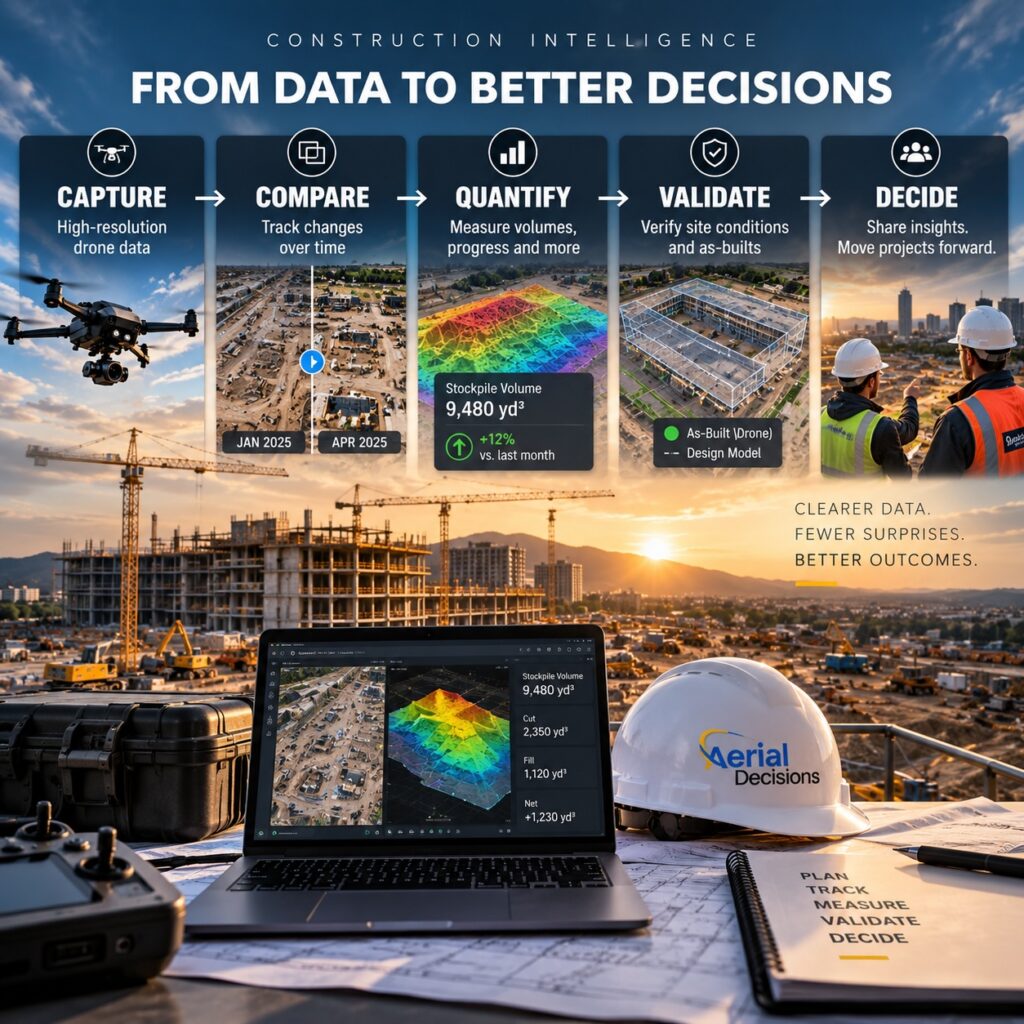
Tag: Construction Progress Monitoring

  • Photogrammetry in Commercial Construction: Turning Drone Images into Measurable Data

    Photogrammetry in Commercial Construction: Turning Drone Images into Measurable Data

    Introduction: Bringing Measurable Clarity to the Jobsite

    Most commercial construction leaders don’t need more photos — they need clarity they can measure.

    Across Southern California projects we support at Aerial Decisions, one of the most common questions we hear from General Contractors and Owners is:

    • Are we progressing according to plan?
    • Are quantities aligning with expectations?
    • Can we validate what actually changed?
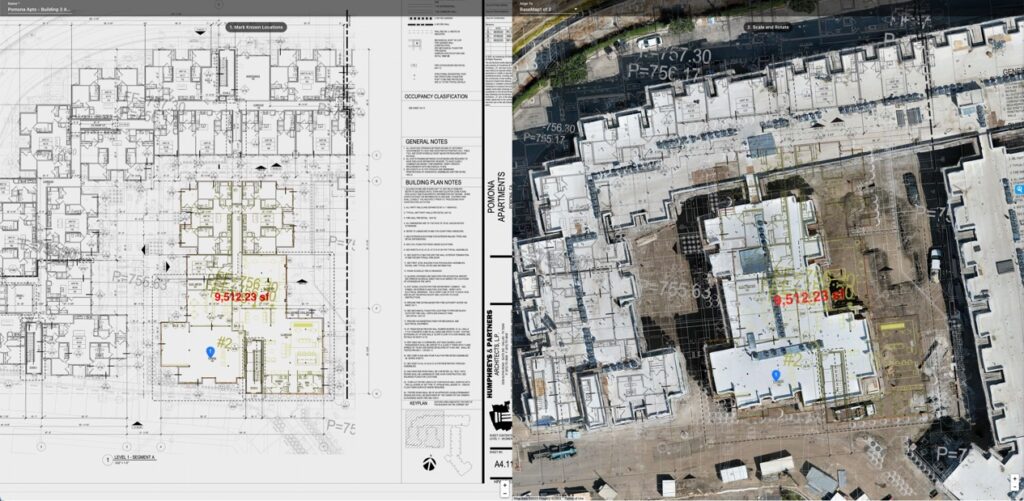
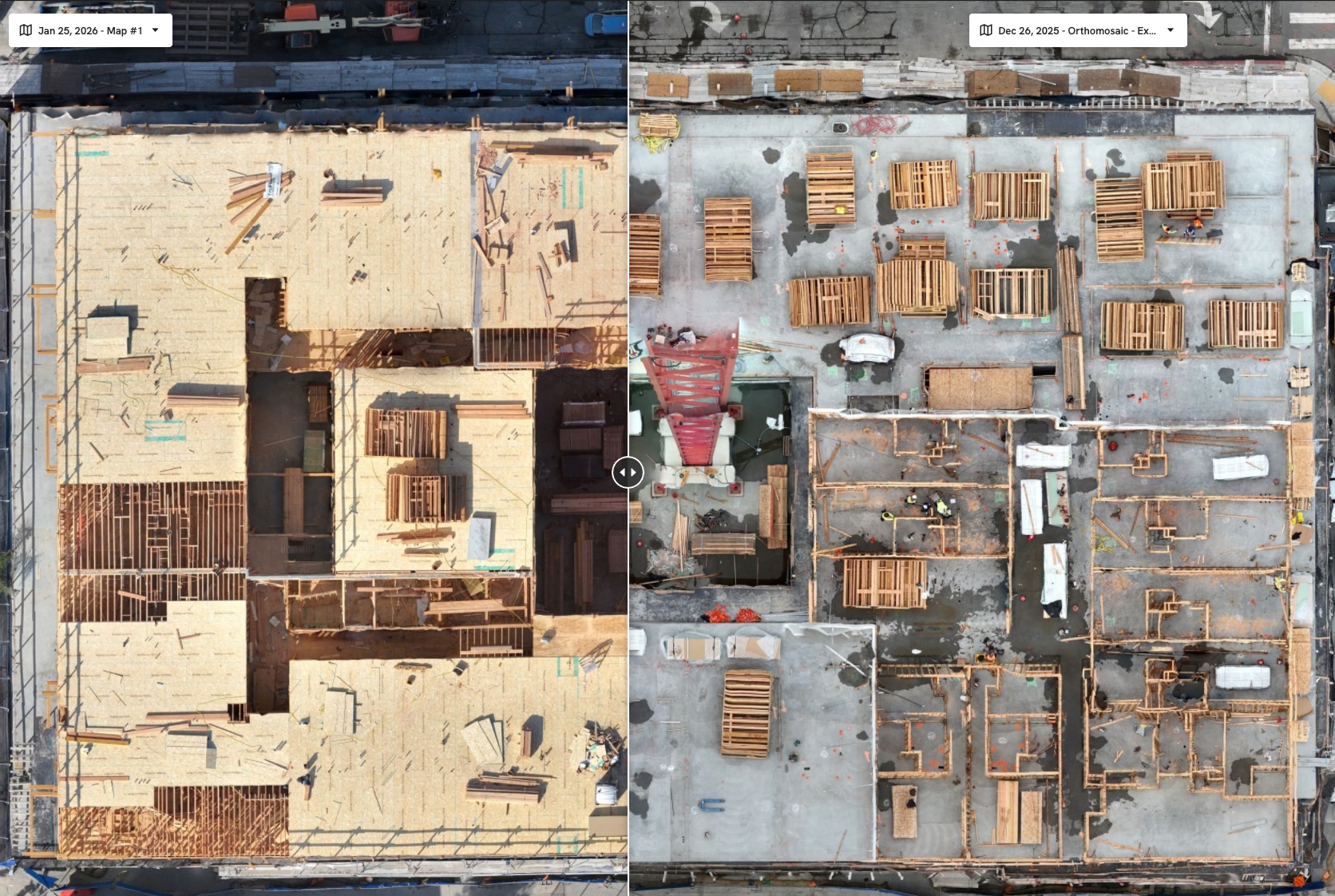
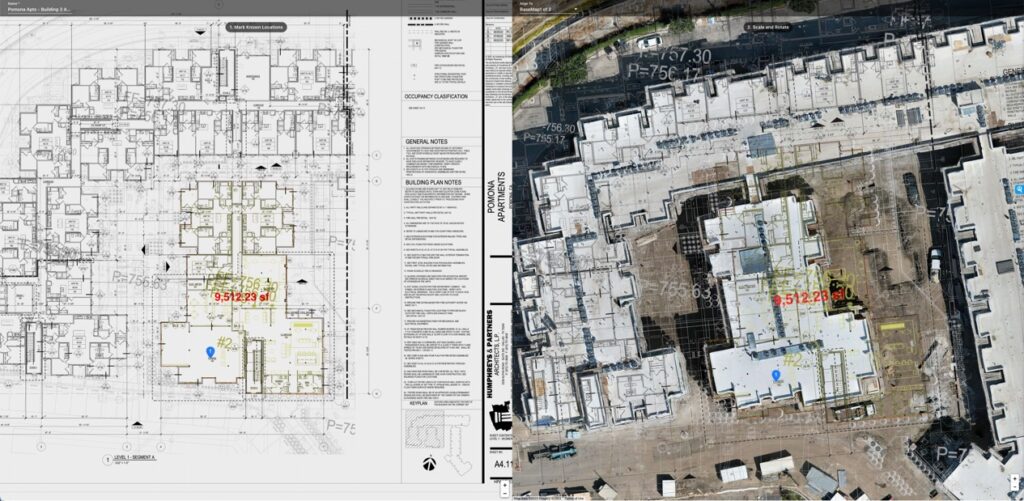
    Construction Map Overlay
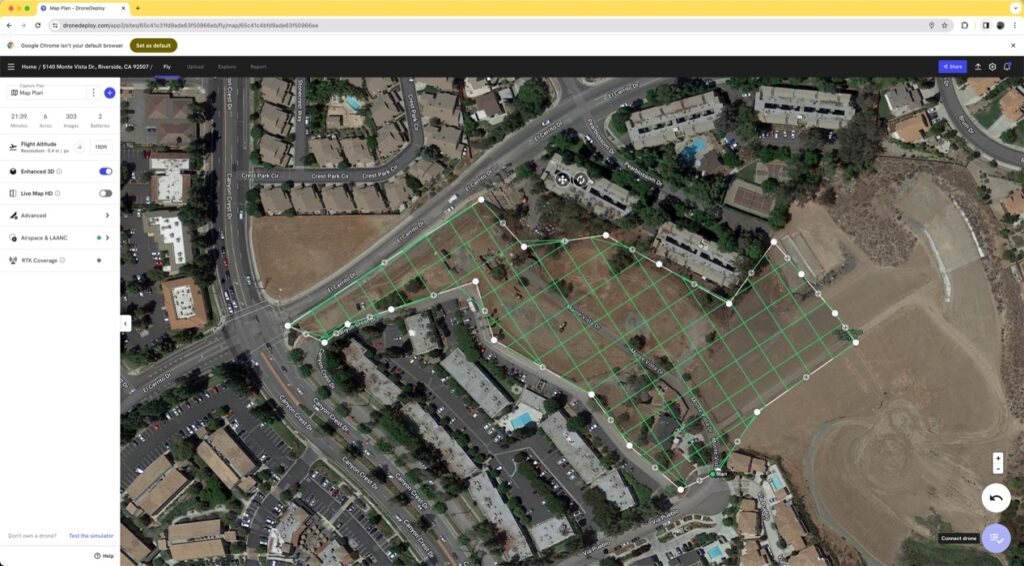
    Creating Measurable Data Starts with an Integrated Planning Approach

    Photogrammetry is what allows us to answer those questions with data — not opinion.

    When structured correctly, photogrammetry turns hundreds (sometimes thousands) of drone images into accurate, measurable site models that support better decisions, cleaner reporting, and stronger documentation throughout the lifecycle of a commercial construction project.

    What Is Photogrammetry in Commercial Construction?

    In commercial construction, photogrammetry is the process of capturing overlapping aerial images with a drone and using specialized software to convert those images into accurate 2D maps, 3D models, and measurable datasets such as orthomosaics, point clouds, and digital terrain models.

    Instead of simply viewing a jobsite, teams can:

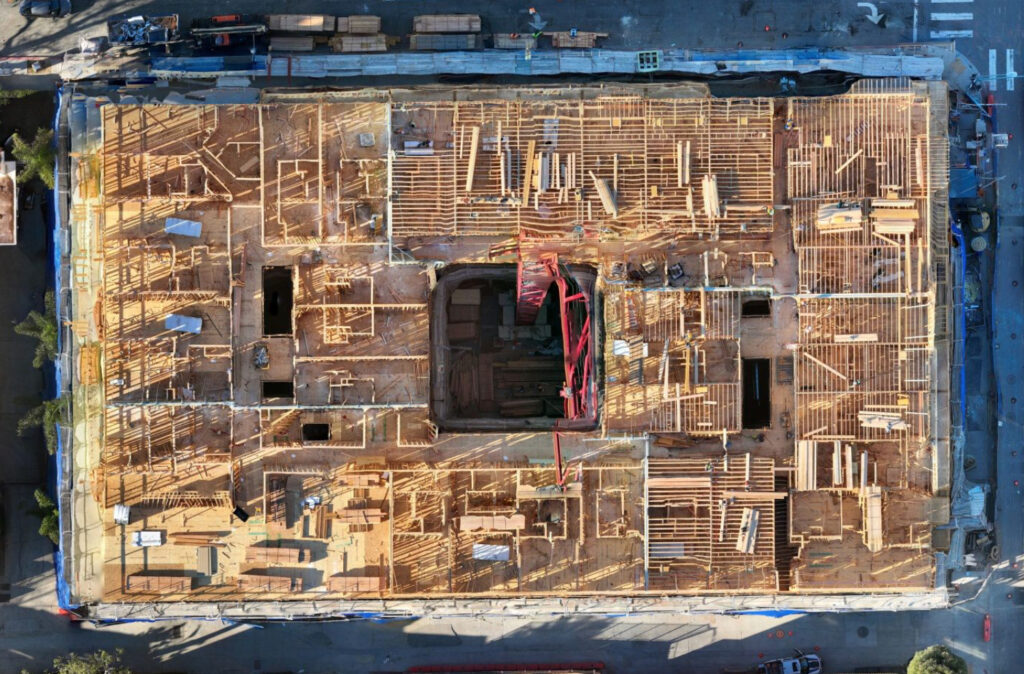
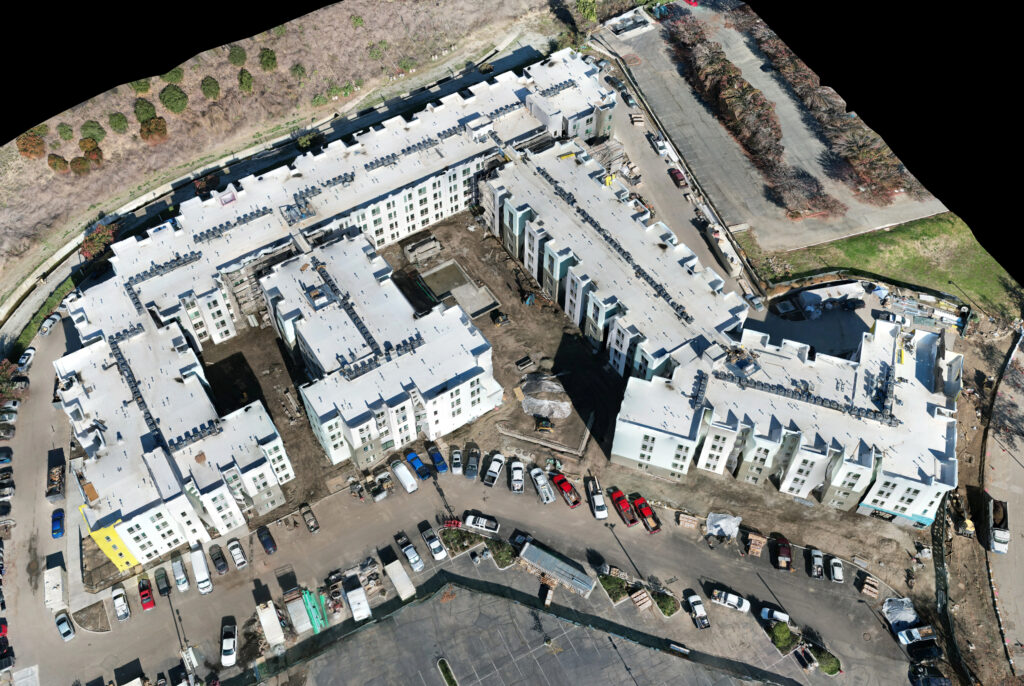
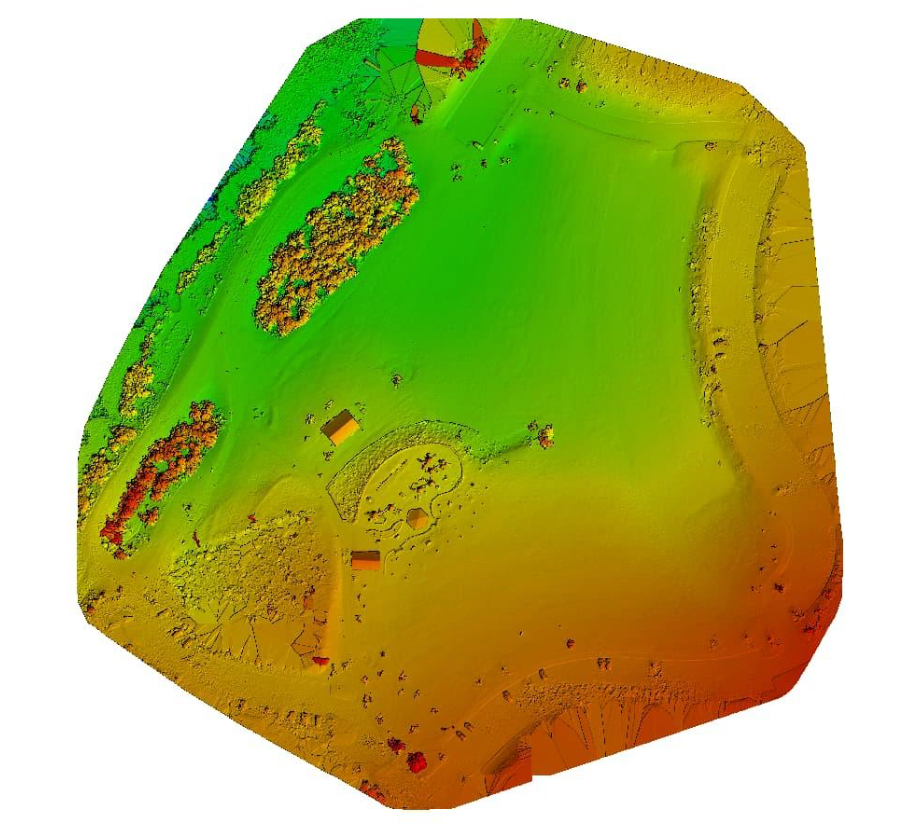
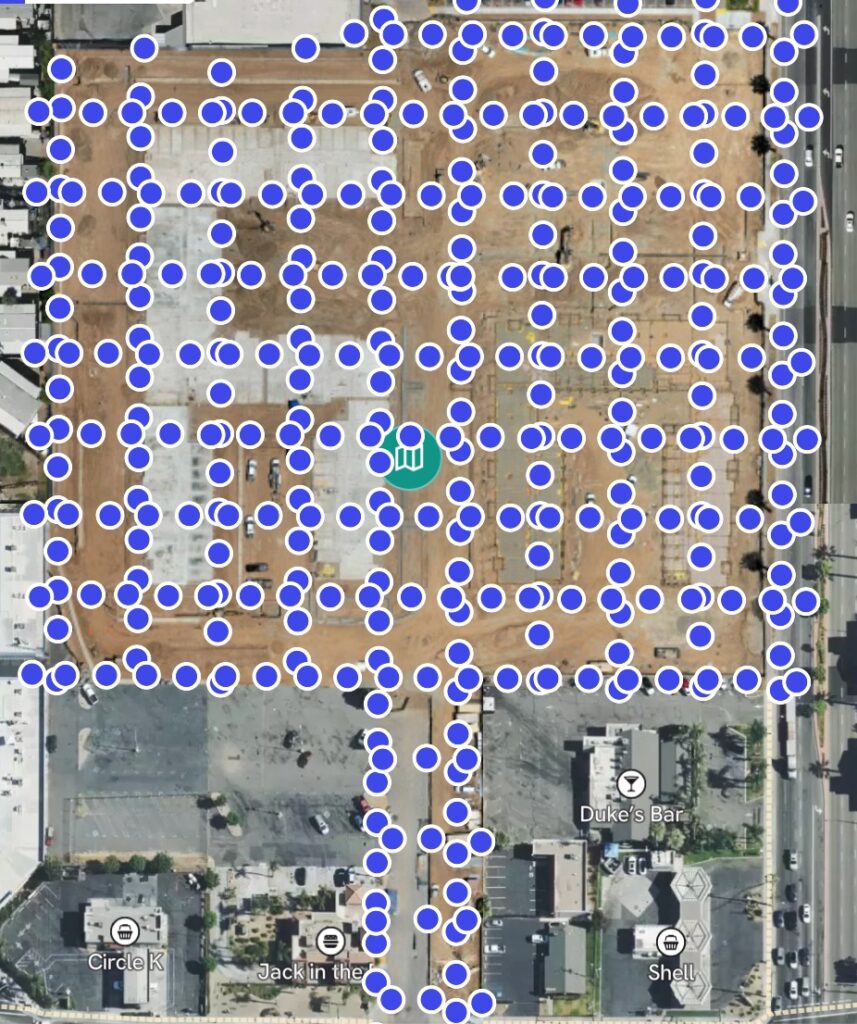
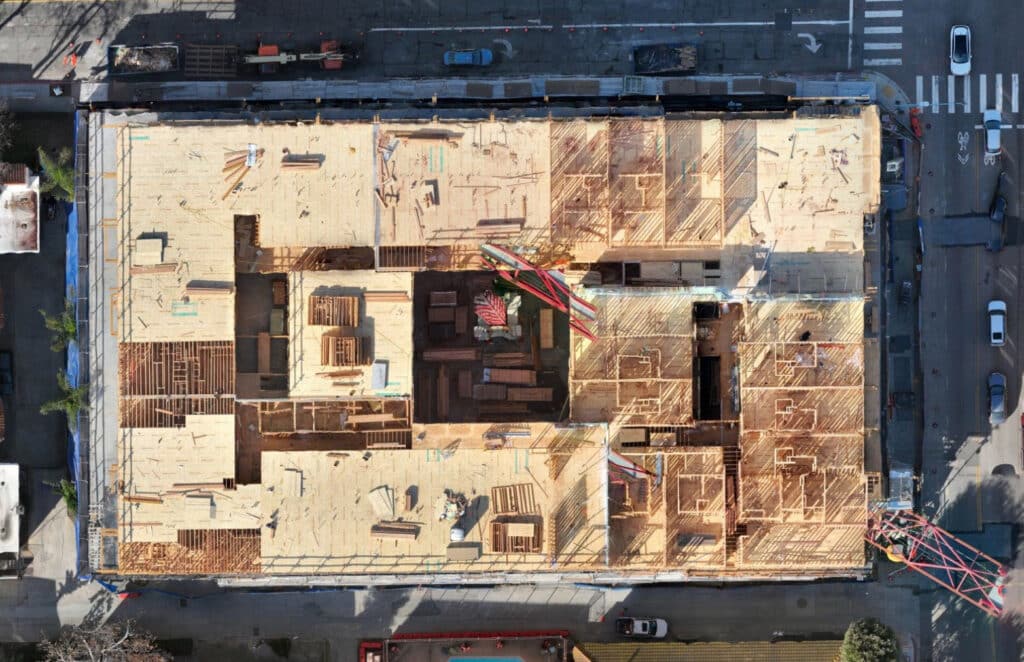
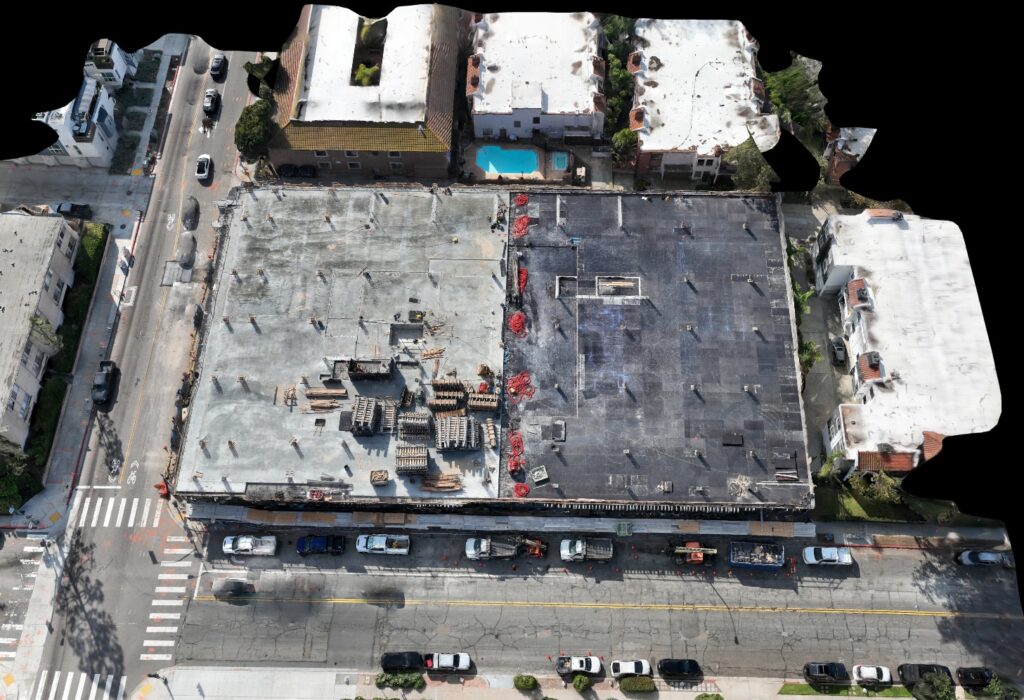
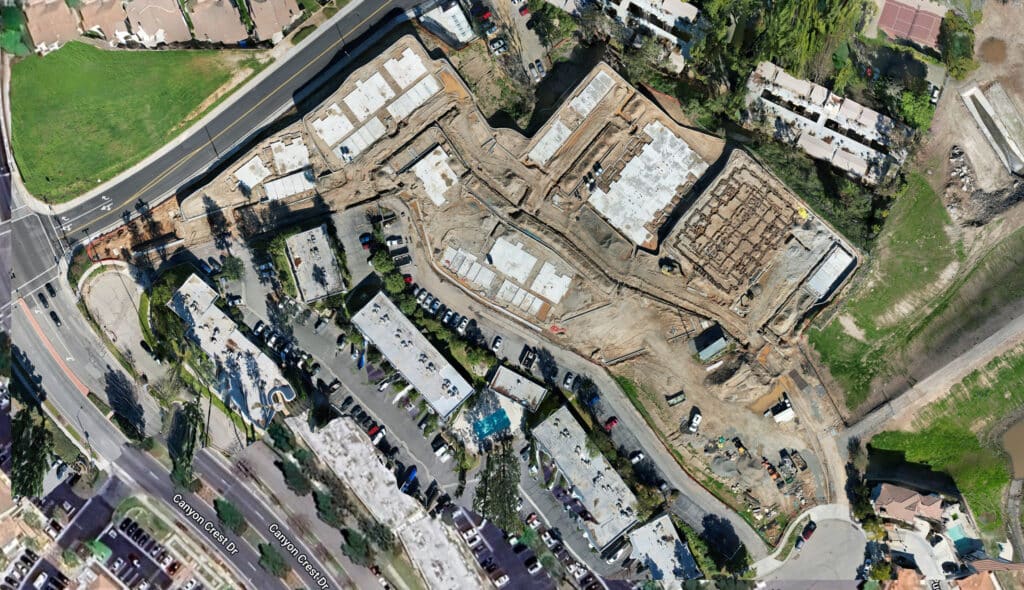
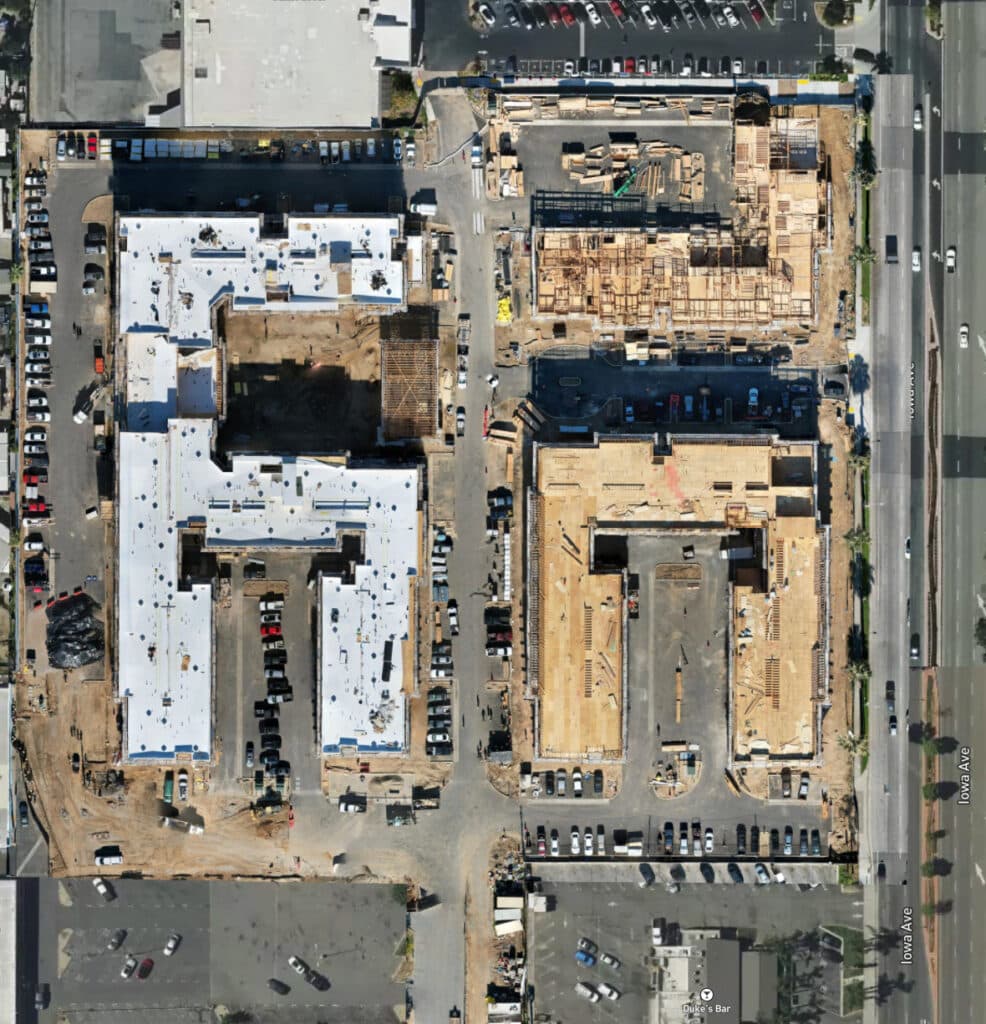
    drone mapping commercial construction site
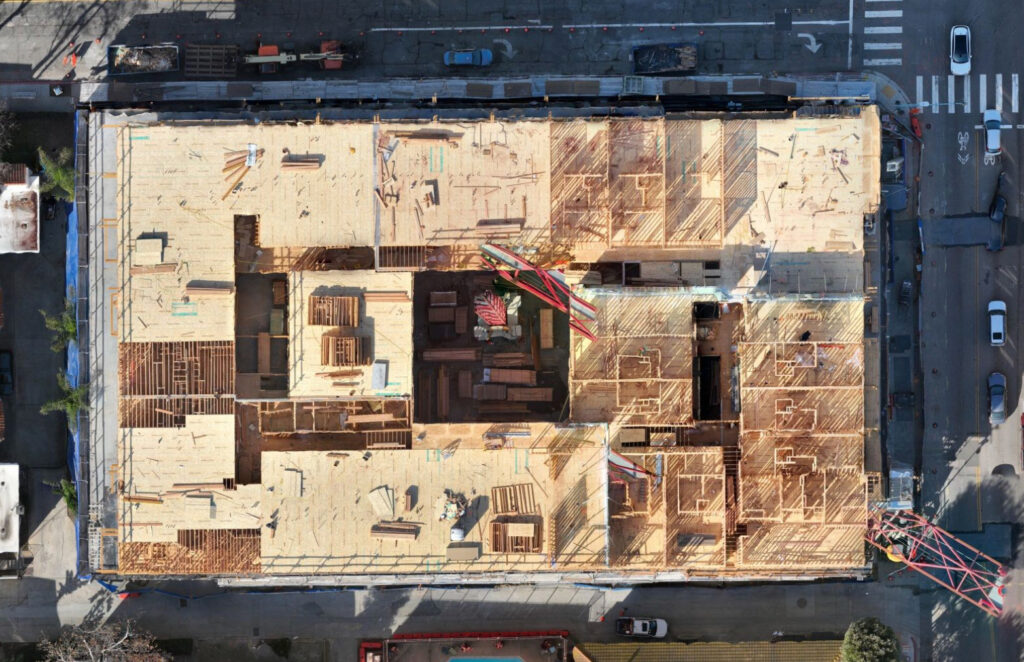
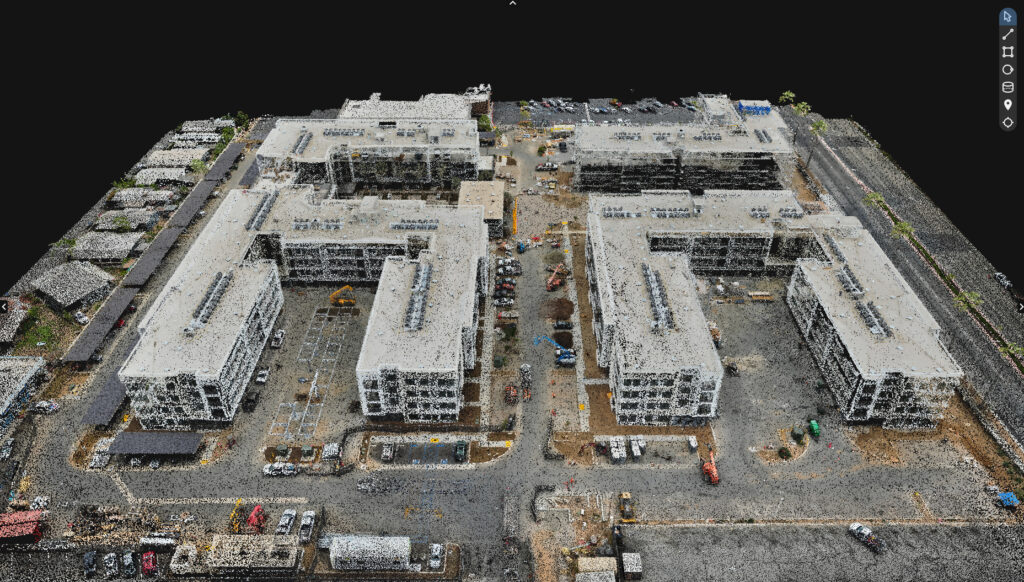
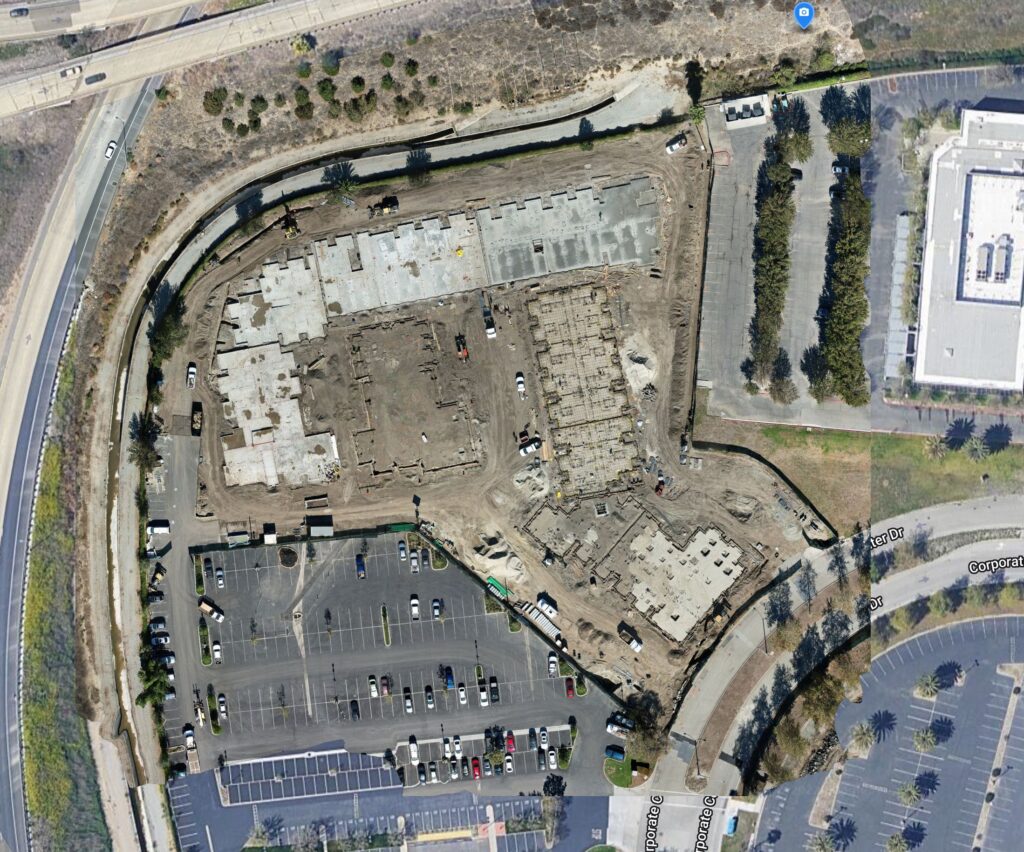
    3D model from a recent drone mapping commercial construction project
    • Measure distances and areas
    • Calculate volumes
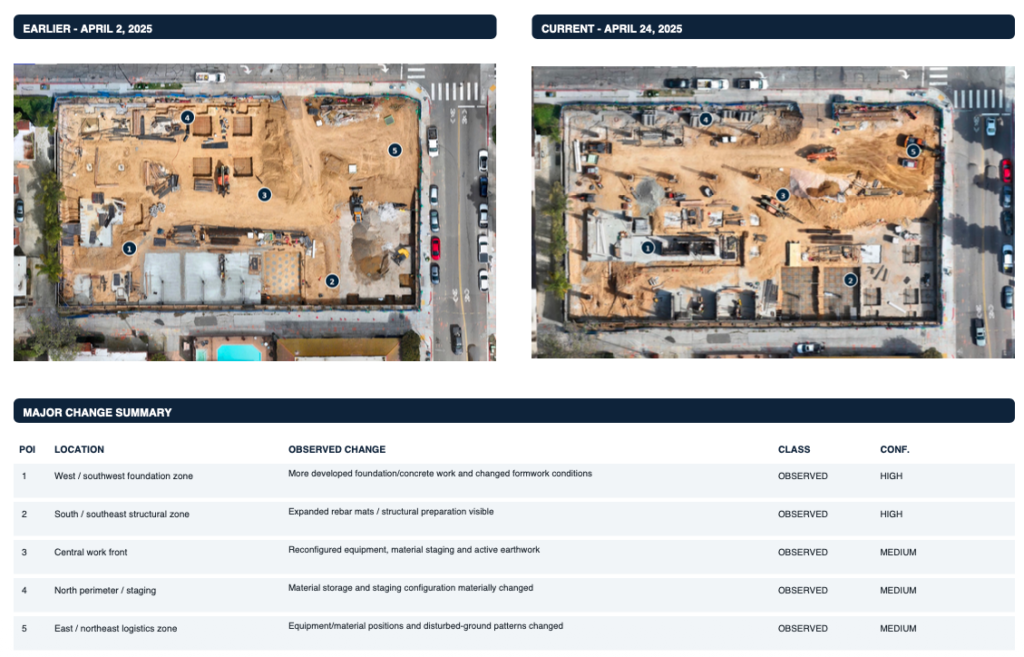
    • Compare time-based progress
    • Document site conditions with precision

    It transforms imagery into usable construction intelligence.

    How Photogrammetry Supports Commercial Construction Workflows

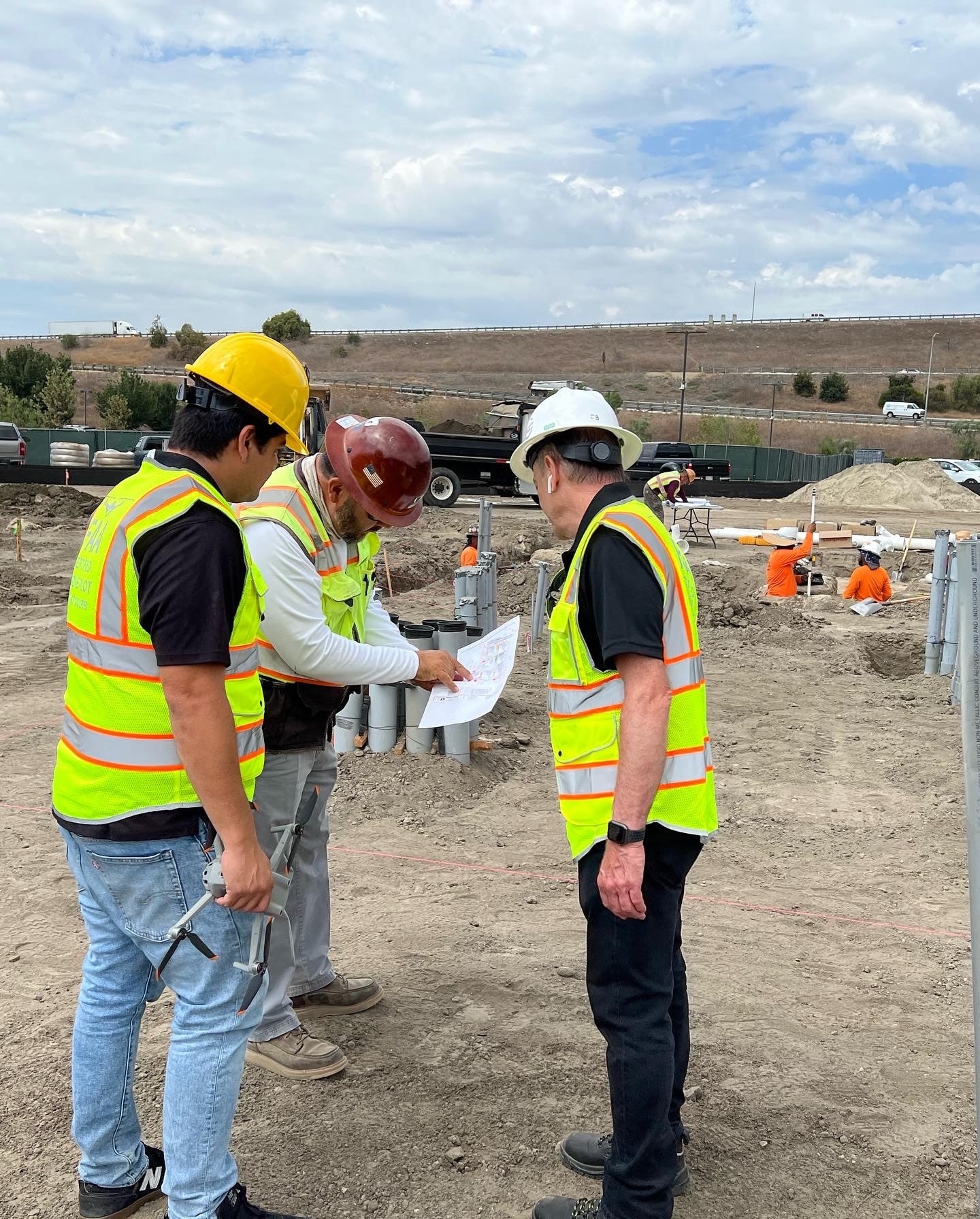
    From our experience operating pilot and visual observer crews across Southern California, photogrammetry provides the most value when it is integrated into repeatable reporting cycles — not treated as a one-off flight.

    Here’s where it most often supports project teams:

    1. Preconstruction & Existing Conditions

    Photogrammetry provides a detailed baseline before work begins. This helps align owners, designers, and contractors early — especially on complex or urban sites.

    2. Earthwork & Volume Verification

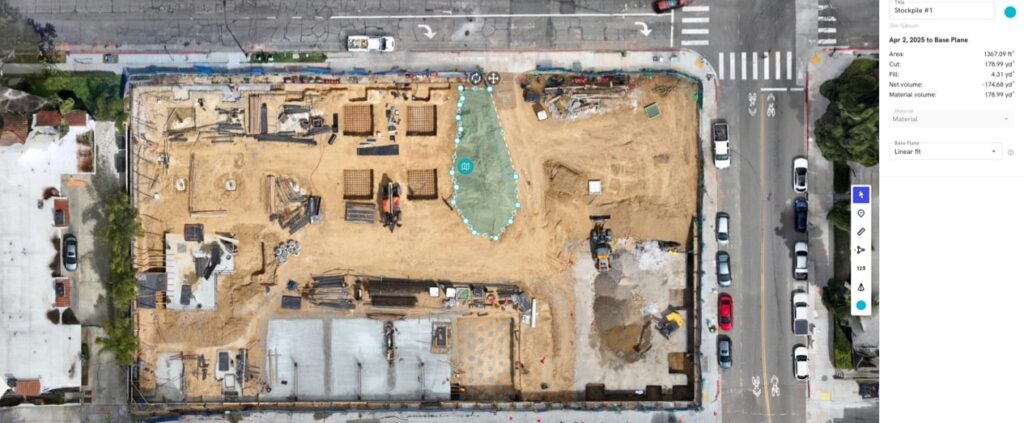
    Accurate volume calculations help validate grading progress and reduce uncertainty around material quantities.

    3. Progress Validation

    Side-by-side comparisons allow project teams to visually confirm sequencing and identify potential inefficiencies before they escalate.

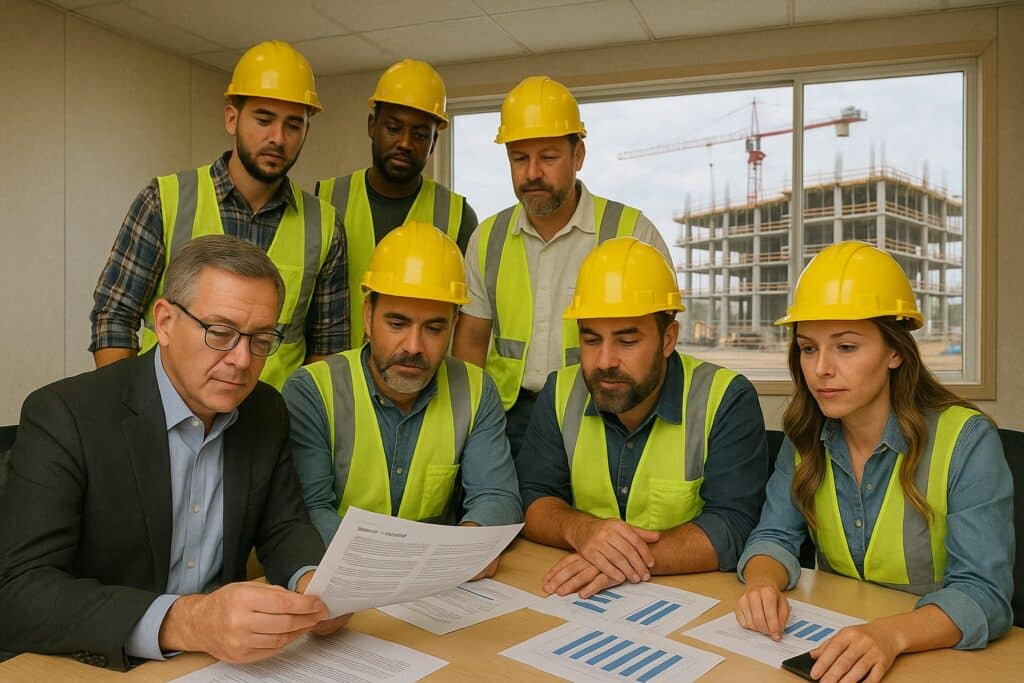
    4. Executive & Stakeholder Reporting

    Measurable orthomosaic maps and 3D models create a structured reporting layer that most executives find easier to interpret than narrative-only updates.

    What Photogrammetry Produces

    A properly executed photogrammetry workflow typically generates:

    • Orthomosaic maps (georeferenced 2D aerial maps)
    • 3D site models
    • Point clouds
    • Digital Surface Models (DSM)
    • Digital Terrain Models (DTM)
    • Volume calculations
    Orthomosaics are ortho-rectified images
    Orthomosaics are ortho-rectified images that minimize the impact of the earth’s natural curvature.

    These deliverables allow teams to move beyond visual observation into measurable validation.

    Photogrammetry vs Standard Drone Video

    Category Drone Video Photogrammetry
    Emotional Impact High Moderate
    Measurability None High
    Progress Comparison Limited Structured
    Volume Calculations No Yes
    Reporting Value Visual Data-Driven
    Dispute Support Weak Strong

    Video may support marketing.
    Photogrammetry supports management.

    Most commercial stakeholders prioritize measurable outcomes over cinematic visuals.

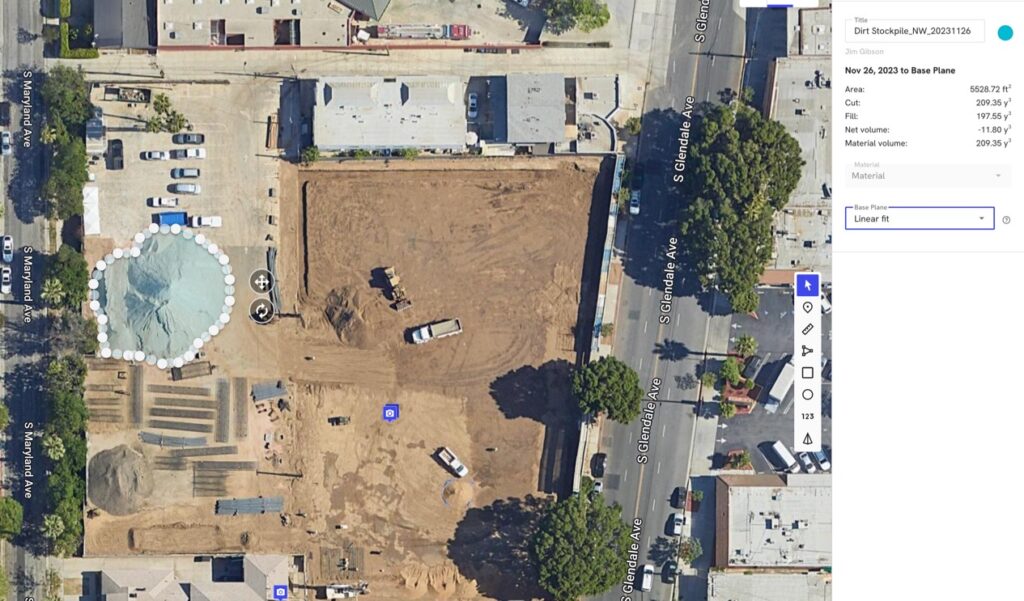
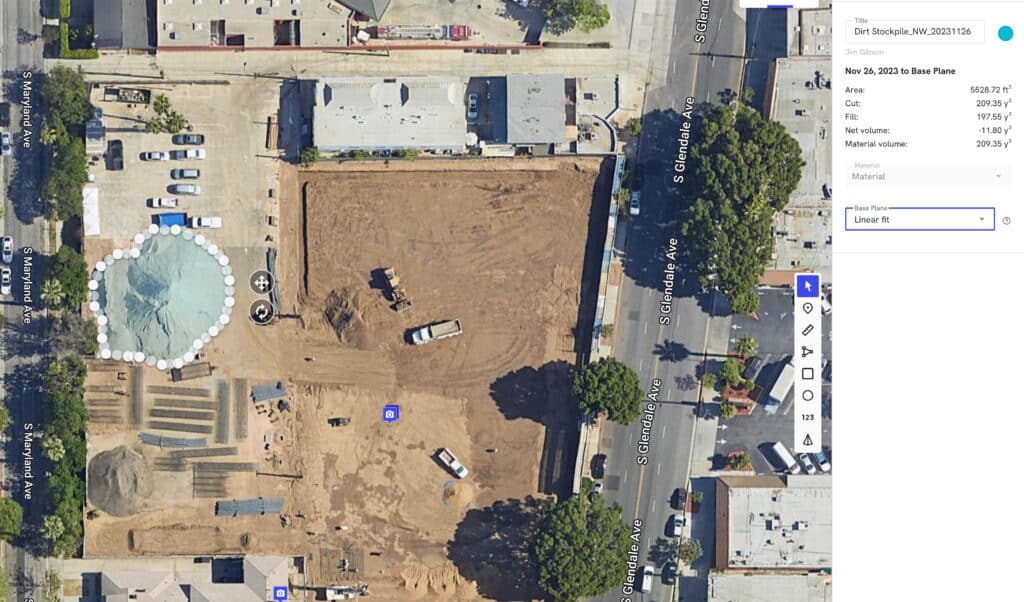
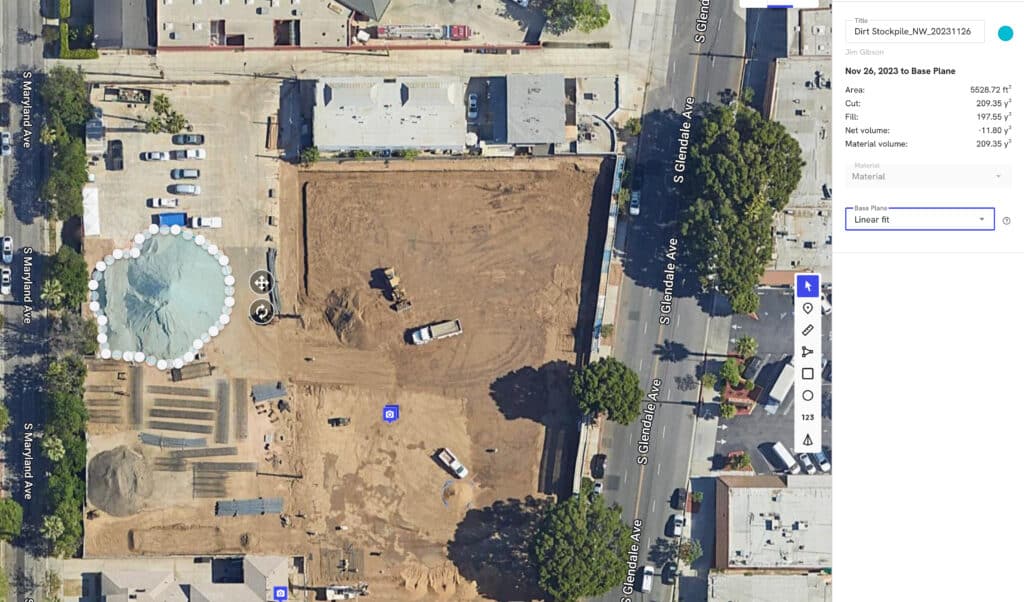
    Stockpile Measurements of a Construction Dirt Pile
    Software Can Convert Regular Drone Images to an Ortho Rectified Image thus Enabling Accurate Stock Pile Measurements

    Mini Case Snapshot (From Field Experience)

    • Project Type: Mid-sized commercial development, Southern California
    • Challenge: Grading quantities required validation before pay application review
    • Drone Method: Recurring photogrammetry flights producing orthomosaics and volume calculations
    • Outcome: Improved confidence in reported quantities and clearer owner-contractor alignment

    Why Photogrammetry Strengthens Risk Control

    In our work supporting commercial construction teams, we’ve seen photogrammetry reduce risk exposure in several ways:

    • Early identification of sequencing inconsistencies
    • Documentation of scope changes
    • Visual confirmation of installed conditions
    • Reduced ambiguity in progress conversations

    When teams rely less on interpretation and more on measurable site data, decision cycles tend to accelerate.

    And accelerated decisions often protect margins.

    How Photogrammetry Fits Into a Modern Drone Program

    Photogrammetry is most effective when it becomes a repeatable intelligence layer across the lifecycle of a build:

    • Monthly mapping cadence
    • Standardized flight plans
    • Time-stamped archive
    • Executive-ready reporting structure
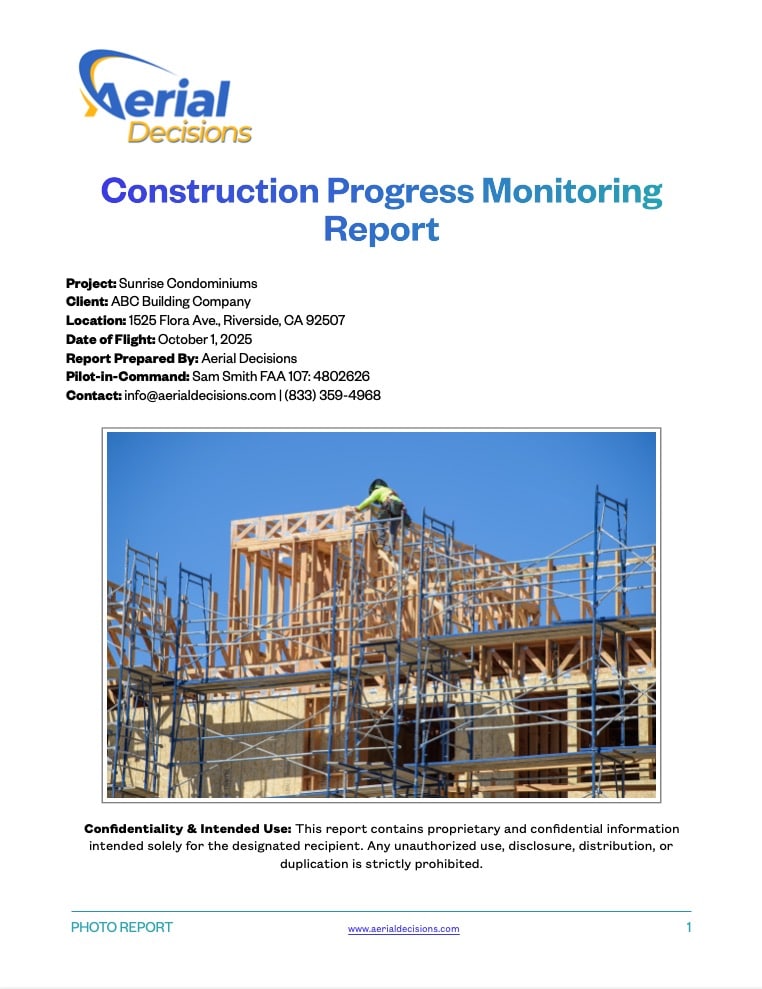
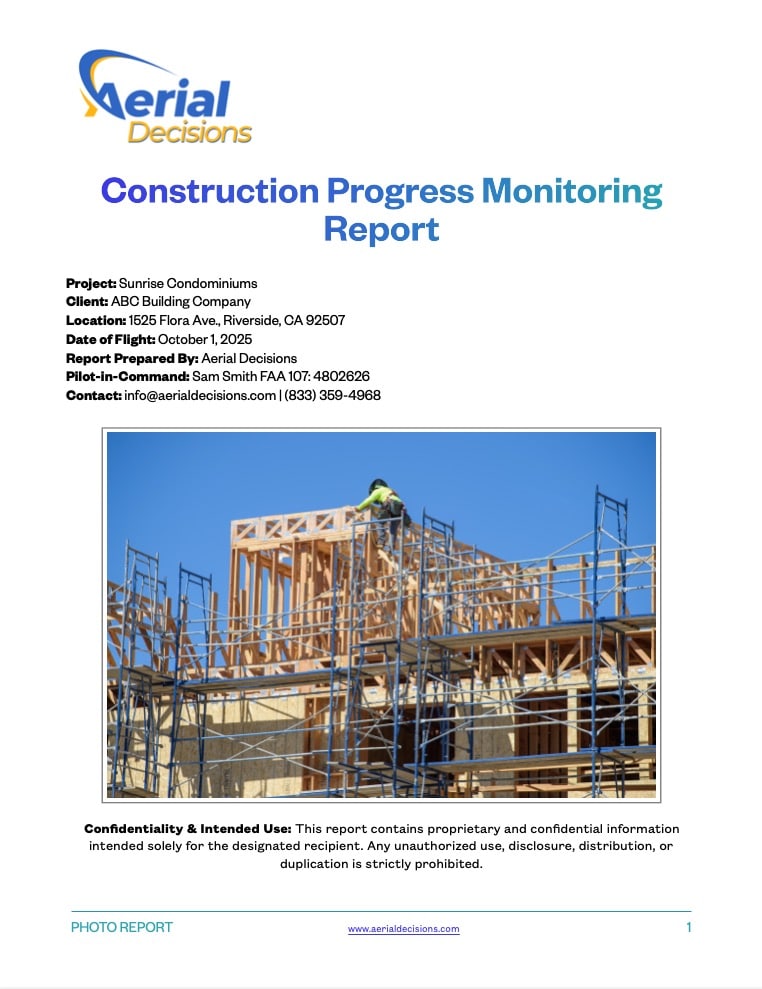
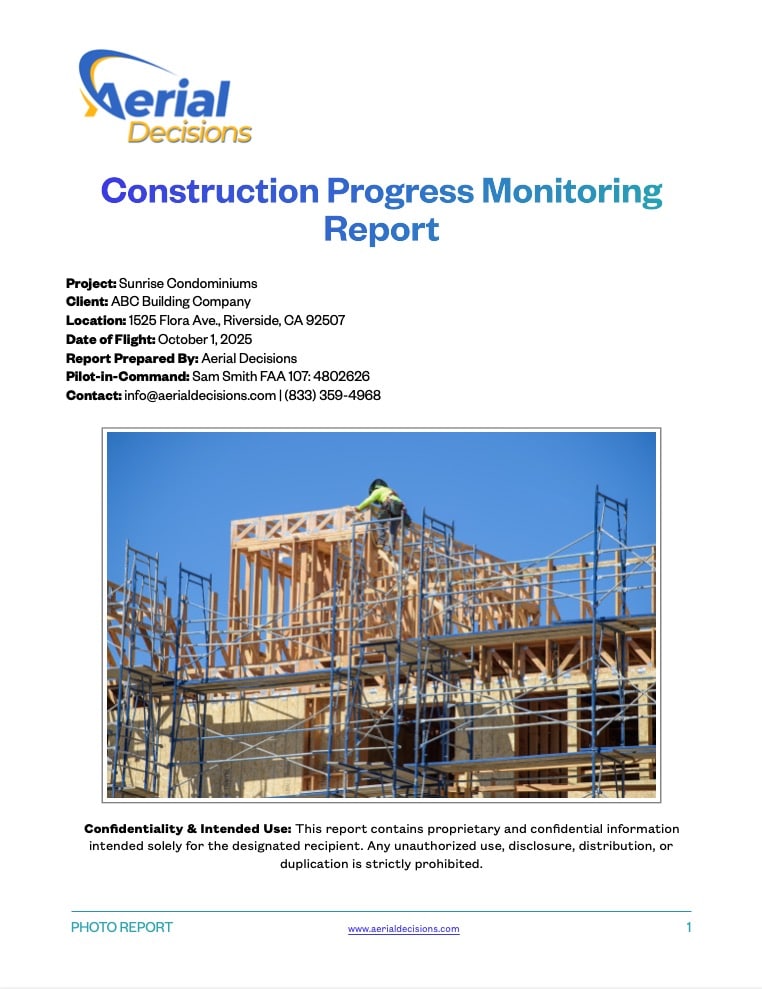
    Construction Monitoring Progress Report
    Construction Monitoring Reports are an Excellent Way to Share Site Progress with Key Stakeholders

    When structured properly, photogrammetry is not a technical add-on.
    It becomes operational infrastructure.

    FAQs

    Is photogrammetry accurate enough for commercial construction projects?
    When properly captured and processed, photogrammetry provides reliable site measurements suitable for progress validation, documentation, and volume analysis.

    Does photogrammetry replace traditional surveying?
    No. It complements survey data by providing frequent visual and measurable updates between formal survey milestones.

    How often should photogrammetry flights occur?
    Most commercial projects benefit from monthly flights, with higher frequency during critical grading or structural phases.

    What software is used for photogrammetry processing?
    Professional workflows use specialized processing platforms that convert overlapping images into orthomosaics, 3D models, and terrain datasets.

    Who benefits most from photogrammetry?
    General Contractors, Owners, Developers, and Project Executives responsible for oversight and reporting.

    Executive Takeaway

    Photogrammetry in commercial construction is not about capturing better images — it’s about converting site conditions into measurable, defensible data. Most construction stakeholders prioritize clarity, risk reduction, and validation. When integrated correctly, photogrammetry provides all three.

    From The Editor:

    Do you need to hire a professional drone service provider for your project? To speak to an aerial data specialist, fill out a form, email us or for even faster response times, give us a call at (833) FLY-4YOU or (833) 359-4968. Check out our transparent pricing at https://aerialdecisions.com/drone-photography-pricing/ and watch this space as we expand on the above topics and more over the coming weeks and months.

    If you like this post, feel free to click the share button at the bottom of the page. We appreciate you helping us by spreading the content we share on our blog.

    Drones and Construction podcast on Spotify
    Stream Drones and Construction podcast on your favorite listening platform.

    Showcase Your Company on the Drones and Construction Podcast! If you’d like to be a featured guest on our podcast, send us an email: info@aerialdecisions.com and one of our crew will get right back to you to share the details.

    About Aerial Decisions

    Aerial Decisions is a Los Angeles-based Drone Services Provider (DSP). We specialize in providing cutting-edge drone data collection combined with industry leading software solutions tailored for the commercial construction industry. Our mission is to optimize the way enterprise construction projects are managed by offering precise aerial photography, detailed data analysis, and innovative software tools through a network of FAA-certified and insured drone pilots. Aerial Decisions is not just a drone service provider; we are your strategic partner in commercial construction. Our hands-on approach to understanding your unique requirements and our dedication to excellence ensures that every flight and every data point is optimized for your success. Trust us to be the eyes in the sky that elevate your construction projects to new heights.

  • Drone Mapping for Commercial Construction Projects

    Drone Mapping for Commercial Construction Projects

    Why We Started Using Drone Mapping on Construction Jobsites

    When we first started flying drones on commercial construction projects in Southern California, the goal wasn’t flashy visuals—it was clarity. As our pilot and visual observer teams began supporting more General Contractors and Owners, we kept seeing the same problems: inconsistent progress documentation, misalignment between field teams and executives, and too much reliance on subjective reporting.

    Drone mapping changed that.

    From dense urban infill projects to large commercial developments, we’ve seen firsthand how a consistent aerial mapping program gives project teams a shared, objective view of what’s actually happening on site. For executives who don’t have time to walk jobs every week, that visibility matters—and it directly impacts schedule confidence, risk exposure, and decision-making.


    drone mapping commercial construction site
    drone mapping commercial construction site

    What Drone Mapping Means in Commercial Construction

    In commercial construction, drone mapping is the process of capturing aerial imagery and converting it into accurate, measurable site maps—such as orthomosaics and 3D models—that document existing conditions and track progress over time.

    This isn’t about pretty pictures. It’s about producing repeatable, data-driven visuals that project teams, owners, and stakeholders can trust.


    How We See Drone Mapping Used Most Effectively

    Based on our work across Southern California projects, drone mapping delivers the most value in four areas:

    1. Pre-Construction & Site Context

    Before ground is broken, drone mapping helps teams document existing conditions and align expectations early—especially on tight or complex sites.

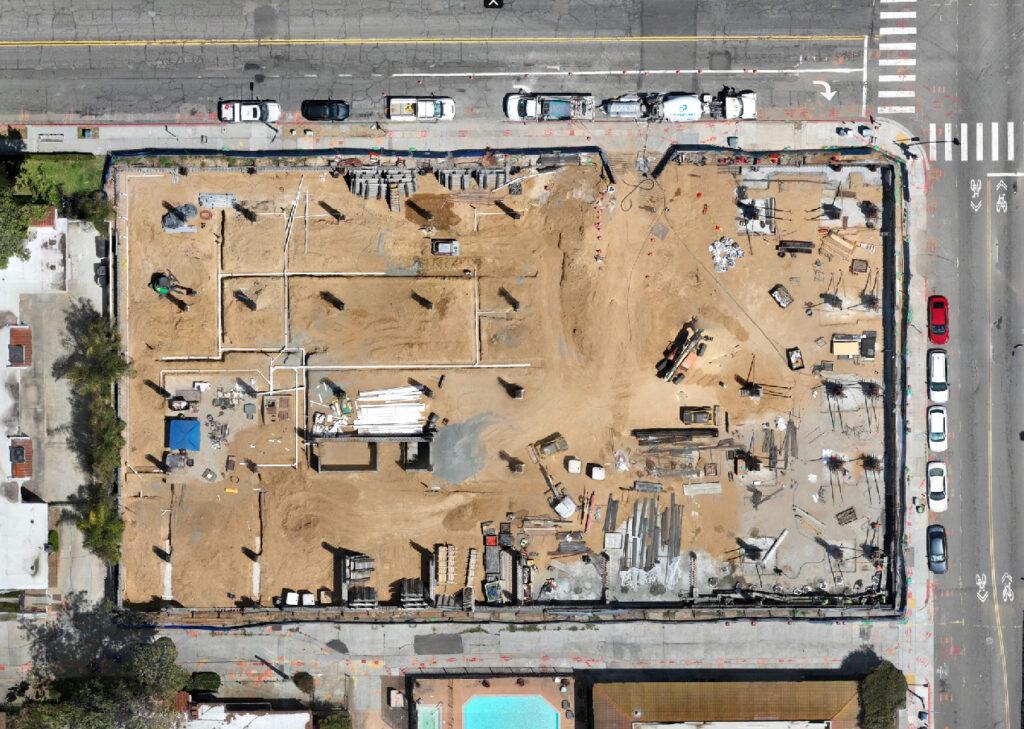
    commercial construction site aerial map
    Commercial construction site aerial map

    2. Ongoing Progress Documentation

    Recurring flights (monthly or milestone-based) create a visual timeline that supports:

    • Owner updates
    • Schedule reviews
    • Internal coordination meetings

    Instead of debating what’s complete, teams can see it clearly.

    3. Coordination & Risk Reduction

    From staging conflicts to access constraints, aerial maps often reveal issues that are difficult to spot from the ground—before they become expensive problems.

    4. Executive & Owner Reporting

    Many of our GC and owner clients use drone maps as their primary reporting tool. One aerial map often replaces multiple pages of written updates.


    Drone Mapping vs Traditional Jobsite Documentation

    AreaTraditional MethodsDrone Mapping
    Site CoverageGround-level onlyFull site visibility
    ConsistencyVaries by reportRepeatable & standardized
    SafetyRequires site walksRemote data capture
    Owner CommunicationText-heavyVisual & intuitive
    Historical RecordFragmentedTime-based archive

    Mini Case Snapshot (From Our Field Experience)

    • Project Type: Large commercial construction site, Southern California
    • Challenge: Owners needed reliable progress visibility without frequent site visits
    • Drone Method: Monthly drone mapping with orthomosaics and progress overlays
    • Outcome: Faster executive decisions, fewer clarification requests, and improved trust between field teams and ownership

    construction drone orthomosaic
    Construction drone orthomosaic

    Why Drone Mapping Shows Real ROI

    From our perspective, the return on drone mapping isn’t just financial—it’s operational. When everyone is looking at the same visual truth, meetings are shorter, disputes are fewer, and decisions happen faster.

    That kind of clarity compounds over the life of a project.


    FAQs

    Is drone mapping accurate enough for commercial construction projects?
    Yes. When captured correctly, drone maps provide reliable visual and measurement data for progress tracking and site documentation.

    How often should drone mapping be performed?
    Most projects benefit from monthly mapping, with higher frequency during critical construction phases.

    Does drone mapping replace traditional surveying?
    No. Drone mapping complements surveying by adding visual context and frequent updates.

    Is drone mapping safe on active jobsites?
    Yes. It reduces the need for personnel to enter active or hazardous areas while still capturing comprehensive data.

    Who uses drone mapping the most?
    General Contractors, Owners, Developers, and Project Executives responsible for oversight and reporting.


    Key Takeaway

    From our experience at Aerial Decisions, drone mapping has become one of the most effective tools for improving visibility and accountability on commercial construction projects. It doesn’t replace existing workflows—it strengthens them by giving teams a clearer, shared understanding of progress and risk.

    From The Editor:

    Do you need to hire a professional drone service provider for your project?  To speak to an aerial data specialist, fill out a form, email us or for even faster response times, give us a call at (833) FLY-4YOU or (833) 359-4968.  Check out our transparent pricing at https://aerialdecisions.com/drone-photography-pricing/ and watch this space as we expand on the above topics and more over the coming weeks and months.  

    If you like this post, feel free to click the share button at the bottom of the page.  We appreciate you helping us by spreading the content we share on our blog.

    Drones and Construction podcast on Spotify
    Stream Drones and Construction podcast on your favorite listening platform.

    Showcase Your Company on the Drones and Construction Podcast! If you’d like to be a featured guest on our podcast, send us an email: info@aerialdecisions.com and one of our crew will get right back to you to share the details.

    About Aerial Decisions

    Aerial Decisions is a Los Angeles-based Drone Services Provider (DSP).  We specialize in providing cutting-edge drone data collection combined with industry leading software solutions tailored for the commercial construction industry. Our mission is to optimize the way enterprise construction projects are managed by offering precise aerial photography, detailed data analysis, and innovative software tools through a network of FAA-certified and insured drone pilots.  Aerial Decisions is not just a drone service provider; we are your strategic partner in commercial construction. Our hands-on approach to understanding your unique requirements and our dedication to excellence ensures that every flight and every data point is optimized for your success. Trust us to be the eyes in the sky that elevate your construction projects to new heights.

  • Drones and Construction – The 2025 Outlook

    Drones and Construction – The 2025 Outlook

    Disclaimer: This blog post is based on insights from The Hub International 2025 Construction Outlook. While we have repurposed key takeaways and provided our own analysis, all original data and projections are credited to Hub International. For the full report, you can download a free copy here: Hub International 2025 Construction Outlook.

    Hey there, fellow builders and innovators! As a commercial drone service provider specializing in construction progress, I’m excited to share some insights from HUB International’s 2025 Construction Outlook and explore how drones can be a game-changer in navigating the industry’s evolving landscape.

    Facing the 2025 Construction Landscape

    The construction industry is gearing up for a dynamic year in 2025, with projections indicating total new construction spending will reach $2.145 trillion, aiming for $2.340 trillion by 2028. While large-scale infrastructure projects are on the rise, challenges like inflation, climate change, and fluctuating interest rates could impact profitability. Notably, only 16% of construction firms feel adequately insured against profit-threatening risks, highlighting a significant area for improvement.

    Profitability Challenges and Drone Solutions

    With non-residential construction spending expected to increase by just 2% after a 7% gain in 2024, firms must find innovative ways to maintain profitability. Material costs remain volatile, and the looming $2 trillion in commercial real estate debt maturing over the next two years adds to the uncertainty.

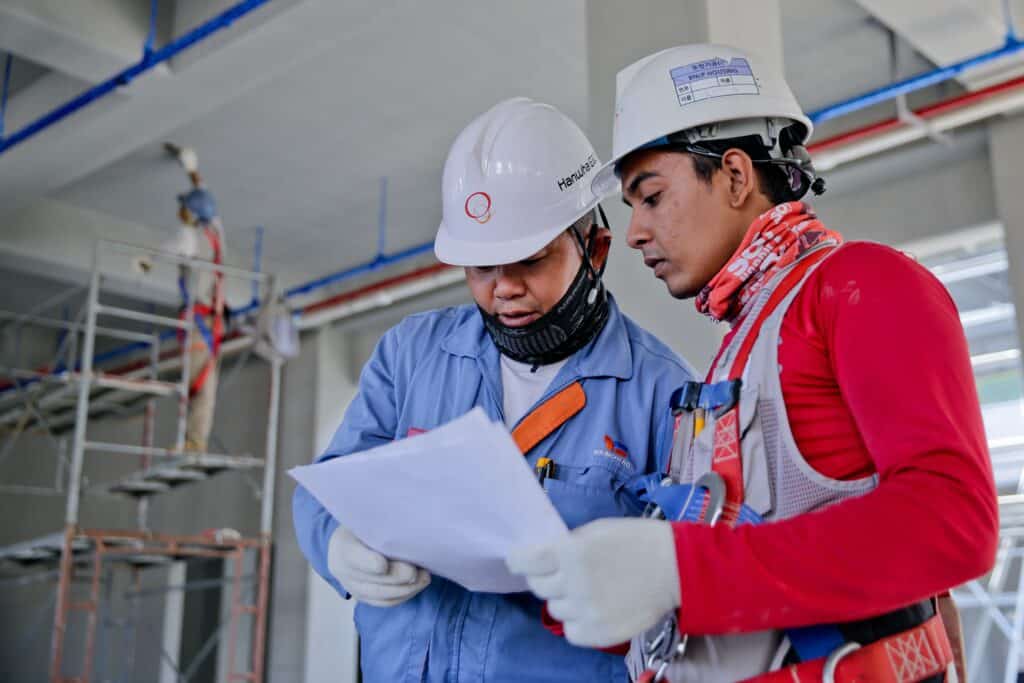
    Construction Worker Taking Inventory
    Construction Worker Taking Inventory

    This is where drones come into play. By providing real-time aerial insights, drones can:

    • Monitor Material Usage: Track inventory and reduce waste, helping manage fluctuating material costs.
    • Assess Site Conditions: Quickly evaluate sites after severe weather, enabling prompt responses and minimizing downtime.
    • Enhance Project Planning: Offer detailed topographic maps, aiding in accurate project estimations and budgeting.

    Addressing Labor Shortages with Technology

    The labor shortage continues, with a projected deficit of over 450,000 workers in 2025. The aging workforce and a lack of younger entrants exacerbate this issue.

    Drones can alleviate some labor pressures by:

    • Automating Routine Inspections: Reducing the need for manual checks and allowing skilled workers to focus on critical tasks.
    • Providing Training Tools: Offering aerial footage for training purposes, helping new workers understand site layouts and safety protocols.

    Enhancing Safety and Risk Management

    Severe weather and environmental challenges are increasing, posing risks to both workers and project timelines.

    Drones contribute to safety by:

    • Conducting Hazard Assessments: Identifying potential dangers from a safe distance before workers enter a site.
    • Monitoring Compliance: Ensuring safety protocols are followed through aerial surveillance, reducing the likelihood of accidents.

    Insurance and Risk Mitigation

    Given that a mere 16% of firms feel adequately insured, it’s crucial to explore alternative risk transfer solutions.

    Drones assist in this area by:

    • Documenting Progress: Providing visual records that can be invaluable during insurance claims.
    • Assessing Damage: Quickly surveying sites post-incident to evaluate damage and expedite claims processes.

    Building a Resilient Future

    As we navigate the unpredictable conditions of 2025, integrating drone technology into construction practices offers a proactive approach to risk management and operational efficiency. By leveraging drones, construction firms can enhance profitability, address labor challenges, and strengthen resilience against environmental and economic uncertainties.

    Let’s embrace the skies and build a smarter, safer, and more efficient future together!

    From The Editor:

    Do you need to hire a professional drone service provider for your project?  To speak to an aerial data specialist, fill out a form, email us or for even faster response times, give us a call at (833) FLY-4YOU or (833) 359-4968.  Check out our transparent pricing at https://www.aerialdecisions.com/drone-photography-pricing/ and watch this space as we expand on the above topics and more over the coming weeks and months.  

    If you like this post, feel free to click the share button at the bottom of the page.  We appreciate you helping us by spreading the content we share on our blog.

    Drones and Construction podcast on Spotify
    Stream Drones and Construction podcast on your favorite listening platform.

    Showcase Your Company on the Drones and Construction Podcast! If you’d like to be a featured guest on our podcast, send us an email: info@aerialdecisions.com and one of our crew will get right back to you to share the details.

    About Aerial Decisions

    Aerial Decisions is a Los Angeles-based Drone Services Provider (DSP).  We specialize in providing cutting-edge drone data collection combined with industry leading software solutions tailored for the commercial construction industry. Our mission is to optimize the way enterprise construction projects are managed by offering precise aerial photography, detailed data analysis, and innovative software tools through a network of FAA-certified and insured drone pilots.  Aerial Decisions is not just a drone service provider; we are your strategic partner in commercial construction. Our hands-on approach to understanding your unique requirements and our dedication to excellence ensures that every flight and every data point is optimized for your success. Trust us to be the eyes in the sky that elevate your construction projects to new heights.

  • The Future of Business: Top 7 Commercial Drone Applications Across Key Sectors

    The Future of Business: Top 7 Commercial Drone Applications Across Key Sectors

    For many people, drones are often seen as toys for hobbyists or even as threats to privacy and safety. Recent news about unidentified drones buzzing across the East Coast has sparked fears about espionage and airspace violations. These incidents make headlines, but they overshadow a much bigger story: the transformative potential of drones as tools for innovation, commerce, and safety in the United States.

    Instead of focusing solely on the risks, it’s time to recognize the critical role drones are playing in solving challenges that were once insurmountable. From revolutionizing agriculture to enhancing the response to disasters, such as the recent LA fires, drones are not just flying gadgets—they’re essential assets for building a more efficient and secure future.

    As a drone service provider, I’ve seen firsthand how this technology is being adopted across industries. While certain sectors may focus on specific applications—such as the Arts & Entertainment industry prioritizing photography—many industries are leveraging drones in diverse and unexpected ways. Here are the top industries using drones today and how they’re transforming their operations.

    Drone Surveying Oil Pipelines
    Inspecting wind turbines, solar panels, and miles of pipelines once demanded time-consuming and potentially dangerous efforts from workers.

    1. Energy: Inspections and More

    Inspecting wind turbines, solar panels, and extensive pipelines has traditionally been a labor-intensive and hazardous task for workers. The advent of drone technology has revolutionized this process, offering safer, more efficient, and cost-effective inspection methods.

    A notable example is the use of drones equipped with LiDAR (Light Detection and Ranging) technology for power line inspections. According to a case study by CHC Navigation, their AlphaAir 450 UAV LiDAR scanner has been employed to inspect power lines, providing high-precision data and reducing the time required for inspections. 

    In the solar energy sector, drones have significantly increased inspection efficiency. A case study by AgEagle Aerial Systems demonstrated that drone inspections of solar panels mirrored the results of manual inspections with 99% accuracy. However, the drone-based method completed the task in just two hours per site, compared to two days for manual inspections, resulting in a 97% increase in efficiency. 

    These examples highlight how drones are transforming industrial inspections, offering precise data collection while minimizing risks and operational costs.

    agriculture drone spraying field
    Drones can efficiently and precisely apply pesticides, fertilizers, and even water, reducing environmental impact while swiftly covering expansive areas.

    2. Agriculture: Mapping, Monitoring, and Spraying

    Agriculture is one of the most dynamic industries for drone technology. Farmers use drones for mapping and surveying fields to detect crop stress, soil health, and pest infestations with pinpoint accuracy. This data helps optimize resource use and improve yields, giving farmers actionable insights they never had before.

    Spraying and dispensing are equally transformative. Drones can precisely apply pesticides, fertilizers, and even water, minimizing environmental impact while covering large areas quickly. For farms with challenging terrain or tight planting cycles, drones are the perfect solution to reduce labor costs and increase efficiency.

    3. Construction: Progress Tracking and Site Management

    In construction, drones are reshaping project management. Site surveys that once took weeks can now be completed in hours, offering real-time data to track progress and ensure quality. High-resolution imagery and 3D mapping enable better communication across teams and faster identification of potential issues.

    Drones also improve safety by inspecting hard-to-reach areas like scaffolding or high-rise structures, reducing risks to workers. For an industry driven by timelines and budgets, drones are becoming an indispensable tool.

    4. Public Administration and Emergency Services: Mapping, Tracking, and More

    Government agencies and emergency services rely heavily on drones for public safety and resource management. In public administration, drones are primarily used for mapping and surveying urban landscapes, aiding in smarter city planning and disaster preparedness.

    For emergency services, drones equipped with thermal imaging cameras have become life-saving tools. They can locate missing persons, assess damage during natural disasters, and deliver critical supplies to areas that are otherwise inaccessible. The ability to provide real-time visuals in crisis situations makes drones invaluable for saving lives.

    Drones delivering supplies in disaster
    Drones can be an indispensable asset to public service agencies during natural disasters.

    5. Healthcare and Disaster Relief: Drone Deliveries

    The healthcare sector is at the forefront of integrating drone technology to expedite the delivery of critical medical supplies, especially in remote or disaster-stricken regions. Drones are now transporting defibrillators, vaccines, blood products, and essential medications, ensuring timely medical interventions when every second counts.

    A notable example is Zipline, a California-based company that has established the world’s largest medical drone delivery network. Operating primarily in Rwanda and Ghana, Zipline’s drones have completed over 1.3 million deliveries, covering nearly 100 million miles. These autonomous drones deliver whole blood, platelets, frozen plasma, and cryoprecipitate, significantly reducing delivery times compared to traditional methods. 

    In Rwanda, Zipline’s services have transformed the healthcare logistics landscape. The country’s mountainous terrain and limited infrastructure previously hindered timely medical deliveries. With Zipline’s drone network, medical facilities receive blood products and vaccines swiftly, drastically improving patient outcomes. By October 2020, Zipline had made over 70,000 medical deliveries across Rwanda and Ghana, demonstrating the scalability and reliability of drone delivery systems

    These case studies underscore the transformative potential of drones in healthcare logistics, offering rapid, reliable, and cost-effective delivery solutions that overcome geographical and infrastructural challenges.

    6. Safety & Security: Surveillance and Monitoring

    For security-focused industries, drones are revolutionizing surveillance. They are used to monitor sensitive infrastructure, manage crowds, and conduct large-area reconnaissance. Equipped with advanced cameras and sensors, drones provide a level of situational awareness that static security systems simply can’t match.

    7. Waste Management: Landfill Mapping

    Even industries like waste management are benefiting from drone technology. Landfills use drones to calculate capacity and identify inefficiencies, helping optimize waste management strategies. This reduces environmental impact and ensures compliance with regulatory standards.

    The Takeaway

    Drone technology is no longer a novelty or a luxury—it’s a necessity. Across industries, drones are improving efficiency, enhancing safety, and delivering unprecedented insights. For c-suite leaders, the message is clear: embracing drones isn’t just a technological upgrade; it’s a strategic move to stay competitive in an ever-evolving marketplace.

    Yes, challenges like privacy concerns and airspace safety must be addressed, but they shouldn’t distract us from the immense value drones bring to commerce and public safety. The future of drones is here, and it’s reshaping industries in ways we could only dream of a few years ago. If your business isn’t leveraging drones yet, the question isn’t if you will, but when. Let’s explore how drone technology can elevate your organization to new heights.

    From The Editor:

    Do you need to hire a professional drone service provider for your project?  To speak to an aerial data specialist, fill out a form, email us or for even faster response times, give us a call at (833) FLY-4YOU or (833) 359-4968.  Check out our transparent pricing at https://www.aerialdecisions.com/drone-photography-pricing/ and watch this space as we expand on the above topics and more over the coming weeks and months.  

    If you like this post, feel free to click the share button at the bottom of the page.  We appreciate you helping us by spreading the content we share on our blog.

    Drones and Construction podcast on Spotify
    Stream Drones and Construction podcast on your favorite listening platform.

    Showcase Your Company on the Drones and Construction Podcast! If you’d like to be a featured guest on our podcast, send us an email: info@aerialdecisions.com and one of our crew will get right back to you to share the details.

    About Aerial Decisions

    Aerial Decisions is a Los Angeles-based Drone Services Provider (DSP).  We specialize in providing cutting-edge drone data collection combined with industry leading software solutions tailored for the commercial construction industry. Our mission is to optimize the way enterprise construction projects are managed by offering precise aerial photography, detailed data analysis, and innovative software tools through a network of FAA-certified and insured drone pilots.  Aerial Decisions is not just a drone service provider; we are your strategic partner in commercial construction. Our hands-on approach to understanding your unique requirements and our dedication to excellence ensures that every flight and every data point is optimized for your success. Trust us to be the eyes in the sky that elevate your construction projects to new heights.

  • From Over-Ordering to Supplier Accountability: How Drones Redefine Stockpile Management

    From Over-Ordering to Supplier Accountability: How Drones Redefine Stockpile Management

    Having spent years in the commercial construction industry, I’ve seen firsthand how the integration of drone technology and advanced post-processing software has revolutionized site management. Accurate stockpile measurements are essential for staying on schedule and within budget, but the real game-changer isn’t just the drones collecting data—it’s the sophisticated software that processes it into precise, actionable insights.

    Construction Supervisor Taking Materials Inventory
    Managing materials stockpiles can be a time-consuming and error-prone process.

    Traditionally, managing materials stockpiles was a manual, time-consuming and error-prone process. Workers had to physically measure stockpiles, often with basic tools or outdated equipment, and then calculate volumes manually. While functional, this method left room for costly errors. Human oversight, difficult terrain, and sheer site complexity made inaccuracies inevitable. But with the advent of drones and cutting-edge software, we’re solving this problem at its core.

    The Limitations of Traditional Stockpile Management

    A few years ago, a construction manager I worked with discovered a significant discrepancy between their manual stockpile measurements and actual inventory. This discrepancy wasn’t caught until midway through a critical phase, leading to a materials shortfall. Rushed orders from a supplier not only cost a premium but also caused delays that rippled across the schedule. On top of that, the supplier had overbilled them in the past—errors they didn’t realize until after adopting drone-based measurements.

    Construction Subcontractor Holding Clipboard
    Rush orders from a supplier not only cost a premium but also caused delays that rippled across the schedule.

    This is a common scenario in construction. Without accurate and timely data, it’s difficult to spot errors or hold suppliers accountable. Over- or underestimating stockpile volumes can lead to either overordering, which ties up capital and space, or underordering, which disrupts progress. Either way, the project suffers.

    How Drones and Software Work Together

    Drones bring speed and efficiency to data collection. They can quickly fly over a site, capturing high-resolution aerial imagery of stockpiles from multiple angles. But the real magic happens in the post-processing phase. Using advanced software, this imagery is transformed into orthographic images—highly accurate, to-scale maps of the site. From these images, the software generates precise 3D models and calculates stockpile volumes with unparalleled accuracy.

    This process eliminates the guesswork. Instead of relying on rough estimates, project managers now have a reliable, detailed view of their materials inventory. The combination of drones and post-processing software ensures that every measurement is precise, helping teams make informed decisions about ordering and allocation.

    The Benefits Go Beyond Accuracy

    Regular drone flights, coupled with software processing, also create a digital timeline of site progress. This visual record allows project managers to monitor the movement and depletion of materials over time. It also provides stakeholders with transparent updates, fostering trust and collaboration.

    Moreover, the post-processed data isn’t just useful for measuring materials. The orthographic images and 3D models can be integrated into broader project management tools, helping teams plan and coordinate everything from equipment placement to site safety measures.

    A Smarter Approach to Construction

    One of the most rewarding aspects of my work is seeing the tangible benefits of these technologies. I’ve worked with teams that saved thousands of dollars by identifying discrepancies in supplier invoices using drone-generated data. Others have avoided costly delays by catching stockpile shortages early.

    The combination of drone technology and post-processing software is transforming construction site management. It’s not just about having the latest tools—it’s about empowering project managers with the information they need to make smarter decisions.

    If your site is struggling with inaccurate stockpile measurements, delays, or supplier disputes, it’s time to consider a more advanced approach. Drones and software don’t just make the process easier—they make it better. Let’s put them to work on your next project.

    From The Editor:

    Do you need to hire a professional drone service provider for your project?  To speak to an aerial data specialist, fill out a form, email us or for even faster response times, give us a call at (833) FLY-4YOU or (833) 359-4968.  Check out our transparent pricing at https://www.aerialdecisions.com/drone-photography-pricing/ and watch this space as we expand on the above topics and more over the coming weeks and months.  

    If you like this post, feel free to click the share button at the bottom of the page.  We appreciate you helping us by spreading the content we share on our blog.

    Drones and Construction podcast on Spotify
    Stream Drones and Construction podcast on your favorite listening platform.

    Showcase Your Company on the Drones and Construction Podcast! If you’d like to be a featured guest on our podcast, send us an email: info@aerialdecisions.com and one of our crew will get right back to you to share the details.

    About Aerial Decisions

    Aerial Decisions is a Los Angeles-based Drone Services Provider (DSP).  We specialize in providing cutting-edge drone data collection combined with industry leading software solutions tailored for the commercial construction industry. Our mission is to optimize the way enterprise construction projects are managed by offering precise aerial photography, detailed data analysis, and innovative software tools through a network of FAA-certified and insured drone pilots.  Aerial Decisions is not just a drone service provider; we are your strategic partner in commercial construction. Our hands-on approach to understanding your unique requirements and our dedication to excellence ensures that every flight and every data point is optimized for your success. Trust us to be the eyes in the sky that elevate your construction projects to new heights.

  • Beyond GPS: Mastering Drone Mapping Accuracy

    Beyond GPS: Mastering Drone Mapping Accuracy

    As a drone pilot, I’ve always been fascinated by the incredible perspective a drone provides. It’s like having a bird’s eye view with the ability to freeze time and dissect every detail below. But beyond the stunning visuals, drones are powerful tools for creating maps that are more than just pretty pictures—they’re accurate, data-driven representations of the world. Let me guide you through the world of drone mapping, keeping it simple and fun.

    UNDERSTANDING DRONE MAPPING SERVICES INFOGRAPHIC
    Understanding the Key Principles of Drone Mapping is Essential to Delivering Accurate Maps.

    What Is Drone Mapping?

    Imagine you’re putting together a jigsaw puzzle, but instead of individual pieces, you have photos taken from the sky. Drone mapping stitches these photos together to create a seamless, detailed picture of the land below. This is what we call an orthomosaic. It’s like a high-tech quilt made from aerial images, corrected for perspective and distortion, so everything lines up perfectly.

    Drone mapping isn’t just about making maps; it’s about precision and accuracy. Whether you’re in construction, agriculture, or environmental monitoring, a well-made map is like a crystal ball, revealing insights that help you make better decisions.

    Orthomosaics are ortho-rectified images
    Orthomosaics are ortho-rectified images that minimize the impact of the earth’s natural curvature.

    What Are Orthomosaics, and Why Are They Important?

    Orthomosaics are the bread and butter of drone mapping. Think of them as the difference between a hand-drawn treasure map and a detailed GPS-enabled city map. While the treasure map might get you in the ballpark, the city map ensures you find the exact address.

    These stitched-together images are incredibly accurate, allowing you to measure areas, calculate volumes, and even identify small changes over time. For example, in construction, orthomosaics help track progress and ensure everything is on track—literally and figuratively.

    How Are Drone Maps Created?

    Creating a drone map is like baking a cake. You need the right ingredients, tools, and a good recipe. The first ingredient is, of course, the drone. Most drones come with GPS systems that help them fly accurately and stay stable in the air. It’s like the autopilot on an airplane, ensuring a smooth ride. GPS alone, however, is like baking a cake without measuring the ingredients—it might look okay, but it won’t be precise.

    This is where additional tools come in. Drones equipped with RTK (Real-Time Kinematic) modules are game-changers. RTK acts like a kitchen scale, measuring everything down to the gram. It provides real-time corrections to the drone’s position, ensuring centimeter-level accuracy. But even RTK isn’t enough without Ground Control Points (GCPs). These are like the landmarks on your treasure map, anchoring your data to the real world.

    To make everything work together, you also need a GNSS receiver and, in most cases, access to an NTRIP (Networked Transport of RTCM via Internet Protocol) subscription. It’s a mouthful, I know, but think of NTRIP as your recipe’s secret ingredient—a little extra something that makes your map exceptionally accurate.

    RTK vs. PPK: What’s the Difference?

    RTK and PPK (Post-Processed Kinematic) are like two chefs with different cooking styles. RTK is all about instant results. It’s like cooking with a pressure cooker, delivering fast, accurate data corrections in real time. PPK, on the other hand, is more like slow cooking. You gather the data during your flight and process it later for even more refined accuracy.

    Both methods have their strengths. RTK is ideal for real-time applications, while PPK shines when you need the highest level of precision. The choice between the two depends on your project’s needs, much like choosing between quick weeknight meals and a gourmet weekend feast.

    A Word of Caution: Accuracy vs. Survey-Grade

    Here’s a crucial point for drone pilots and service providers: avoid claiming that your maps are “survey-grade” unless you’re a licensed surveyor. It’s like calling a home-cooked meal a Michelin-starred dish. While your maps might be highly accurate, using the term “survey-grade” can lead to legal trouble with government agencies and professional surveyors. Instead, focus on highlighting your maps’ precision and practical applications.

    Why Accuracy Matters

    Accurate maps are more than just a nice-to-have; they’re the foundation for decision-making. Imagine a construction site where measurements are off by even a few inches. Those inches could translate into costly mistakes. With tools like RTK, PPK, and GCPs, we ensure our maps are as accurate as possible, providing our clients with reliable data they can trust.

    Final Thoughts

    Drone mapping is an incredible blend of art and science. It’s about taking raw data from the sky and transforming it into actionable insights. By understanding tools like RTK and PPK and embracing best practices, we can create maps that are not only accurate but also impactful.

    To my fellow drone pilots, remember that accuracy is key, but honesty is just as important. Always communicate clearly about what your maps can and cannot do. And to anyone considering drone mapping services, know that you’re not just getting a map—you’re getting a tool to unlock the potential of your project.

    Thanks for joining me on this journey into drone mapping. Whether you’re a seasoned pro or just starting out, I hope this has given you a clearer picture of what’s possible. Fly safe and map responsibly!

    From The Editor:

    Do you need to hire a professional drone service provider for your project?  To speak to an aerial data specialist, fill out a form, email us or for even faster response times, give us a call at (833) FLY-4YOU or (833) 359-4968.  Check out our transparent pricing at https://www.aerialdecisions.com/drone-photography-pricing/ and watch this space as we expand on the above topics and more over the coming weeks and months.  

    If you like this post, feel free to click the share button at the bottom of the page.  We appreciate you helping us by spreading the content we share on our blog.

    Drones and Construction podcast on Spotify
    Stream Drones and Construction podcast on your favorite listening platform.

    Showcase Your Company on the Drones and Construction Podcast! If you’d like to be a featured guest on our podcast, send us an email: info@aerialdecisions.com and one of our crew will get right back to you to share the details.

    About Aerial Decisions

    Aerial Decisions is a Los Angeles-based Drone Services Provider (DSP).  We specialize in providing cutting-edge drone data collection combined with industry leading software solutions tailored for the commercial construction industry. Our mission is to optimize the way enterprise construction projects are managed by offering precise aerial photography, detailed data analysis, and innovative software tools through a network of FAA-certified and insured drone pilots.  Aerial Decisions is not just a drone service provider; we are your strategic partner in commercial construction. Our hands-on approach to understanding your unique requirements and our dedication to excellence ensures that every flight and every data point is optimized for your success. Trust us to be the eyes in the sky that elevate your construction projects to new heights.

  • Drones and Construction: The Secret to Perfect Earthworks and Utilities

    Drones and Construction: The Secret to Perfect Earthworks and Utilities

    As a construction engineer or general contractor, you know one thing is certain: precision is everything. Whether you’re balancing cut-and-fill volumes, analyzing substructure conditions, or mapping utility layouts, a single mistake can snowball into delays, cost overruns, or worse—a full-on rework. That’s where drones and construction are stepping in to completely change the game.

    I’ve seen firsthand how drones are transforming commercial construction projects. They’re not just high-tech gadgets; they’re tools that help us work smarter, faster, and more accurately than ever before. Let me break down how drones are reshaping key areas like earthworks, substructure analysis, and utilities reporting—and why you should consider bringing them into your next project.


    Construction Earthworks
    Large-scale grading for a commercial development

    Earthworks: Faster Surveys, Better Data

    You know the headaches of manual surveying: it’s time-consuming, sometimes risky, and prone to inaccuracies. Drones take these pain points and crush them. With a drone, you can capture high-resolution aerial data in hours, not days.

    I remember reviewing a case where a construction company was building a new hospital and needed precise elevation maps to balance cut-and-fill volumes. Using drones, they created 3D models that nailed the math—reducing survey time by a third and improving accuracy by 15%. Imagine what you could do with those time savings.


    Construction sub-structure analysis

    Substructure Analysis: See What’s Beneath the Surface

    Foundations can be tricky, especially in urban environments or areas with complex subsurface conditions. That’s where drones equipped with LiDAR or thermal imaging shine.

    Take Allianz Field in St. Paul, Minnesota. During construction, drones provided an overhead view of progress, but their real magic was in subsurface analysis. They caught early signs of soil compaction issues—issues that could’ve led to major setbacks. The result? No rework and significant savings on time and money.

    By integrating drones into substructure analysis, you’re not just avoiding mistakes—you’re likely preventing them entirely.


    Utilities Reporting: Mapping Without the Guesswork

    If you’ve ever dealt with as-built utility layouts, you know they can be a nightmare. Buried pipelines, overlapping networks—just thinking about it gives me a headache. Drones simplify all that.

    On one project, a drone with thermal imaging revealed a hidden underground water leak that would’ve caused massive delays if left undetected. It wasn’t just a win for accuracy—it saved the team tens of thousands of dollars in repairs and downtime.

    By using drones for utility mapping, you can reduce guesswork and bring clarity to some of the murkiest aspects of construction.


    Drone over construction site
    If you’re not using drones in your construction work-flows just yet, it’s time to start.

    Why It’s Time to Go Drone

    Drones aren’t just a shiny new toy; they’re tools that deliver measurable ROI. Faster surveys, fewer mistakes, and better data mean projects stay on schedule and on budget. For earthworks, substructure analysis, and utilities reporting, drones are changing how we build—period.

    So, here’s my advice: if you’re not using drones yet, it’s time to start. The construction industry is moving fast, and those who embrace tech like this are the ones staying ahead of the curve.

    If you’re curious about how drones could make your next project more accurate, efficient, and cost-effective, let’s talk. Trust me, you won’t look back.

    Drones and Construction Case Studies

    Drones have become indispensable in modern construction, offering unparalleled accuracy in surveying, mapping, and analytics. Their integration into earthworks, substructure analysis, and utilities reporting has led to significant improvements in efficiency and precision. Below are real-world case studies illustrating these advancements:

    Earthworks: Precision and Progress Monitoring

    • Case Study: Brasfield & Gorrie’s Hospital Construction
      • Project Overview: During the construction of a hospital, Brasfield & Gorrie utilized drone-generated 3D models to create elevation maps of the site.
      • Results: The drone-based aerial survey reduced the time taken to survey by a third, enabling faster data collection and higher ROI.
      • Source: Drone Mapping in Construction – Commercial UAV News

    Substructure Analysis: Enhancing Data Integrity

    • Case Study: Allianz Field Stadium Construction

    Utilities Reporting and Analytics: Improving Infrastructure Coordination

    • Case Study: Road Maintenance Survey in Malaysia

    These case studies demonstrate the transformative impact of drones and construction are marrying together to enhance accuracy and efficiency in construction projects. By leveraging drone technology, project engineers can achieve precise measurements, real-time monitoring, and improved decision-making across various construction phases.

    Conclusion

    Construction safety is evolving, and drones are leading the charge. By combining traditional measures like fall protection and PPE with cutting-edge drone technology, we’re creating safer work environments. These tools not only save lives but also improve efficiency, proving that technology and safety go hand in hand. Drones and Construction might be a small part of the bigger picture, but their impact is undeniably transformative.

    From The Editor:

    Do you need to hire a professional drone service provider for your project?  To speak to an aerial data specialist, fill out a form, email us or for even faster response times, give us a call at (833) FLY-4YOU or (833) 359-4968.  Check out our transparent pricing at https://www.aerialdecisions.com/drone-photography-pricing/ and watch this space as we expand on the above topics and more over the coming weeks and months.  

    If you like this post, feel free to click the share button at the bottom of the page.  We appreciate you helping us by spreading the content we share on our blog.

    Drones and Construction podcast on Spotify
    Stream Drones and Construction podcast on your favorite listening platform.

    Showcase Your Company on the Drones and Construction Podcast! If you’d like to be a featured guest on our podcast, send us an email: info@aerialdecisions.com and one of our crew will get right back to you to share the details.

    About Aerial Decisions

    Aerial Decisions is a Los Angeles-based Drone Services Provider (DSP).  We specialize in providing cutting-edge drone data collection combined with industry leading software solutions tailored for the commercial construction industry. Our mission is to optimize the way enterprise construction projects are managed by offering precise aerial photography, detailed data analysis, and innovative software tools through a network of FAA-certified and insured drone pilots.  Aerial Decisions is not just a drone service provider; we are your strategic partner in commercial construction. Our hands-on approach to understanding your unique requirements and our dedication to excellence ensures that every flight and every data point is optimized for your success. Trust us to be the eyes in the sky that elevate your construction projects to new heights.

  • Outsourcing vs. Building Your Own Construction Drone Team

    Outsourcing vs. Building Your Own Construction Drone Team

    Drones and Construction: What’s Best for Your Construction Business?

    The construction industry is complex, with tight schedules, high costs, and significant safety risks. To thrive in this environment, companies need tools that streamline workflows, enhance safety, and improve decision-making. Enter drones. These high-tech tools are no longer futuristic gadgets—they’re becoming a must-have for construction companies looking to stay competitive. Here’s why:

    Drones and Construction
    Drones, or Unmanned Aerial Vehicles (UAVs), are revolutionizing the construction industry by providing innovative solutions for surveying, monitoring, and managing construction projects.

    Enhanced Progress Monitoring

    Drones provide a bird’s-eye view of your project, offering real-time progress reports. Weekly drone flights can capture high-resolution imagery that’s easy to compare against project timelines and goals. This kind of transparency keeps teams accountable and ensures everyone is on the same page—reducing delays and miscommunication.

    Accurate and Efficient Surveying

    Traditional surveying methods are time-consuming and prone to human error. Drones, equipped with advanced sensors like LiDAR or photogrammetry software, can survey large sites in minutes instead of days. They deliver centimeter-level accuracy, making them ideal for creating topographic maps, calculating volumes of materials, or marking out boundaries.

    Improved Safety

    Construction sites are inherently risky, but drones help minimize hazards by performing tasks that would otherwise put workers in danger. For instance, instead of sending a worker to inspect a roof or monitor progress in a hazardous area, a drone can gather the necessary data remotely. This reduces the likelihood of accidents and ensures compliance with safety regulations.

    Cost Savings

    While drones require an initial investment, they save money in the long run. By streamlining workflows, reducing delays, and preventing costly errors, drones can significantly lower operational costs. According to industry reports, companies using drones for site management have reported up to 20% savings in project costs.

    Better Decision-Making

    Drones deliver high-quality data that empowers construction managers to make informed decisions. From 3D models and thermal imaging to site progress videos, drones offer actionable insights that help optimize resources, reduce waste, and improve project outcomes.

    Faster Documentation and Reporting

    Clients and stakeholders often want detailed updates on project progress. Drones make it easy to create visual reports with aerial imagery, videos, and progress data. These polished updates not only impress stakeholders but also build trust and transparency.

    Competitive Advantage

    Finally, drones are becoming a differentiator in the construction industry. Companies that adopt drone technology gain a competitive edge, showcasing their commitment to innovation, safety, and efficiency.

    Drones have reshaped the construction industry by enhancing progress monitoring, surveying, mapping, and safety management. But if you’re an executive in construction, the question isn’t if you should adopt drone technology—it’s how. Should you outsource services to a professional provider or build an internal team? Let’s break down both options in detail to help you decide.

    Outsourcing Drone Services

    Immediate Expertise at Your Fingertips

    When outsourcing, you’re hiring professionals who are already certified, experienced, and equipped with the latest drone technology. These providers specialize in delivering construction-focused services, such as photogrammetry, thermal imaging, or volumetric calculations, and they know how to interpret the data to improve workflows.

    You don’t have to worry about FAA regulations, insurance, or troubleshooting technical glitches—providers handle all of this for you.

    Cost-Effectiveness Without Sacrificing Quality

    Outsourcing eliminates hefty upfront investments in drones, software, and training. With predictable fees, it’s easier to budget for project-specific needs. Plus, you don’t incur hidden costs like equipment depreciation or re-certifying employees when regulations change.

    Operational Flexibility and Scalability

    Need high-resolution maps for one project and thermal scans for another? Outsourcing allows you to adjust services on-demand. This scalability ensures you’re paying only for what you need when you need it.

    The Downsides

    However, outsourcing does have its limitations. You’ll have less control over drone operations and data handling. In some cases, you may face delays if the service provider has limited availability or their processes don’t align perfectly with your project timelines.

    Building an Internal Drone Team

    Control and Customization

    By creating your own drone team, you gain full control over operations, ensuring workflows are tailored to your specific needs. Your team can design data collection processes that integrate seamlessly with existing systems, such as project management software.
    Developing Internal Expertise

    Your team’s expertise grows over time, fostering innovation and knowledge specific to your company’s unique challenges. An in-house team can adapt faster to on-the-ground needs without waiting for third-party availability.

    Costs: Upfront and Recurring

    This is where it gets tricky. The initial setup includes purchasing drones (often $10,000+ per unit for professional models), software licenses, training programs, and certifications. Add recurring expenses for maintenance, insurance, and staying compliant with FAA regulations.

    For example, each FAA Part 107 certification for your pilots requires fees and renewals, and software licenses can run thousands annually. Long-term, the costs could balance out—but only if your drones are in constant use.

    Operational Challenges

    Building an in-house team requires not just money but time. Hiring, training, and integrating drone operations into your workflow can take 6–12 months. Furthermore, technology evolves rapidly. Keeping up with hardware upgrades and software updates becomes your responsibility.

    Build or Buy Analysis
    Should you outsource services to a professional provider or build an internal team?

    Making the Decision

    Frequency of Drone Use: If your projects require frequent drone operations, building a team could save money in the long term. For occasional needs, outsourcing is far more practical.

    Budget Considerations: For companies without significant upfront capital or the desire to take on ongoing expenses, outsourcing is the smarter choice.

    Control Needs: If data security and operational customization are critical to your business, an in-house team might be worth the investment.

    Scalability: Outsourcing provides unmatched flexibility. Need 10 drones for one project and none the next? No problem.

    Summary: The Pros and Cons

    Outsourcing Drone Services

    Pros: Cost-effective, fast setup, high expertise, flexible scaling.

    Cons: Less control, potential delays, data security risks.

    Building an Internal Drone Team

    Pros: Total control, customized workflows, internal expertise.

    Cons: High upfront costs, long setup time, resource-intensive maintenance.

    Final Thoughts

    There’s no one-size-fits-all answer to the “build or buy” question. Instead, the right choice depends on your company’s priorities, project frequency, and budget. If you’re not ready for the steep learning curve and investment of an in-house team, start by outsourcing. As your drone needs grow, you can always revisit the idea of building your internal team. With a strategic approach, you’ll maximize the ROI of this game-changing technology, no matter which path you take.

    From The Editor:

    Do you need to hire a professional drone service provider for your project?  To speak to an aerial data specialist, fill out a form, email us or for even faster response times, give us a call at (833) FLY-4YOU or (833) 359-4968.  Check out our transparent pricing at https://www.aerialdecisions.com/drone-photography-pricing/ and watch this space as we expand on the above topics and more over the coming weeks and months.  

    If you like this post, feel free to click the share button at the bottom of the page.  We appreciate you helping us by spreading the content we share on our blog.

    About Aerial Decisions

    Aerial Decisions is a Los Angeles-based Drone Services Provider (DSP).  We specialize in providing cutting-edge drone data collection combined with industry leading software solutions tailored for the commercial construction industry. Our mission is to optimize the way enterprise construction projects are managed by offering precise aerial photography, detailed data analysis, and innovative software tools through a network of FAA-certified and insured drone pilots.  Aerial Decisions is not just a drone service provider; we are your strategic partner in commercial construction. Our hands-on approach to understanding your unique requirements and our dedication to excellence ensures that every flight and every data point is optimized for your success. Trust us to be the eyes in the sky that elevate your construction projects to new heights.

  • 4 Hidden Culprits Behind Commercial Construction Inefficiencies

    4 Hidden Culprits Behind Commercial Construction Inefficiencies

    The commercial construction industry is no stranger to challenges. While building the infrastructure and commercial spaces that keep society moving is rewarding, it’s also incredibly complex. Projects often face hidden costs in delays, cost overruns, and inefficiencies that can wreak havoc on budgets and timelines. At the root of many of these issues are four main pillars of waste: Technology GapsLabor InefficienciesChange Order Impact, and Safety and Communication Issues.

    The good news? By addressing these areas head-on, the construction industry can not only minimize waste but also thrive in an increasingly competitive landscape.

    Hidden Construction Costs and Waste Infographic

    1. Technology Gaps

    Let’s start with technology—or the lack of it. Despite the rapid growth of tools like drones, Building Information Modeling (BIM), and cloud-based platforms, many construction companies still rely on outdated systems or, worse, manual processes. These gaps lead to a cascade of problems:

    • Inefficient Inventory Management: Without real-time tracking, materials go missing or arrive late, stalling progress.
    • Poor Project Oversight: Teams using outdated methods like paper blueprints or spreadsheets lack the ability to catch errors early.
    • Inconsistent Data: When everyone is working off different systems, communication breaks down, and mistakes happen.

    For example, firms using drones to survey sites can spot issues like grading errors before they become costly mistakes. Similarly, BIM technology allows teams to simulate the entire construction process, identifying potential conflicts in design or scheduling before they occur.


    2. Labor Waste

    Labor is one of the most significant costs in construction, but inefficiencies often lead to massive waste. A report from 2022 (FMI Corp) revealed that the construction industry lost up to $40 billion in productivity due to poor labor management. What causes this?

    • Idle Time: Workers are often stuck waiting for materials or instructions.
    • Skill Mismatches: Inexperienced workers may take longer to complete tasks or make mistakes that require rework.
    • Disorganized Schedules: Poor planning can result in crews standing around without clear direction.

    Adopting advanced scheduling tools and workforce management platforms can help optimize labor. For instance, AI-powered software can predict when workers are needed and automate shift assignments, ensuring the right people are in the right place at the right time.


    3. Change Order Impact

    If there’s one thing that sends projects off the rails, it’s change orders. Whether it’s a last-minute design tweak or an unforeseen issue, change orders disrupt workflows, inflate costs, and extend timelines.

    • Direct Costs: Every change means extra materials, additional labor, and sometimes expensive rework.
    • Ripple Effects: Adjusting one aspect of a project often impacts multiple others, leading to delays and further costs.
    • Lost Productivity: Teams must pause work while waiting for new instructions or materials.

    The solution? Better planning upfront. Technology like BIM allows stakeholders to visualize the project from start to finish, reducing the likelihood of unexpected changes. Additionally, cloud-based platforms ensure that everyone is on the same page, so when changes do happen, they’re implemented as efficiently as possible.


    4. Safety and Communication Issues

    Construction sites are inherently risky, and safety concerns can lead to delays and wasted resources. Add poor communication to the mix, and you’ve got a recipe for disaster.

    • Safety Delays: Accidents or unsafe conditions can shut down work and require costly interventions.
    • Miscommunication: If crews don’t have the latest updates, tasks get repeated or done incorrectly.
    • Low Morale: Poor communication and unsafe conditions can lead to higher turnover and less engaged workers.

    Investing in tools like wearable safety tech and real-time communication apps can make a world of difference. For example, wearable devices can alert workers to hazards on-site, while collaboration platforms ensure that everyone—from the office to the field—has access to the latest information.


    Turning Challenges Into Opportunities

    The commercial construction industry is at a crossroads. While the four pillars of waste—Technology Gaps, Labor Waste, Change Order Impact, and Safety and Communication Issues—present real challenges, they also offer enormous opportunities for improvement.

    By embracing modern technology, optimizing labor, managing change orders effectively, and prioritizing safety and communication, construction leaders can not only reduce waste but also deliver projects more efficiently and profitably.

    The key is innovation. With tools like drones, AI-driven scheduling systems, and cloud-based platforms, the industry can move away from inefficiency and toward smarter, faster, and more sustainable building practices. It’s not just about keeping up—it’s about leading the way into a brighter future for construction.

    What Next?

    In my next post, I’ll lean into how drones and software technologies are reshaping the commercial construction industry. Until then, check out our new podcast series, “Drones and Construction“, streaming on your favorite podcast station.

    Listen to Drones and Construction on Spotify

    From the Editor

    Do you need to hire a professional drone service provider for your project?  To speak to an aerial data specialist, fill out a form, email us or for even faster response times, give us a call at (833) FLY-4YOU or (833) 359-4968.  Check out our transparent pricing at https://www.aerialdecisions.com/drone-photography-pricing/ and watch this space as we expand on the above topics and more over the coming weeks and months.  

    If you like this post, feel free to click the share button at the bottom of the page.  We appreciate you helping us by spreading the content we share on our blog.

    About Aerial Decisions

    Aerial Decisions is a Los Angeles-based Drone Services Provider (DSP).  We specialize in providing cutting-edge drone data collection combined with industry leading software solutions tailored for the commercial construction industry. Our mission is to optimize the way enterprise construction projects are managed by offering precise aerial photography, detailed data analysis, and innovative software tools through a network of FAA-certified and insured drone pilots.  Aerial Decisions is not just a drone service provider; we are your strategic partner in commercial construction. Our hands-on approach to understanding your unique requirements and our dedication to excellence ensures that every flight and every data point is optimized for your success. Trust us to be the eyes in the sky that elevate your construction projects to new heights.

  • Drones and Construction Podcast: Real Stories from Industry Innovators

    Drones and Construction Podcast: Real Stories from Industry Innovators

    Aerial Decisions is excited to announce the launch of Season 1 of our brand-new podcast series, “Drones and Construction.” This engaging series is dedicated to exploring the revolutionary impact of drone technology in the commercial construction industry.

    Podcast Topics

    In this podcast, we delve into key areas where drones are transforming the way construction projects are managed, including:

    • Surveying and Mapping: Enhancing precision and efficiency.
    • Progress Monitoring: Keeping projects on track with real-time updates.
    • Drone Inspections: Critical building inspections to save time, money and increase safety.
    • Inventory Control: Streamlining materials management.
    • Safety and Security: Improving job site safety and monitoring.
    Drones and Construction Podcast Host
    Drones and Construction Podcast Host (image courtesy of Chatgpt)

    Each episode features live interviews with construction industry leaders and innovators who are using drones to improve workflows, streamline communication with stakeholders, and deliver projects on time and within budget. You’ll hear firsthand accounts of challenges, successes, and the remarkable ways drones are reshaping the industry.

    Whether you’re a seasoned professional or just starting in the construction field, “Drones and Construction” offers valuable insights, tips, and inspiring stories to help you stay ahead of the curve in this rapidly evolving space.

    Now Streaming Everywhere!

    You can listen to our new podcast on all major streaming platforms, including Spotify, Apple Podcasts, Amazon Music, and iHeartRadio. Simply search for “Drones and Construction” on your favorite podcast app, and don’t forget to subscribe, leave a comment, and share with your network—it helps us grow our podcast community!

    c
    Join Drones and Construction’s Podcast and Share Your Expertise!

    Want to be on our Show?

    Do you consider yourself a thought leader in the commercial construction space? Are you interested in getting your firm in front of more people? We have an opportunity for you to join our podcast as a guest and share your views on the present and future-state of the commercial construction industry. It’s also a great way to generate more brand visibility for you and your company. Our format is casual, fun, and stress-free, offering an engaging atmosphere where great stories and insights come to life. Tune in today and discover how drones are shaping the future of construction! If you’re interested in being featured as a guest on our show, we’d love to hear from you. Email us at info@aerialdecisions.com, and someone from our team will get back to you right away.

    From the Editor

    Do you need to hire a professional drone service provider for your project?  To speak to an aerial data specialist, fill out a form, email us or for even faster response times, give us a call at (833) FLY-4YOU or (833) 359-4968.  Check out our transparent pricing at https://www.aerialdecisions.com/drone-photography-pricing/ and watch this space as we expand on the above topics and more over the coming weeks and months.  

    If you like this post, feel free to click the share button at the bottom of the page.  We appreciate you helping us by spreading the content we share on our blog.

    About Aerial Decisions

    Aerial Decisions is a Los Angeles-based Drone Services Provider (DSP).  We specialize in providing cutting-edge drone data collection combined with industry leading software solutions tailored for the commercial construction industry. Our mission is to optimize the way enterprise construction projects are managed by offering precise aerial photography, detailed data analysis, and innovative software tools through a network of FAA-certified and insured drone pilots.  Aerial Decisions is not just a drone service provider; we are your strategic partner in commercial construction. Our hands-on approach to understanding your unique requirements and our dedication to excellence ensures that every flight and every data point is optimized for your success. Trust us to be the eyes in the sky that elevate your construction projects to new heights.