Tag: Drone Service Provider

  • Photogrammetry in Commercial Construction: Turning Drone Images into Measurable Data

    Photogrammetry in Commercial Construction: Turning Drone Images into Measurable Data

    Introduction: Bringing Measurable Clarity to the Jobsite

    Most commercial construction leaders don’t need more photos — they need clarity they can measure.

    Across Southern California projects we support at Aerial Decisions, one of the most common questions we hear from General Contractors and Owners is:

    • Are we progressing according to plan?
    • Are quantities aligning with expectations?
    • Can we validate what actually changed?
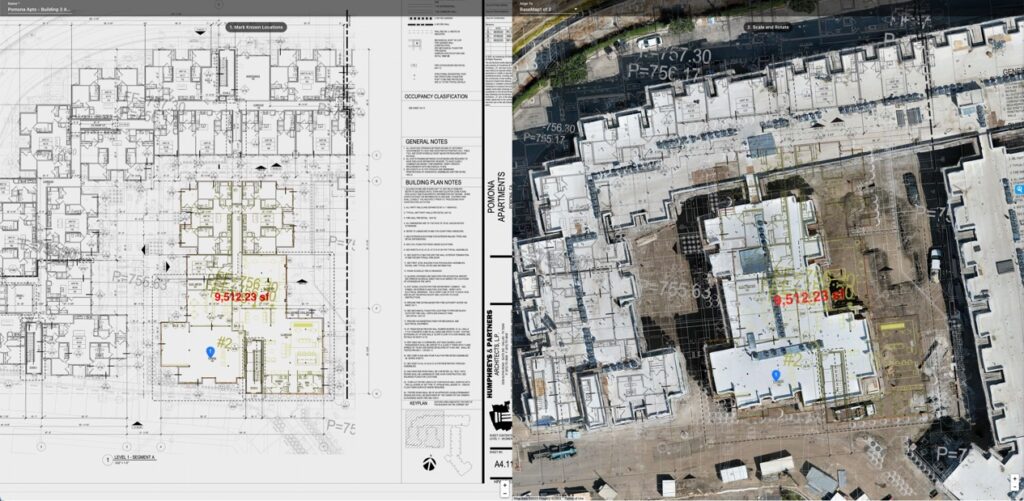
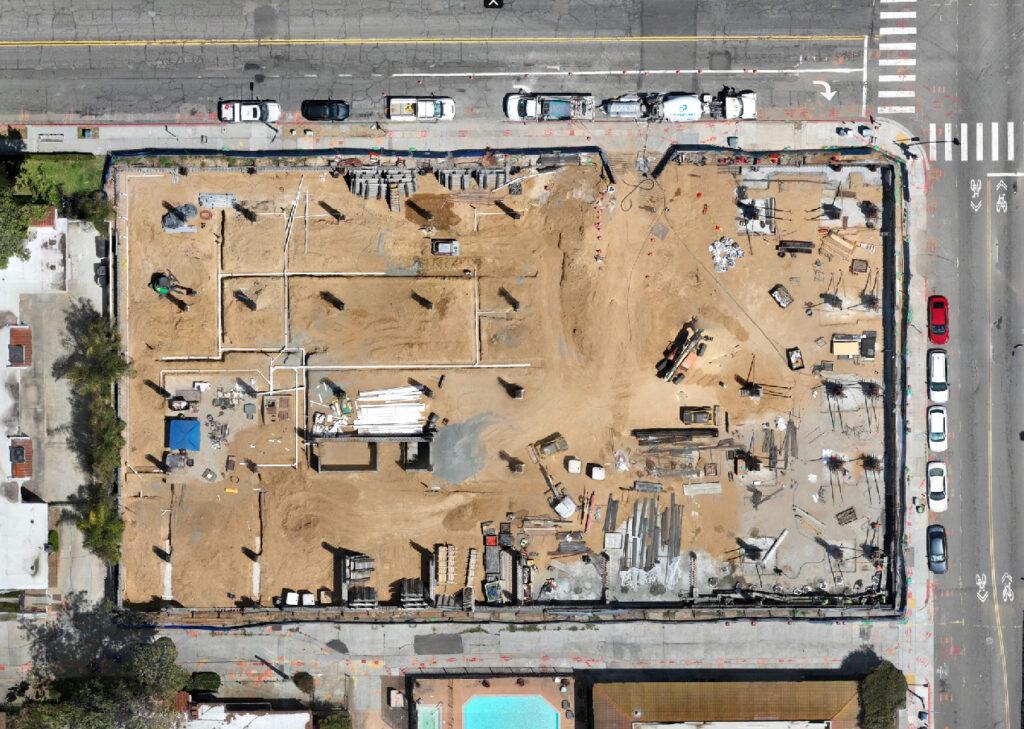
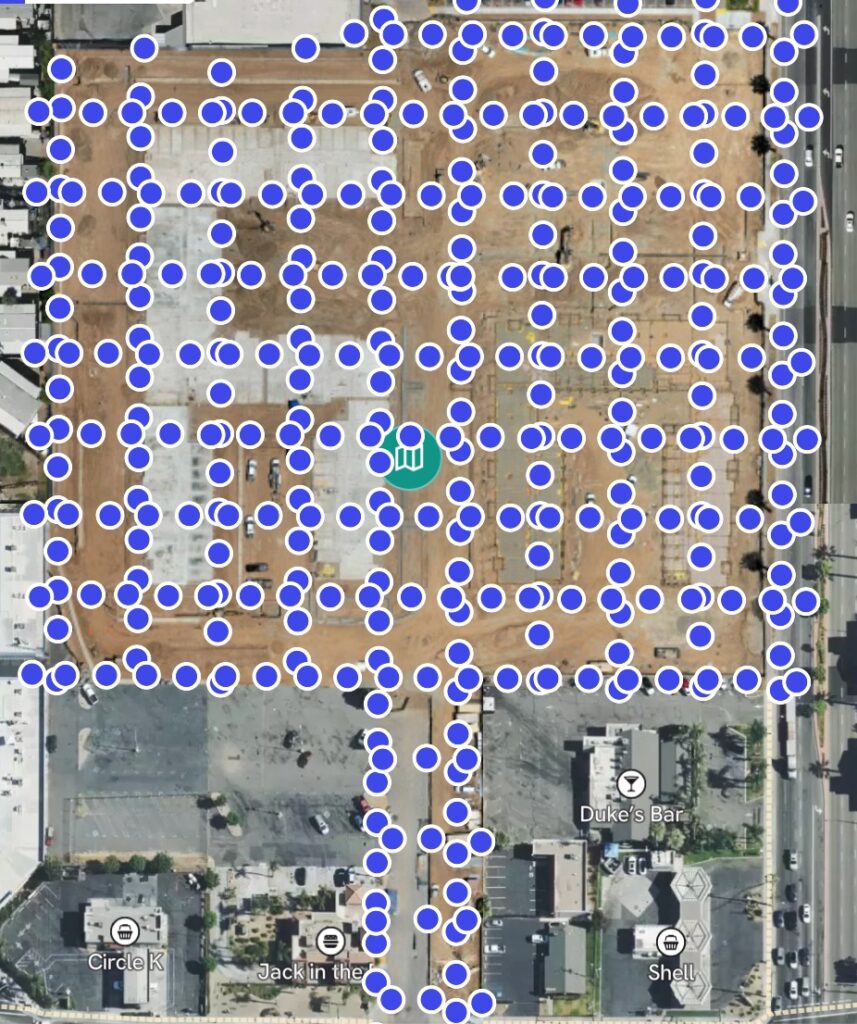
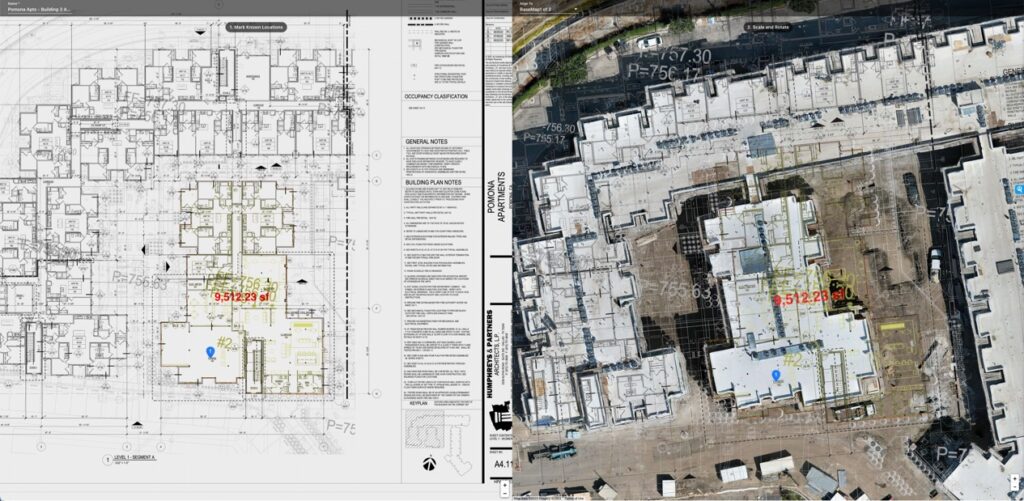
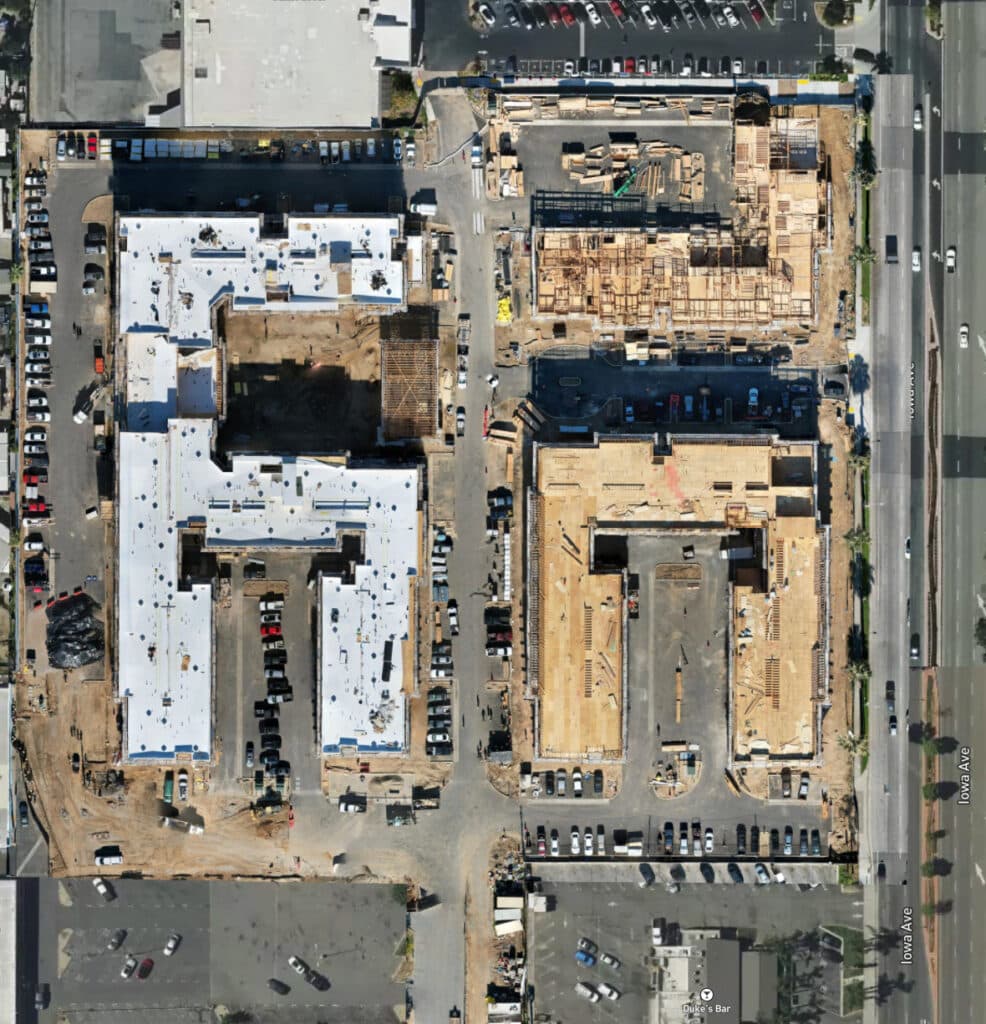
    Construction Map Overlay
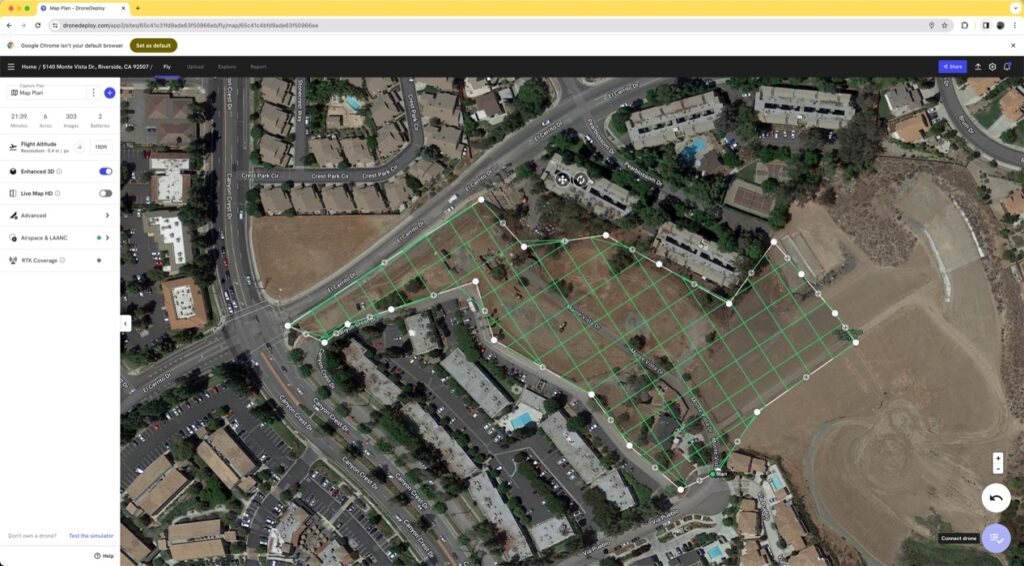
    Creating Measurable Data Starts with an Integrated Planning Approach

    Photogrammetry is what allows us to answer those questions with data — not opinion.

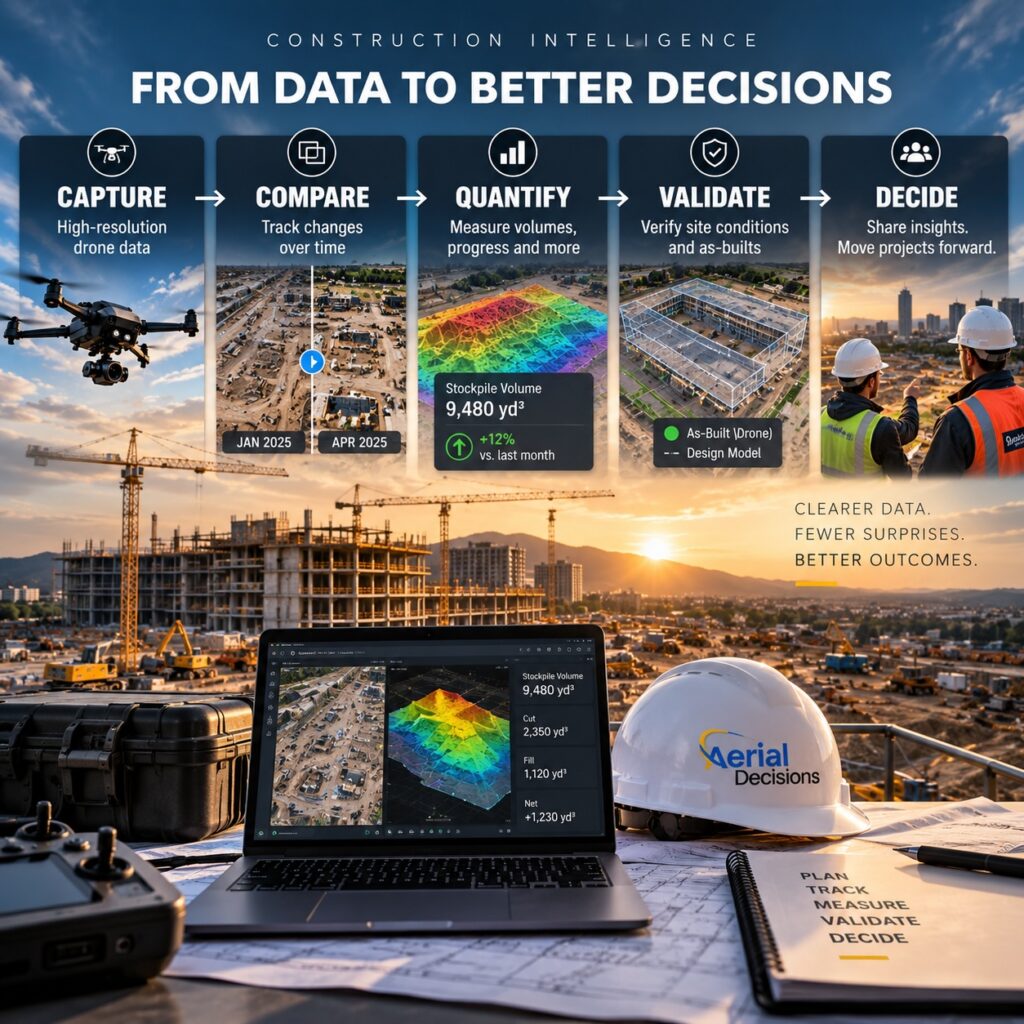
    When structured correctly, photogrammetry turns hundreds (sometimes thousands) of drone images into accurate, measurable site models that support better decisions, cleaner reporting, and stronger documentation throughout the lifecycle of a commercial construction project.

    What Is Photogrammetry in Commercial Construction?

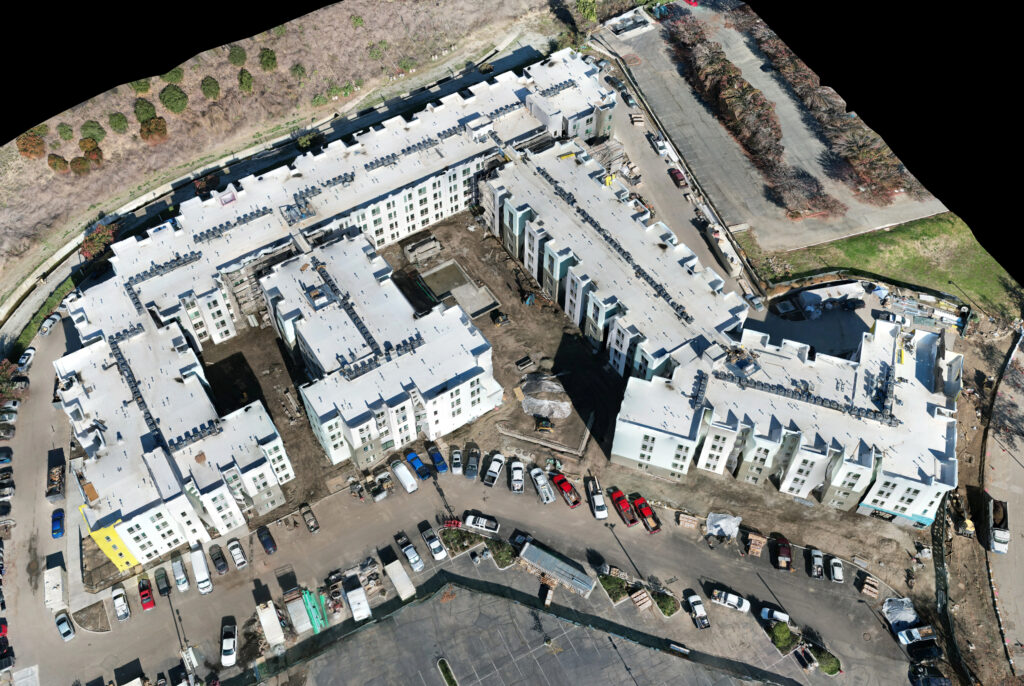
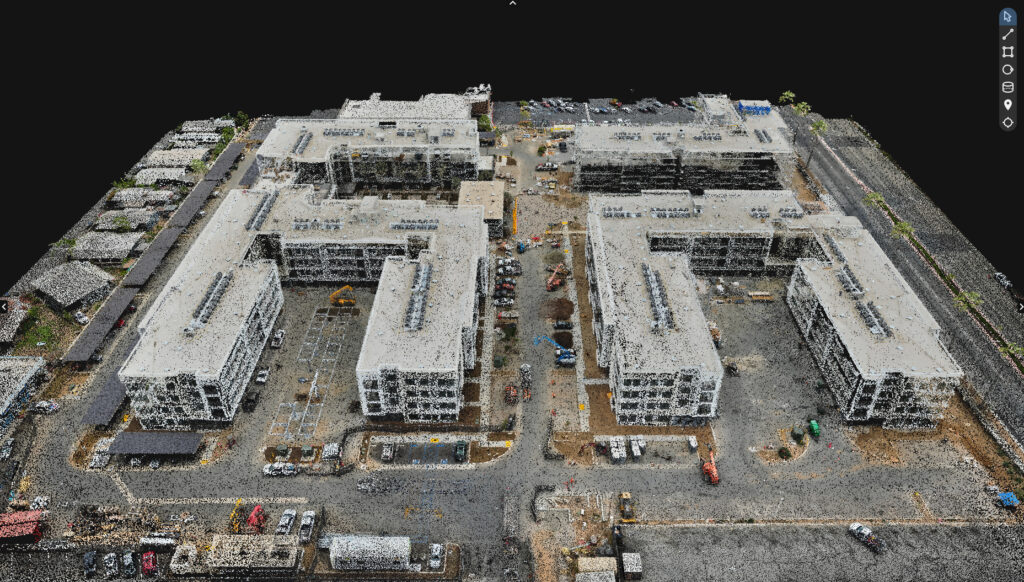
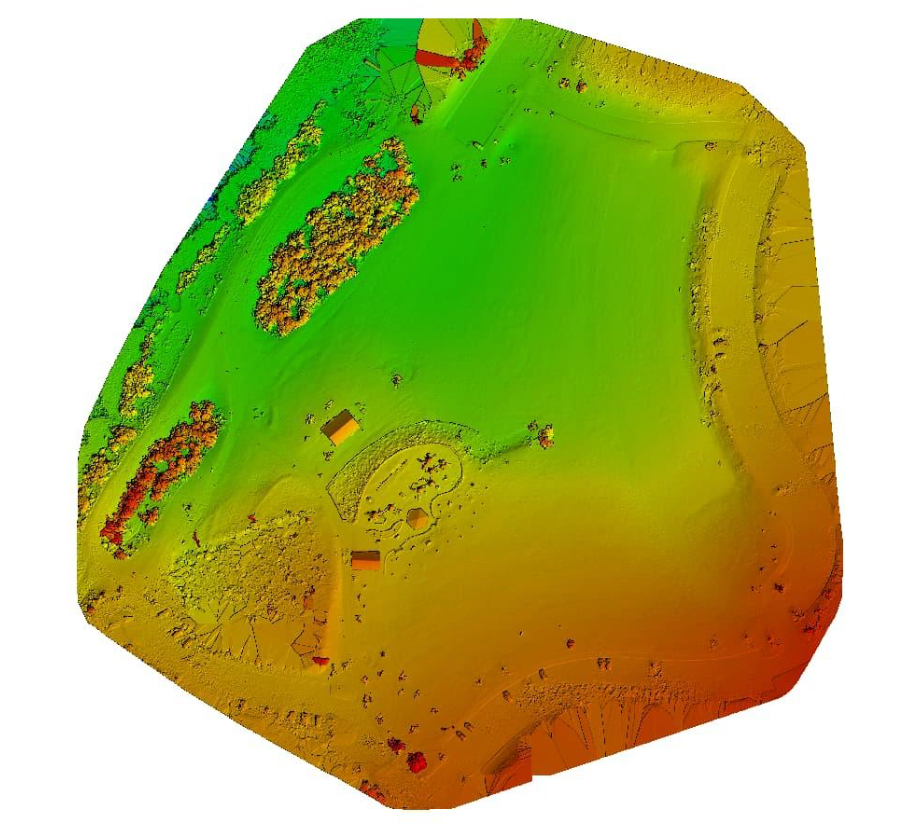
    In commercial construction, photogrammetry is the process of capturing overlapping aerial images with a drone and using specialized software to convert those images into accurate 2D maps, 3D models, and measurable datasets such as orthomosaics, point clouds, and digital terrain models.

    Instead of simply viewing a jobsite, teams can:

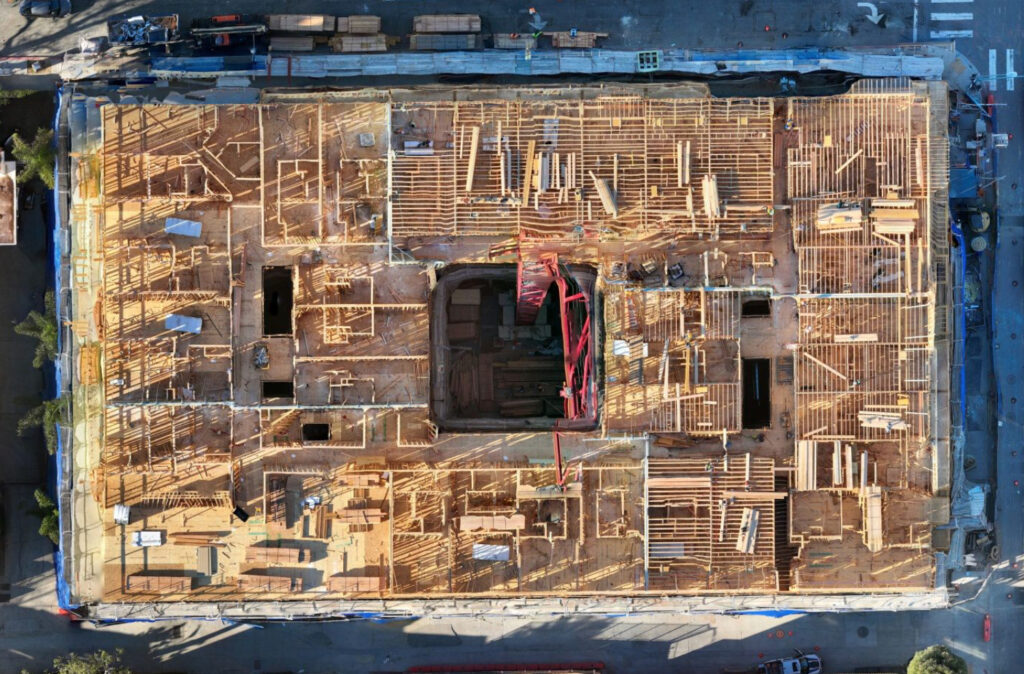
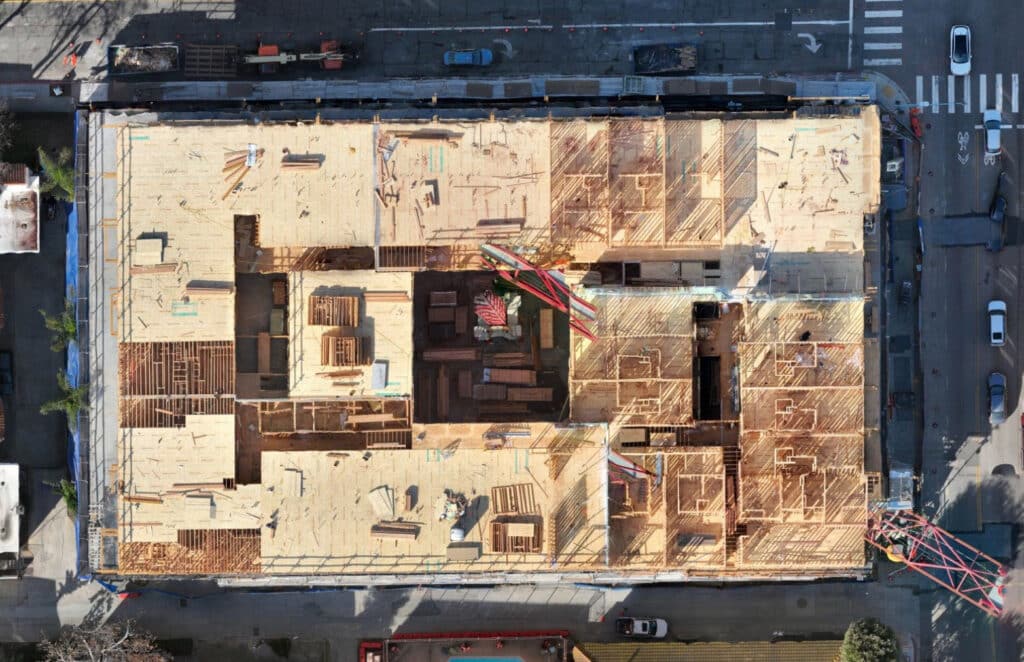
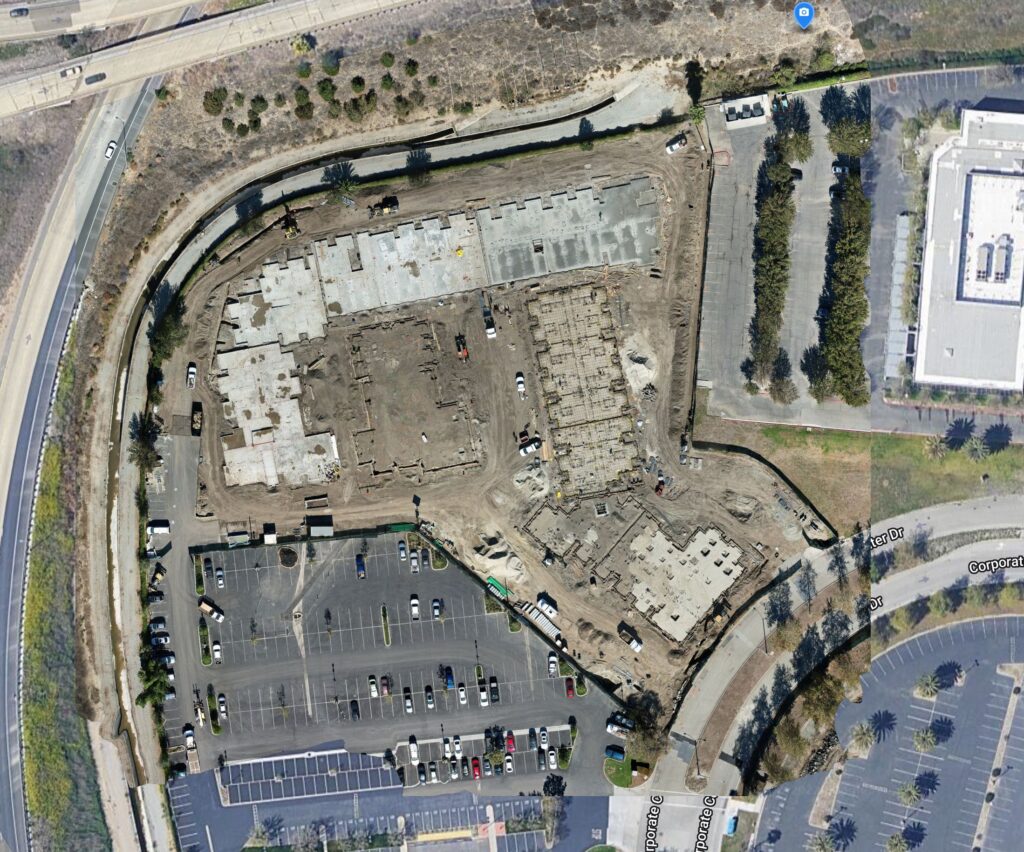
    drone mapping commercial construction site
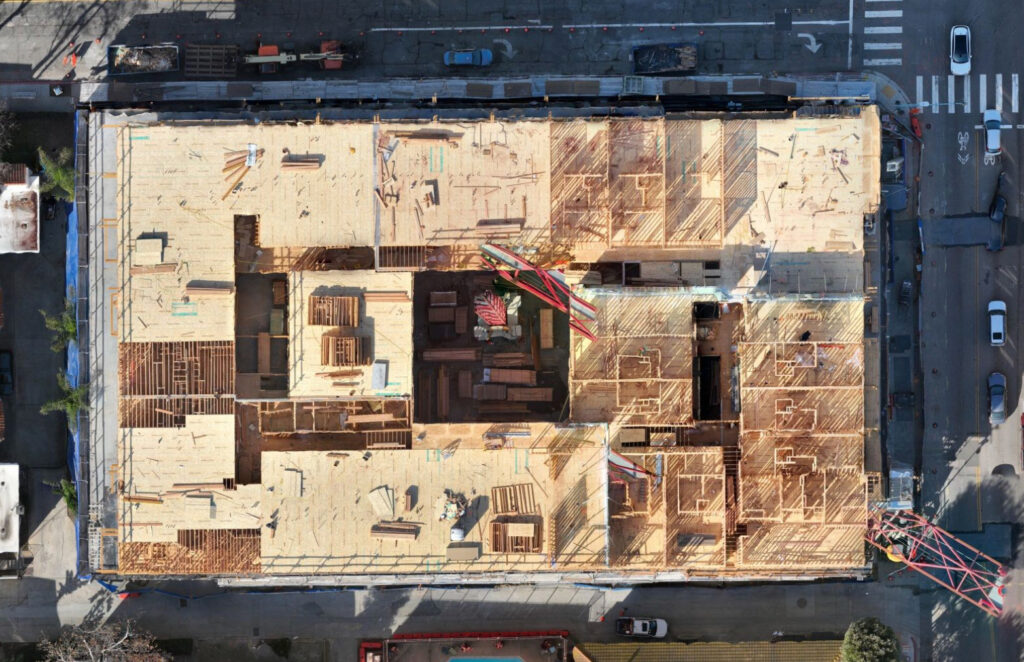
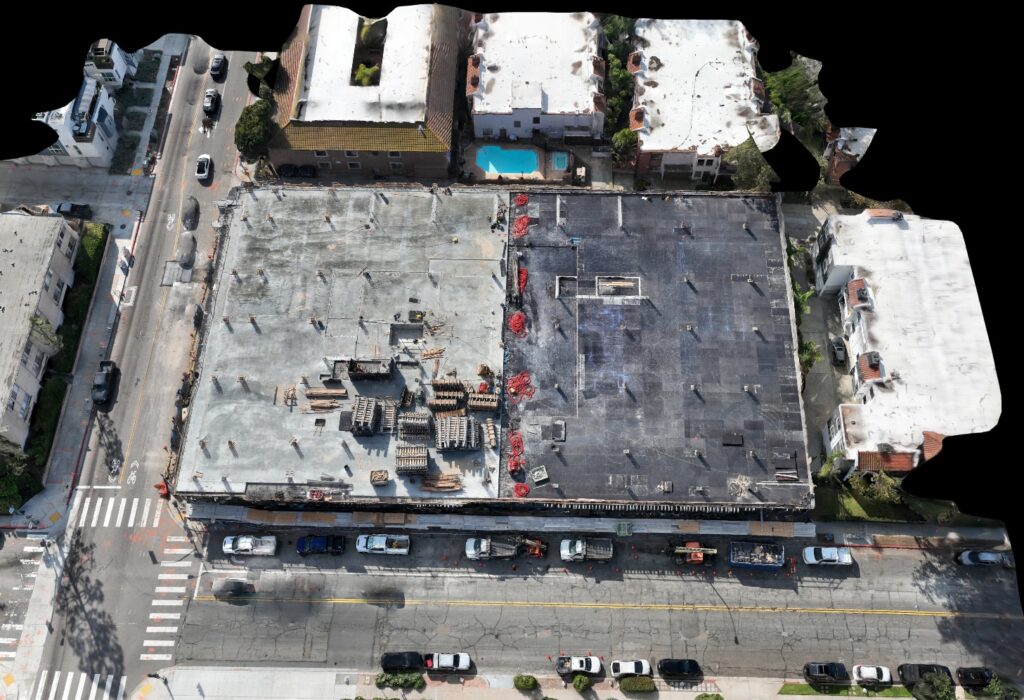
    3D model from a recent drone mapping commercial construction project
    • Measure distances and areas
    • Calculate volumes
    • Compare time-based progress
    • Document site conditions with precision

    It transforms imagery into usable construction intelligence.

    How Photogrammetry Supports Commercial Construction Workflows

    From our experience operating pilot and visual observer crews across Southern California, photogrammetry provides the most value when it is integrated into repeatable reporting cycles — not treated as a one-off flight.

    Here’s where it most often supports project teams:

    1. Preconstruction & Existing Conditions

    Photogrammetry provides a detailed baseline before work begins. This helps align owners, designers, and contractors early — especially on complex or urban sites.

    2. Earthwork & Volume Verification

    Accurate volume calculations help validate grading progress and reduce uncertainty around material quantities.

    3. Progress Validation

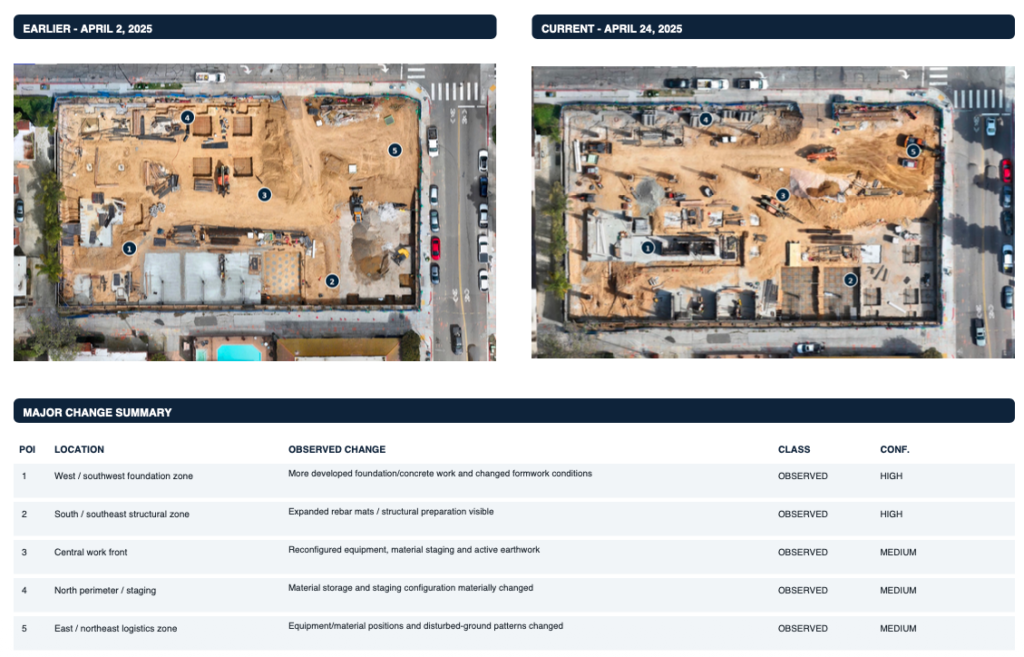
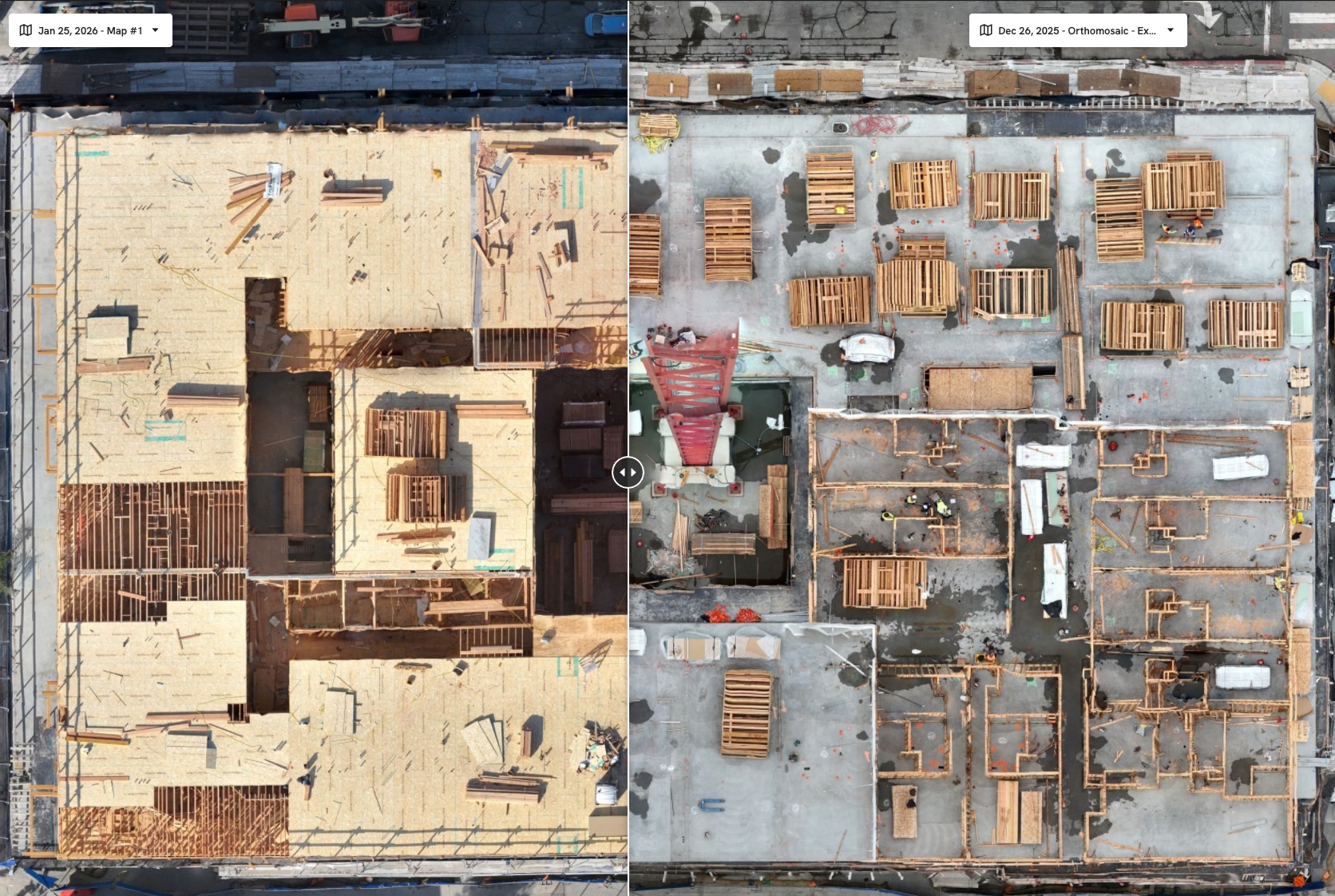
    Side-by-side comparisons allow project teams to visually confirm sequencing and identify potential inefficiencies before they escalate.

    4. Executive & Stakeholder Reporting

    Measurable orthomosaic maps and 3D models create a structured reporting layer that most executives find easier to interpret than narrative-only updates.

    What Photogrammetry Produces

    A properly executed photogrammetry workflow typically generates:

    • Orthomosaic maps (georeferenced 2D aerial maps)
    • 3D site models
    • Point clouds
    • Digital Surface Models (DSM)
    • Digital Terrain Models (DTM)
    • Volume calculations
    Orthomosaics are ortho-rectified images
    Orthomosaics are ortho-rectified images that minimize the impact of the earth’s natural curvature.

    These deliverables allow teams to move beyond visual observation into measurable validation.

    Photogrammetry vs Standard Drone Video

    Category Drone Video Photogrammetry
    Emotional Impact High Moderate
    Measurability None High
    Progress Comparison Limited Structured
    Volume Calculations No Yes
    Reporting Value Visual Data-Driven
    Dispute Support Weak Strong

    Video may support marketing.
    Photogrammetry supports management.

    Most commercial stakeholders prioritize measurable outcomes over cinematic visuals.

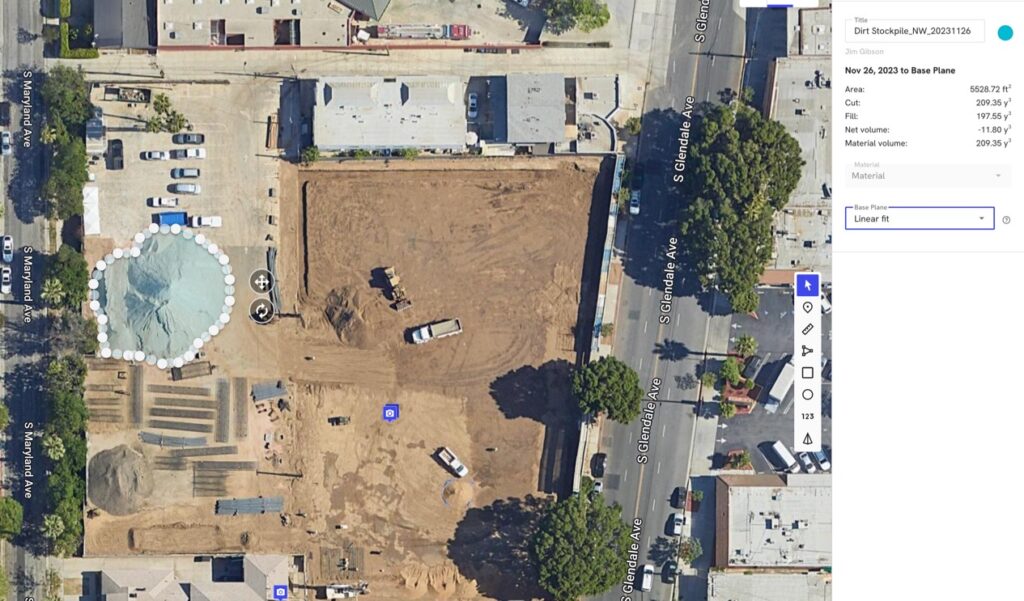
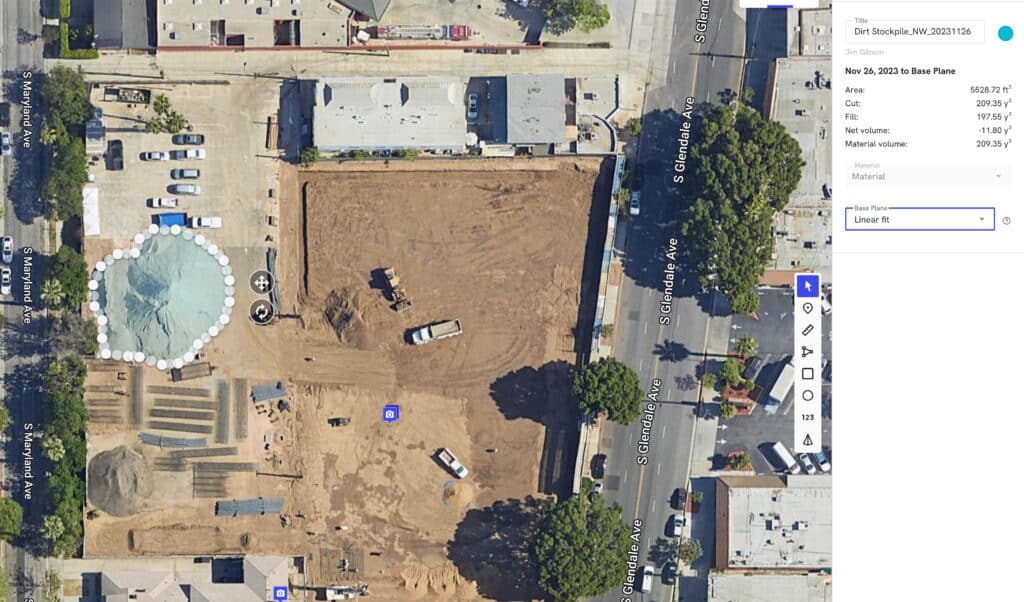
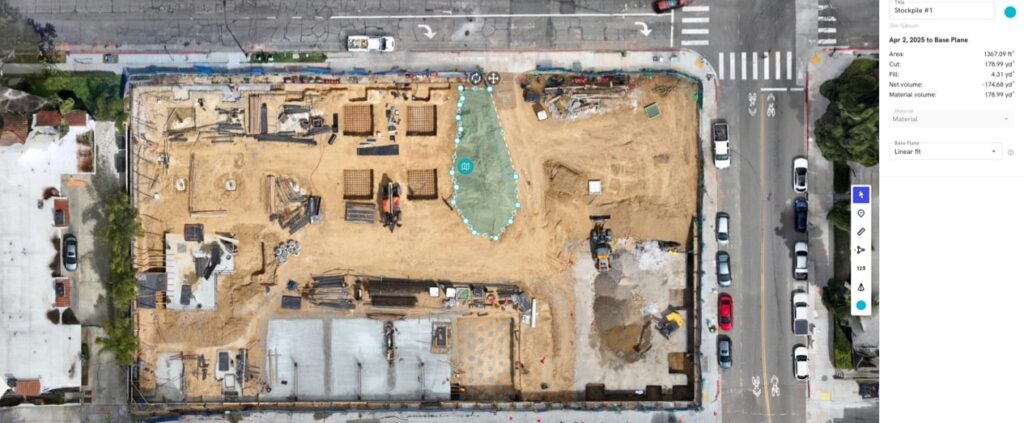
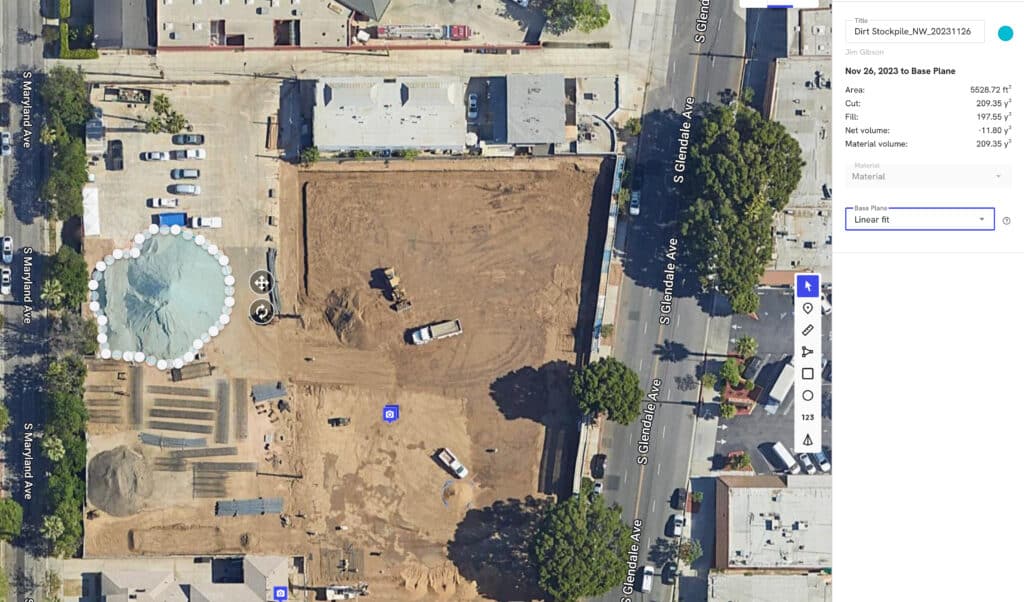
    Stockpile Measurements of a Construction Dirt Pile
    Software Can Convert Regular Drone Images to an Ortho Rectified Image thus Enabling Accurate Stock Pile Measurements

    Mini Case Snapshot (From Field Experience)

    • Project Type: Mid-sized commercial development, Southern California
    • Challenge: Grading quantities required validation before pay application review
    • Drone Method: Recurring photogrammetry flights producing orthomosaics and volume calculations
    • Outcome: Improved confidence in reported quantities and clearer owner-contractor alignment

    Why Photogrammetry Strengthens Risk Control

    In our work supporting commercial construction teams, we’ve seen photogrammetry reduce risk exposure in several ways:

    • Early identification of sequencing inconsistencies
    • Documentation of scope changes
    • Visual confirmation of installed conditions
    • Reduced ambiguity in progress conversations

    When teams rely less on interpretation and more on measurable site data, decision cycles tend to accelerate.

    And accelerated decisions often protect margins.

    How Photogrammetry Fits Into a Modern Drone Program

    Photogrammetry is most effective when it becomes a repeatable intelligence layer across the lifecycle of a build:

    • Monthly mapping cadence
    • Standardized flight plans
    • Time-stamped archive
    • Executive-ready reporting structure
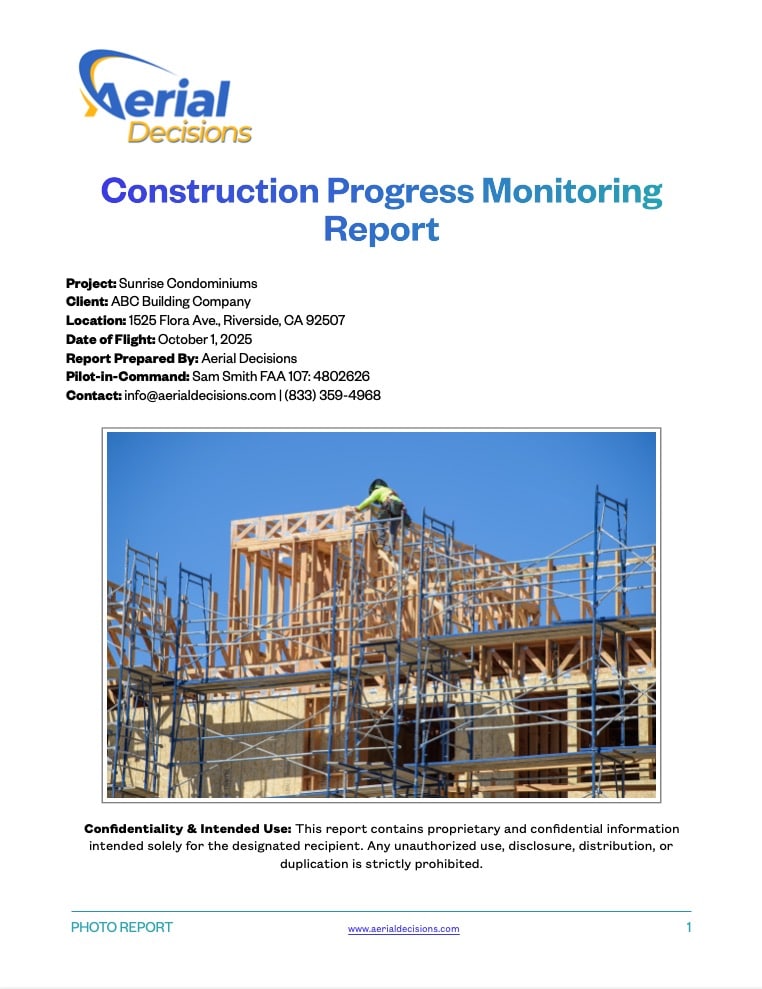
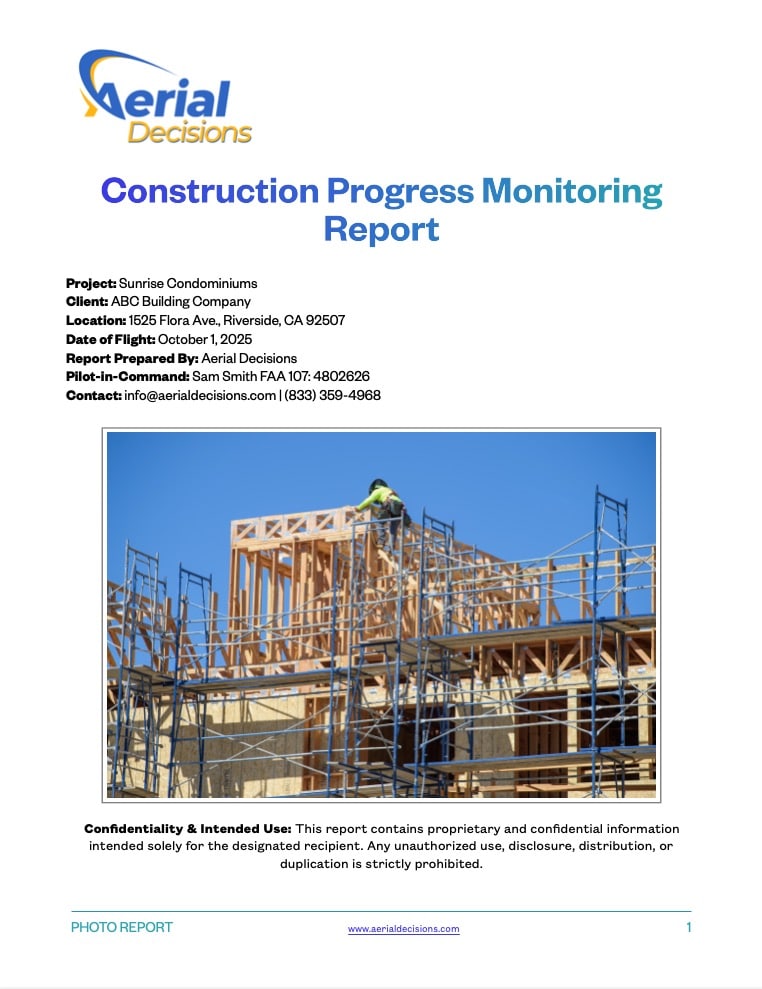
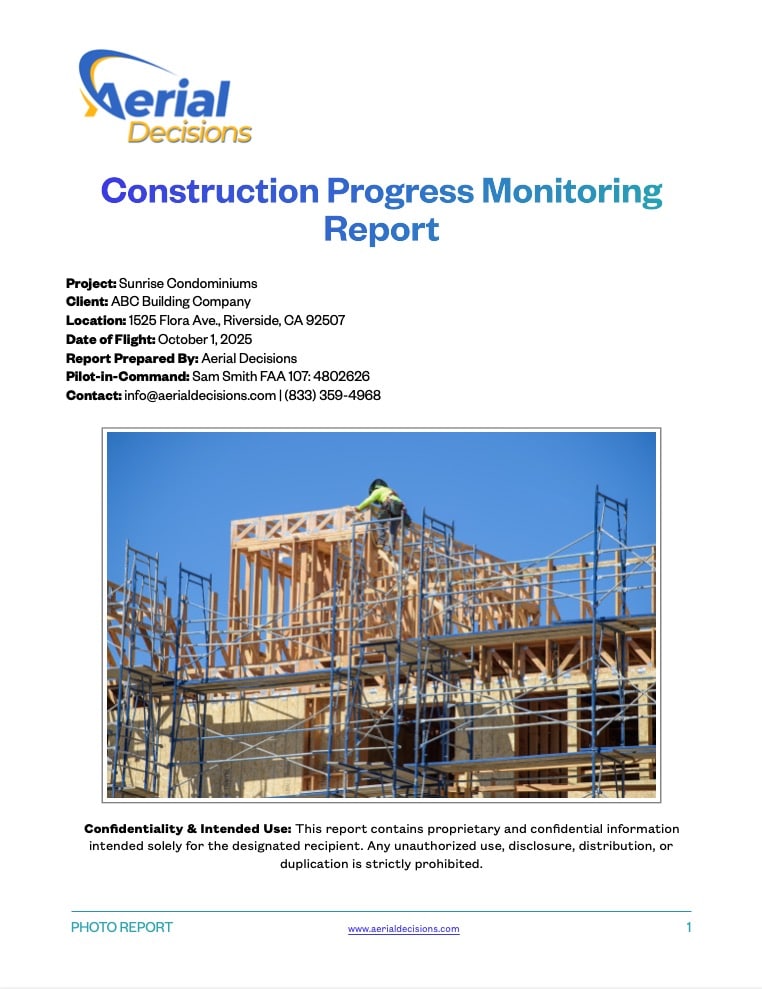
    Construction Monitoring Progress Report
    Construction Monitoring Reports are an Excellent Way to Share Site Progress with Key Stakeholders

    When structured properly, photogrammetry is not a technical add-on.
    It becomes operational infrastructure.

    FAQs

    Is photogrammetry accurate enough for commercial construction projects?
    When properly captured and processed, photogrammetry provides reliable site measurements suitable for progress validation, documentation, and volume analysis.

    Does photogrammetry replace traditional surveying?
    No. It complements survey data by providing frequent visual and measurable updates between formal survey milestones.

    How often should photogrammetry flights occur?
    Most commercial projects benefit from monthly flights, with higher frequency during critical grading or structural phases.

    What software is used for photogrammetry processing?
    Professional workflows use specialized processing platforms that convert overlapping images into orthomosaics, 3D models, and terrain datasets.

    Who benefits most from photogrammetry?
    General Contractors, Owners, Developers, and Project Executives responsible for oversight and reporting.

    Executive Takeaway

    Photogrammetry in commercial construction is not about capturing better images — it’s about converting site conditions into measurable, defensible data. Most construction stakeholders prioritize clarity, risk reduction, and validation. When integrated correctly, photogrammetry provides all three.

    From The Editor:

    Do you need to hire a professional drone service provider for your project? To speak to an aerial data specialist, fill out a form, email us or for even faster response times, give us a call at (833) FLY-4YOU or (833) 359-4968. Check out our transparent pricing at https://aerialdecisions.com/drone-photography-pricing/ and watch this space as we expand on the above topics and more over the coming weeks and months.

    If you like this post, feel free to click the share button at the bottom of the page. We appreciate you helping us by spreading the content we share on our blog.

    Drones and Construction podcast on Spotify
    Stream Drones and Construction podcast on your favorite listening platform.

    Showcase Your Company on the Drones and Construction Podcast! If you’d like to be a featured guest on our podcast, send us an email: info@aerialdecisions.com and one of our crew will get right back to you to share the details.

    About Aerial Decisions

    Aerial Decisions is a Los Angeles-based Drone Services Provider (DSP). We specialize in providing cutting-edge drone data collection combined with industry leading software solutions tailored for the commercial construction industry. Our mission is to optimize the way enterprise construction projects are managed by offering precise aerial photography, detailed data analysis, and innovative software tools through a network of FAA-certified and insured drone pilots. Aerial Decisions is not just a drone service provider; we are your strategic partner in commercial construction. Our hands-on approach to understanding your unique requirements and our dedication to excellence ensures that every flight and every data point is optimized for your success. Trust us to be the eyes in the sky that elevate your construction projects to new heights.

  • Drone Mapping for Commercial Construction Projects

    Drone Mapping for Commercial Construction Projects

    Why We Started Using Drone Mapping on Construction Jobsites

    When we first started flying drones on commercial construction projects in Southern California, the goal wasn’t flashy visuals—it was clarity. As our pilot and visual observer teams began supporting more General Contractors and Owners, we kept seeing the same problems: inconsistent progress documentation, misalignment between field teams and executives, and too much reliance on subjective reporting.

    Drone mapping changed that.

    From dense urban infill projects to large commercial developments, we’ve seen firsthand how a consistent aerial mapping program gives project teams a shared, objective view of what’s actually happening on site. For executives who don’t have time to walk jobs every week, that visibility matters—and it directly impacts schedule confidence, risk exposure, and decision-making.


    drone mapping commercial construction site
    drone mapping commercial construction site

    What Drone Mapping Means in Commercial Construction

    In commercial construction, drone mapping is the process of capturing aerial imagery and converting it into accurate, measurable site maps—such as orthomosaics and 3D models—that document existing conditions and track progress over time.

    This isn’t about pretty pictures. It’s about producing repeatable, data-driven visuals that project teams, owners, and stakeholders can trust.


    How We See Drone Mapping Used Most Effectively

    Based on our work across Southern California projects, drone mapping delivers the most value in four areas:

    1. Pre-Construction & Site Context

    Before ground is broken, drone mapping helps teams document existing conditions and align expectations early—especially on tight or complex sites.

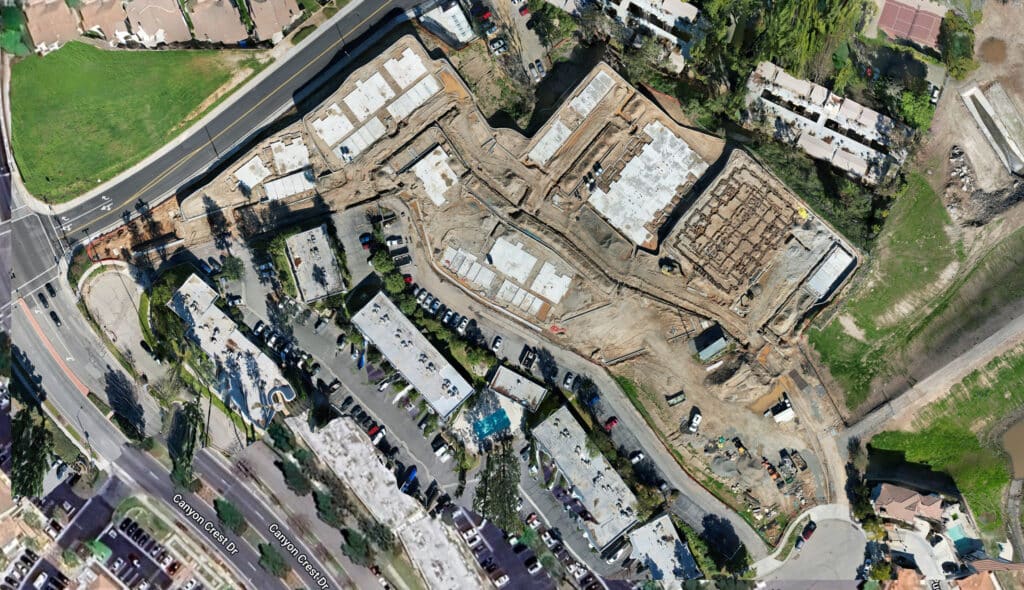
    commercial construction site aerial map
    Commercial construction site aerial map

    2. Ongoing Progress Documentation

    Recurring flights (monthly or milestone-based) create a visual timeline that supports:

    • Owner updates
    • Schedule reviews
    • Internal coordination meetings

    Instead of debating what’s complete, teams can see it clearly.

    3. Coordination & Risk Reduction

    From staging conflicts to access constraints, aerial maps often reveal issues that are difficult to spot from the ground—before they become expensive problems.

    4. Executive & Owner Reporting

    Many of our GC and owner clients use drone maps as their primary reporting tool. One aerial map often replaces multiple pages of written updates.


    Drone Mapping vs Traditional Jobsite Documentation

    AreaTraditional MethodsDrone Mapping
    Site CoverageGround-level onlyFull site visibility
    ConsistencyVaries by reportRepeatable & standardized
    SafetyRequires site walksRemote data capture
    Owner CommunicationText-heavyVisual & intuitive
    Historical RecordFragmentedTime-based archive

    Mini Case Snapshot (From Our Field Experience)

    • Project Type: Large commercial construction site, Southern California
    • Challenge: Owners needed reliable progress visibility without frequent site visits
    • Drone Method: Monthly drone mapping with orthomosaics and progress overlays
    • Outcome: Faster executive decisions, fewer clarification requests, and improved trust between field teams and ownership

    construction drone orthomosaic
    Construction drone orthomosaic

    Why Drone Mapping Shows Real ROI

    From our perspective, the return on drone mapping isn’t just financial—it’s operational. When everyone is looking at the same visual truth, meetings are shorter, disputes are fewer, and decisions happen faster.

    That kind of clarity compounds over the life of a project.


    FAQs

    Is drone mapping accurate enough for commercial construction projects?
    Yes. When captured correctly, drone maps provide reliable visual and measurement data for progress tracking and site documentation.

    How often should drone mapping be performed?
    Most projects benefit from monthly mapping, with higher frequency during critical construction phases.

    Does drone mapping replace traditional surveying?
    No. Drone mapping complements surveying by adding visual context and frequent updates.

    Is drone mapping safe on active jobsites?
    Yes. It reduces the need for personnel to enter active or hazardous areas while still capturing comprehensive data.

    Who uses drone mapping the most?
    General Contractors, Owners, Developers, and Project Executives responsible for oversight and reporting.


    Key Takeaway

    From our experience at Aerial Decisions, drone mapping has become one of the most effective tools for improving visibility and accountability on commercial construction projects. It doesn’t replace existing workflows—it strengthens them by giving teams a clearer, shared understanding of progress and risk.

    From The Editor:

    Do you need to hire a professional drone service provider for your project?  To speak to an aerial data specialist, fill out a form, email us or for even faster response times, give us a call at (833) FLY-4YOU or (833) 359-4968.  Check out our transparent pricing at https://aerialdecisions.com/drone-photography-pricing/ and watch this space as we expand on the above topics and more over the coming weeks and months.  

    If you like this post, feel free to click the share button at the bottom of the page.  We appreciate you helping us by spreading the content we share on our blog.

    Drones and Construction podcast on Spotify
    Stream Drones and Construction podcast on your favorite listening platform.

    Showcase Your Company on the Drones and Construction Podcast! If you’d like to be a featured guest on our podcast, send us an email: info@aerialdecisions.com and one of our crew will get right back to you to share the details.

    About Aerial Decisions

    Aerial Decisions is a Los Angeles-based Drone Services Provider (DSP).  We specialize in providing cutting-edge drone data collection combined with industry leading software solutions tailored for the commercial construction industry. Our mission is to optimize the way enterprise construction projects are managed by offering precise aerial photography, detailed data analysis, and innovative software tools through a network of FAA-certified and insured drone pilots.  Aerial Decisions is not just a drone service provider; we are your strategic partner in commercial construction. Our hands-on approach to understanding your unique requirements and our dedication to excellence ensures that every flight and every data point is optimized for your success. Trust us to be the eyes in the sky that elevate your construction projects to new heights.

  • How Drones are Changing Building Facade Inspections

    How Drones are Changing Building Facade Inspections

    As a Drone Service Provider (DSP) for the commercial real estate sector, we leverage advanced drone technology to offer precise and efficient facade inspections for commercial high-rise buildings. Our drones are equipped with high-resolution cameras and various sensors to capture detailed imagery and data of the building’s exterior.  We then utilize software visualization tools to aid in translating drone imagery into easy to understand data driven visualizations that can help commercial building managers make cost effective decisions that impact the long term sustainability of the properties they manage.

    In this blog post, I will explore the key benefits of using drones for facade inspections.

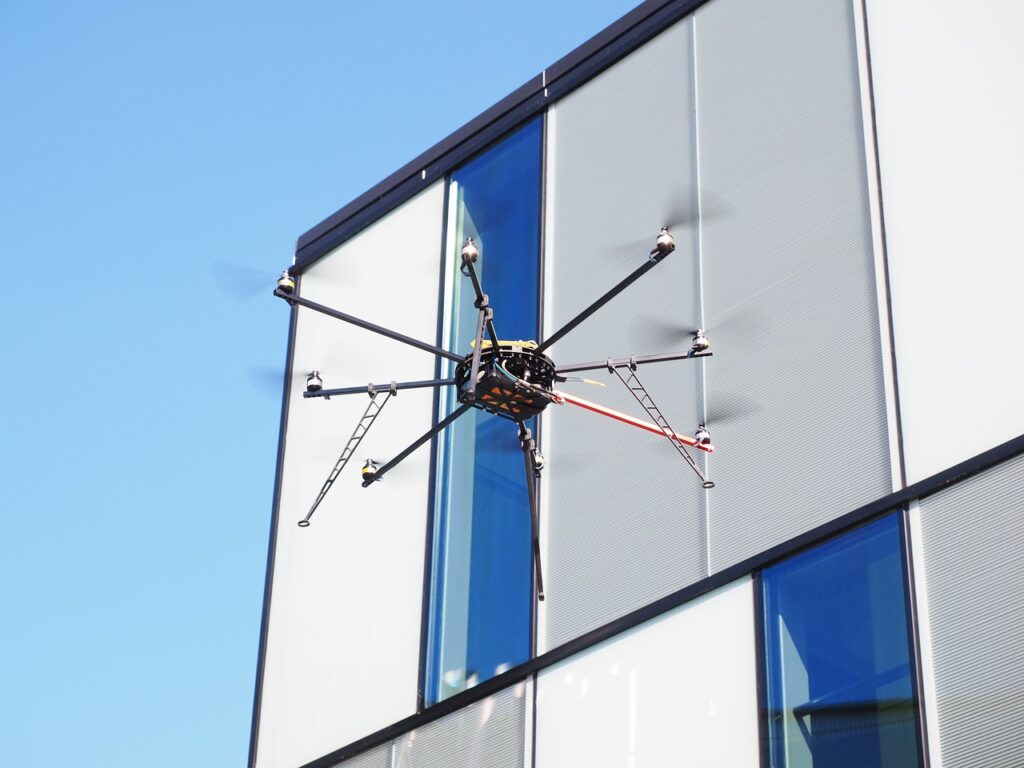
    drone inspecting building facade
    Drones provide faster, safer and smarter ways to conduct commercial building facade inspections.

    Key Benefits of Using Drones for Facade Inspections

    Cost-Effectiveness

    Traditional methods involving scaffolding and manual inspections can be expensive and time-consuming. Drones can perform inspections more quickly and with fewer resources, lowering overall costs.  Complex building facades often have hidden nooks and crannies that pose a challenge for traditional methods. Our drones navigate tight spaces and reach hard-to-access areas with ease, providing a comprehensive overview of your entire building exterior. No stone goes unturned – you’ll receive a detailed report covering every inch of your facade, ensuring no potential issue goes unnoticed.

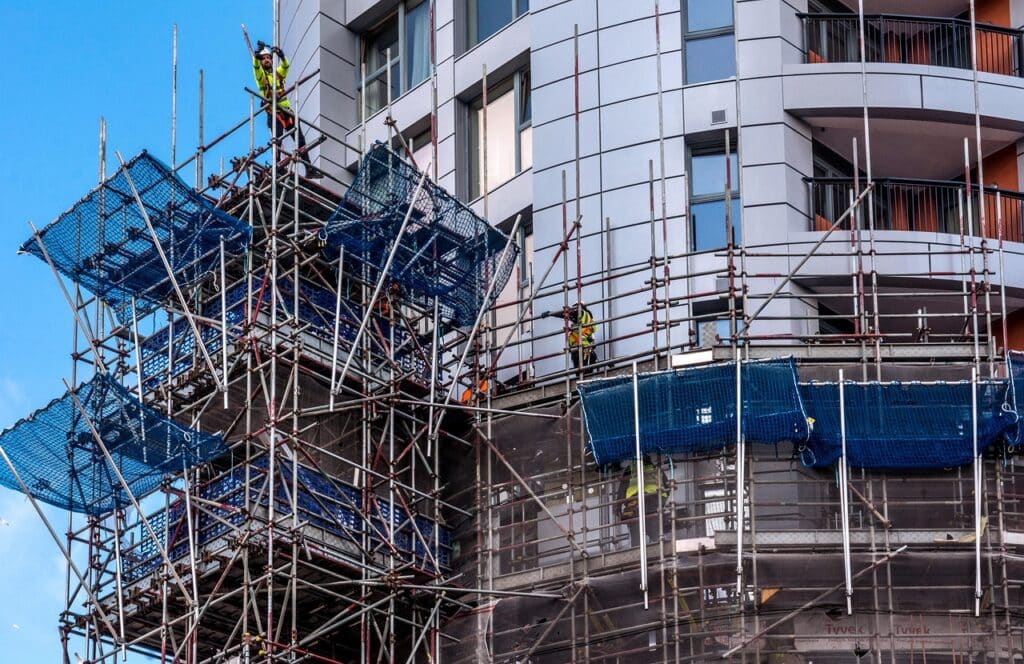
    crew on scaffolding inspecting building facade
    Construction crews take significant risks to inspect building exteriors on scaffolding inspecting building facades.

    Enhanced Safety

    Drones eliminate the need for inspectors to physically climb scaffolding or use suspended platforms such as swing stages or man lifts, significantly reducing the risk of accidents and injuries associated with high-rise inspections.  Traditional methods involving scaffolding, rope access, swing stages, man lifts, bucket trucks and manual inspections can be a major drain on your budget. Aerial Decisions’ drone services offer a cost-effective alternative. Drones require minimal set-up, can cover large areas quickly, and eliminate the need for extensive manpower. This translates to faster inspections at a fraction of the cost, freeing up your resources for other priorities.

    Comprehensive Coverage

    Drones can access hard-to-reach areas and provide a complete and detailed view of the building’s facade, ensuring no part of the structure is overlooked.  Our drones are equipped with advanced cameras and sensors, capturing high-resolution images and videos that reveal even the most minute details. 

    High-Resolution Imagery and Data

    Equipped with advanced cameras and sensors, drones capture high-definition images and videos, along with thermal and structural data. This detailed information aids in accurate assessment and diagnosis of potential issues.  We can also integrate thermal imaging and other specialized sensors to gather comprehensive data about the structural integrity of your facade. This detailed information empowers you to make informed decisions regarding repairs, maintenance, and overall building health.
    Real-Time Data and Reporting

    Drones can transmit data in real time, allowing for immediate analysis and quick decision-making. This accelerates the process of identifying and addressing problems, minimizing downtime and disruption.  Our drone technology allows for real-time data transmission. This means you can receive a comprehensive report and high-definition visuals the moment the inspection is complete. This rapid access to information allows for faster analysis and decision-making. Identify problems quickly, take action swiftly, and minimize downtime and disruption to your operations.

    Now that we have covered the Key Benefits of Using Drones for Facade Inspections, let’s explore the types of data that building managers will find useful.

    Types of Data Beneficial to Building Managers

    Video and Images for Visual Record Keeping

    Our high-resolution drone photos and videos capture the facade in stunning detail, revealing more than just a cursory glance ever could. This detailed visual record allows us to pinpoint visible defects like cracks, spalling, water stains, discoloration, and other signs of wear and tear. With this information, you can prioritize repairs and address issues before they escalate into major problems.

    3D Mapping and Modeling

    Drones can create accurate 3D models of the building’s exterior. These models help visualize the facade’s condition and plan for maintenance or repairs.  The 3D model serves as a “digital twin” of the physical building where building managers can compare the digital twin to the actual facade to assess its condition thus Identifying areas that need maintenance, repairs, or upgrades.
    Environmental Data

    Drones can collect data on environmental conditions around the building, such as wind loads and weather patterns, which can affect the facade’s longevity and performance.

    Drones Equipped with Thermal Sensors

    Traditional inspections often miss hidden problems lurking beneath the surface. Our drones are equipped with thermal imaging technology that reveals temperature variations across the facade. These variations can be indicative of a variety of issues, including:

    Water Intrusion

    Because moist areas retain heat differently than dry areas, moisture trapped within the walls will show up as cooler spots in thermal images. Drones equipped with multispectral sensors capture data across different wavelengths of light.

    Insulation Problems

    Poorly insulated areas will show significant temperature differences compared to well-insulated sections. Well-insulated areas retain heat efficiently, resulting in a more uniform temperature across the facade. The thermal camera translates this uniformity into a consistent color on the image.

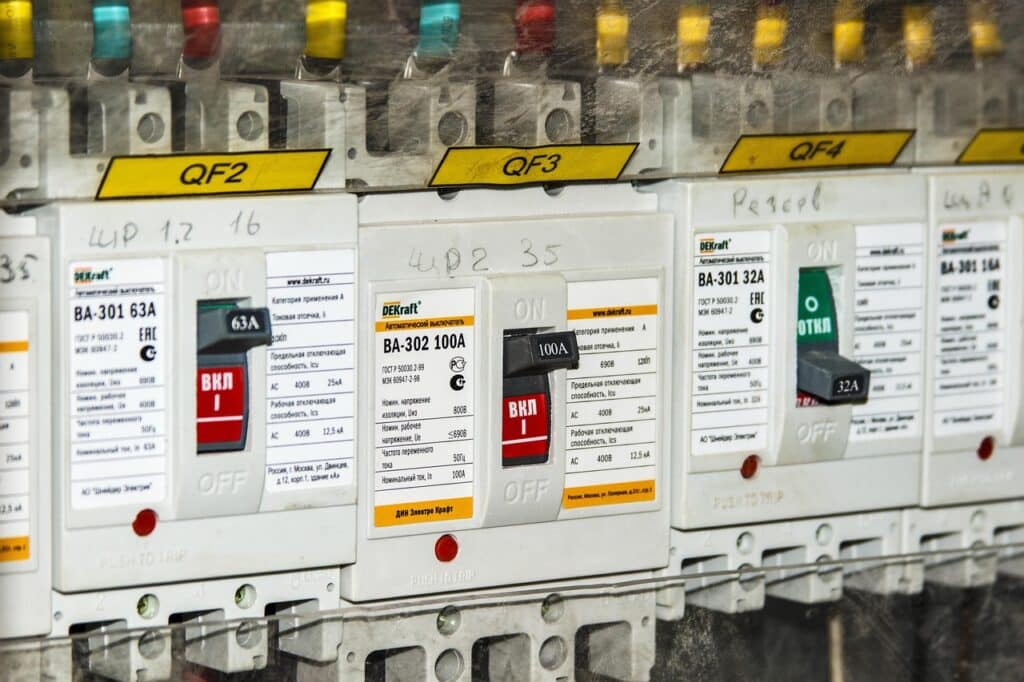
    Building electrical panels
    Inspecting building electrical panels can help to mitigate fire hazards
    Electrical Faults

    Overheated electrical components can be identified through thermal signatures, enabling prompt repair and preventing potential fire hazards.

    By harnessing the power of thermal imaging, we provide a deeper understanding of your building’s health and help you address potential problems before they become costly repairs.  Ultimately, by utilizing drone technology for facade inspections, commercial high-rise building managers can gain a comprehensive understanding of the building’s exterior condition, prioritize maintenance tasks, and ensure the safety and longevity of the structure.

    Looking for Drone Inspection Case Studies?
    Case Studies: Benefits of Drones in Façade Inspections for Commercial Buildings

    NYC Department of Buildings Study The New York City Department of Buildings conducted a comprehensive study on using drones for façade inspections, highlighting potential time and cost savings. The study emphasized that drones could rapidly differentiate areas needing repair, which would allow for more targeted use of scaffolding and reduce unnecessary expenses. Although NYC laws currently restrict drone usage, the findings suggest significant future savings and efficiencies once regulatory changes are implemented  (DroneDJ) .
    Haag Global’s Use of Drones Haag Global demonstrated the advantages of using drones for façade inspections in a case study from February 2023. They found that drones significantly reduced the time required for inspections and minimized the need for costly equipment like aerial lifts or scaffolding. Drones also improved safety by reducing the need for inspectors to work at heights. High-resolution images and videos captured by drones provided detailed data, enabling more precise assessments and reducing the need for additional hands-on inspections  (Haag Global) .

    Facility Executive Case Study An article in Facility Executive highlighted the adoption of drones for building envelope inspections by companies like Helios Visions. Drones enabled quick capture of high-resolution images and videos, leading to faster and more accurate assessments of façade conditions. This method was significantly cheaper and safer than traditional approaches involving scaffolding or rope access. The case study noted that drones could cover a building’s exterior in a fraction of the time, providing valuable data to identify potential issues before they became critical  (Facility Executive Magazine) .

    From The Editor:

    Do you need to hire a professional drone service provider for your project?  To speak to an aerial data specialist, fill out a form, email us or for even faster response times, give us a call at (833) FLY-4YOU or (833) 359-4968.  Check out our transparent pricing at https://www.aerialdecisions.com/drone-photography-pricing/ and watch this space as we expand on the above topics and more over the coming weeks and months.  

    If you like this post, feel free to click the share button at the bottom of the page.  We appreciate you helping us by spreading the content we share on our blog.

  • How Drones & Software Enhance Inventory Control

    As a veteran Drone Service Provider (DSP) that specializes in construction progress monitoring, we’ve grown to appreciate just how much our commercial construction clients rely on us delivering the capabilities of generating regular stockpile measurements.  Stockpile measurements are critical for organizing and managing material and critical supplies ordering and replenishing, essential components for the ongoing production of any construction project.

    What are Stockpile Measurements used for?

    Inventory Management: Stockpile measurements help construction project managers and key team members keep track of the quantity of materials available on-site. This information is essential for ensuring that there is an adequate supply of materials to support ongoing construction activities without delays.

    Resource Planning: By knowing the volume of materials in stockpiles, construction project teams can plan resource allocation more effectively. This includes determining when to order more materials to replenish stockpiles and avoid shortages that could halt construction progress.

    Cost Management: Accurate stockpile measurements allow project managers to better manage costs by preventing over-ordering or under-ordering of materials. This helps to optimize budgets and avoid unnecessary expenses.

    Space Optimization: Understanding the volume of materials in stockpiles helps optimize the layout of the construction site. By strategically arranging stockpiles, managers can maximize available space and improve workflow efficiency.

    Quality Control: Regular stockpile measurements enable internal teams to monitor the quality of materials over time. This helps to identify any issues such as degradation or contamination early on, allowing for timely corrective action to maintain construction quality standards.

    Internal team members depend heavily on accurate stockpile measurements to make informed decisions about material usage and ordering. By having precise data on the quantity and status of materials on-site, construction project managers can anticipate when supplies are running low and proactively order more, thereby avoiding costly delays in construction timelines. Furthermore, these measurements aid in optimizing storage space and preventing overstocking, which can tie up capital and create unnecessary clutter on the site.

    Stockpile Measurements of a Construction Dirt Pile
    Software Can Convert Regular Drone Images to an Ortho Rectified Image thus Enabling Accurate Stock Pile Measurements

    How Drones Have Changed the Stockpile Measurement Game

    Traditionally, obtaining stockpile measurements involved manual methods that were time-consuming and prone to errors. However, the advent of drone technology has revolutionized this process, providing a faster, more accurate, and less labor-intensive solution. Tools like DroneDeploy have become invaluable in streamlining data collection by allowing us to quickly capture high-resolution aerial imagery, called Orthomosaics, of construction sites. 

    The integration of drone technology into stockpile and inventory management has brought about several significant advantages for our clients. One of the most notable benefits is the ability to collect volumetric data in near real-time. Drones equipped with advanced sensors can capture detailed information about stockpile quantities without the need for manual measurement or site visits. This enables construction project managers to monitor stockpile levels remotely and make informed decisions promptly.

    Orthomosaic of Commercial Construction Site
    Orthomosaics are Invaluable Tools for Construction Project Managers

    Drones Deliver Highly Sharable Data

    Additionally, drone technology facilitates the sharing of mission-critical data with internal stakeholders located in different offices, across the country, or even across the ocean. Through cloud-based platforms like DroneDeploy, volumetric data can be uploaded and shared seamlessly, fostering collaboration and ensuring that all team members have access to the same accurate information. This level of accessibility and transparency is essential for maintaining alignment and driving project success.

    In summary, volumetric or stockpile measurement data collection depends on drone technology to create efficiencies at scale. By leveraging drones and innovative tools like DroneDeploy, construction project managers can streamline the process of gathering and analyzing stockpile data, leading to better decision-making and more effective management of materials and critical supplies. This not only saves time and resources but also enhances overall project outcomes, ultimately contributing to the success of commercial construction endeavors.

    From The Editor

    Do you need to hire a professional drone service provider for your project?  To speak to an aerial data specialist, fill out a form, email us or for even faster response times, give us a call at (833) FLY-4YOU or (833) 359-4968.  Check out our transparent pricing at https://aerialdecisions.com/drone-photography-pricing/ and watch this space as we expand on the above topics and more over the coming weeks and months.  

    If you like this post, feel free to click the share button at the bottom of the page.  We appreciate you helping us by spreading the content we share on our blog.

  • Soaring Through the Season: A Drone Enthusiast’s Holiday Tale

    Soaring Through the Season: A Drone Enthusiast’s Holiday Tale

    Tis the season to be droning so let’s toast to some Holiday Drone Humor. As we sip hot cocoa and deck the halls with boughs of holly, let’s take a moment to reflect on why this winter holiday season is extra special for us drone enthusiasts. Gather ’round the virtual fireplace, folks, because this is a tale of joy, gratitude, and a touch of high-flying hilarity!

    First off, can we talk about the gift that keeps on buzzing? Yes, you guessed it – drones! 

    This year has seen some mind-blowing advancements in the drone industry. It’s like our beloved flying robots have been hitting the gym, taking on a sleeker and smarter persona. It’s as if they’ve been sipping on a special drone elixir that’s turned them into the James Bond of the tech world.

    Remember those days when drones were all about capturing breathtaking landscapes? Well, now they’re making headlines for being our very own airborne couriers. Move over, Santa – the sky’s the new sleigh! Just imagine a drone whizzing through the air, delivering holiday cheer faster than you can say “jingle all the way.” If that’s not the true spirit of Christmas, I don’t know what is.

    And let’s not forget the drone enthusiasts’ equivalent of mistletoe – the much-anticipated Drone Under the Tree (DUTT) tradition! Rumor has it that 2023 has been a record-breaking year for DUTT surprises. Families are exchanging knowing glances, wondering if their loved ones have hidden a DJI under the tinsel or perhaps a Parrot in the stockings. It’s a season of suspense, surprise, and the sweet sound of rotors slicing through wrapping paper.

    But beyond the laughter and drone-filled dreams, this season has given us something even more precious – a sense of community. Drone enthusiasts across the globe have formed virtual clubs, sharing tips on how to fend off rogue snowflakes and swapping stories about the ultimate drone fails. It’s heartwarming to know that, in the vast winter wonderland of the internet, there’s a cozy corner for drone aficionados to share their tales of triumph and, let’s be honest, the occasional crash and burn.

    Christmas Carolers and Drones
    Christmas Carolers Serenade a Fleet of Drones. Image courtesy of MS AI Image Creator

    Now, let’s take a moment to express gratitude for the brilliant minds in the drone industry who’ve gifted us with innovations we didn’t know we needed. From obstacle-dodging algorithms to drones with built-in carol singers (okay, maybe not that last one, but we can dream, right?), these geniuses have transformed our hobby into a high-flying adventure.

    So, as we celebrate the season with joy in our hearts and a drone in hand, let’s raise a toast to the drone industry, where the skies are limitless, and the only limit is the charge in our batteries. May your holidays be filled with laughter, love, and the unmistakable hum of a drone overhead, reminding us that the season of joy is also the season of grateful buzzing. Cheers to droning into the new year with high hopes and even higher altitudes!

    From The Editor:

    Do you need to hire a professional drone service provider for your project?  To speak to an aerial data specialist, fill out a form, email us or for even faster response times, give us a call at (833) FLY-4YOU or (833) 359-4968.  Check out our transparent pricing at https://aerialdecisions.com/drone-photography-pricing/ and watch this space as we expand on the above topics and more over the coming weeks and months.  

    If you like this post, feel free to click the share button at the bottom of the page.  We appreciate you helping us by spreading the content we share on our blog.

  • Flying Witnesses: How Drones are Transforming Personal Injury Litigation

    Flying Witnesses: How Drones are Transforming Personal Injury Litigation

    Drones are used more frequently in personal injury cases, driven in large part by their ability to provide comprehensive, efficient, and objective evidence, ultimately facilitating fair and informed legal proceedings. Drones are, no doubt, transforming personal injury litigation in tangible ways.

    In the past, personal injury lawyers had to rely on traditional methods of collecting evidence, such as photographs, videos, and eyewitness testimony. However, drones can provide a much more comprehensive and accurate view of the accident scene. Drones can be used to take aerial photographs and videos of the scene, which can be used to show the exact location of the accident, the vehicles involved, and the injuries sustained. Drones are also used to fly over difficult-to-reach areas, such as rooftops and cliffs, which can be important in cases where the accident occurred in a dangerous location.

    How Drones are Shaping the Future of Personal Injury Case Investigations

    Roads Can be Complex to Navigate
    Roads Can be Complex to Navigate and Inattentive Drivers Can Cause Accidents

    Accident Scene Documentation

    Drones are used to document accident scenes in personal injury cases. By capturing high-resolution aerial photographs and videos, drones provide a comprehensive visual representation of the scene, including factors such as road conditions, traffic patterns, and environmental factors. This evidence can be crucial in determining liability and assessing the extent of injuries sustained.

    Surveillance and Reconstruction

    Drones equipped with advanced imaging technology, such as thermal cameras or LiDAR sensors, are used to conduct surveillance and accident reconstruction in personal injury cases. These drones can capture detailed data on the scene, including 3D models, measurements, and point clouds, which help in analyzing the sequence of events and identifying any contributing factors to the accident.

    Commercial Drone on a Pelican Case
    Commercial Drones are Capable of Sophisticated Photogrammetry and Data Collection.

    Property Inspections

    Drones are employed to conduct aerial inspections of properties in personal injury cases involving premises liability. By flying over the premises, drones can identify hazardous conditions such as inadequate lighting, structural defects, or unsafe premises that may have contributed to the injury. The aerial perspective offered by drones can provide valuable evidence to support a plaintiff’s claim.

    PI Cases That Used Drones for Accident Documentation

    Blount v. United Airlines

    This case involved a passenger who was injured when she was hit by a piece of luggage that fell from an overhead bin on a United Airlines flight. The passenger sued United Airlines, and the case went to trial. During the trial, the passenger’s attorney presented drone footage of the inside of the plane, which showed that the overhead bins were not properly secured. The jury found in favor of the passenger and awarded her damages.

    Hannon v. City of San Diego

    This case involved a pedestrian who was injured when she was struck by a car while crossing the street. The pedestrian sued the City of San Diego, alleging that the city was negligent in maintaining the crosswalk. The city argued that the pedestrian was not crossing the street in a safe manner. During the trial, the pedestrian’s attorney presented drone footage of the crosswalk, which showed that the city had not properly marked the crosswalk. The jury found in favor of the pedestrian and awarded her damages.

    Zhu v. Amazon.com

    This case involved a delivery driver who was injured when he was struck by a car while delivering a package. The delivery driver sued Amazon.com, alleging that Amazon was negligent in failing to properly supervise the driver. Amazon argued that the driver was not following company policy at the time of the accident. During the trial, Amazon presented drone footage of the delivery driver’s route, which showed that the driver was not following company policy. The jury found in favor of Amazon and dismissed the driver’s lawsuit.

    Summary

    These are just a few examples of how drone photography has been used to assist in personal injury cases. Hiring a licensed Drone Service Provider allows law firms to capture valuable evidence that can help to prove a case or defend against a claim. If you have been injured in an accident, you should speak to a personal injury attorney about whether or not using a drone to collect evidence is right for your case.

    These three cases highlight the use of drone photography as a valuable tool in personal injury trials, providing visual evidence from unique vantage points that can strengthen the arguments of both plaintiffs and defendants.

    If you have been injured in an accident, you should speak to a personal injury lawyer about whether or not using a drone to collect evidence is right for your case. If you are an attorney and are interested in learning more about how drones are transforming personal injury litigation, feel free to contact Aerial Decisions for a free drone services case evaluation.

    Sources for the cases mentioned in this post:

    • Blount v. United Airlines, No. 15-cv-05190-LHK (N.D. Cal. filed Mar. 16, 2015).
    • Hannon v. City of San Diego, No. 37-2016-00017015-CU-BT-CTL (Super. Ct. San Diego County filed Jan. 25, 2016).
    • Zhu v. Amazon.com, No. 37-2017-00032342-CU-BT-CTL (Super. Ct. San Diego County filed Mar. 15, 2017).

    From The Editor:

    Do you need to hire a professional drone service provider for your project?  To speak to an aerial data specialist, fill out a form, email us or for even faster response times, give us a call at (833) FLY-4YOU or (833) 359-4968.  Check out our transparent pricing at Drone Photography pricing and watch this space as we expand on the above topics and more over the coming weeks and months.  

    If you like this post, feel free to click the share button at the bottom of the page.  We appreciate you helping us by spreading the content we share on our blog.

  • 5 Benefits of Using Drones for Commercial Building Facade Inspections

    5 Benefits of Using Drones for Commercial Building Facade Inspections

    Drone data collection services provide a reliable and efficient method for inspecting commercial building facades, offering numerous benefits that enhance worker safety, save costs, expedite deliverables, optimize manpower allocation, and keep key stakeholders informed and engaged. 

    In this blog post, we explore these key advantages and showcase the impact of drone inspections through an actual construction defect legal case.

    Image of Apt Building Scaled

    Advantages of Using Drones for Commercial Building Facade Inspections

    Improve Worker Safety

    Traditional methods of inspecting commercial building facades involve manual labor, often requiring workers to use scaffolding or suspended platforms. These methods can pose significant risks, including falls and accidents. By using drones, building owners and inspectors can eliminate or significantly reduce the need for workers to access dangerous heights, thereby improving worker safety and reducing potential injuries or accidents.

    Cost Savings

    Drone data collection services offer cost savings in multiple ways. Drones can capture high-resolution images and videos, eliminating the need for expensive equipment such as scaffolding, high-reach cranes or helicopters. Additionally, drone inspections are more time-efficient, reducing labor costs associated with extended inspection periods. By providing accurate and comprehensive data, drones help identify issues early on, preventing costly repairs and minimizing long-term maintenance expenses.

    Commercial Building Facade - East Corner Inspection
    Commercial Building Facade – East Corner Inspection

    Speed of Deliverables

    Drone inspections enable rapid data collection and analysis. In the past, commercial building owners used scaffolding and time intensive labor to log building inspections. Drones can capture detailed images and videos of building facades efficiently and at high speed. What used to take a week or more, drone data can be processed quickly and turned into actionable insights, allowing stakeholders to make informed decisions promptly. This swift turnaround time accelerates the entire inspection process, enabling building owners to address any identified issues promptly.

    Manpower Allocation

    Using drones for building facade inspections allows for optimal allocation of manpower. Instead of dedicating a significant number of workers to perform manual inspections, these resources can be redirected to other crucial tasks, such as maintenance, repairs, or specialized assessments. By streamlining the inspection process, drone data collection services help organizations allocate their workforce more efficiently, saving time and resources.

    Engaging Key Stakeholders

    Drone inspections facilitate effective communication and engagement among key stakeholders. The comprehensive visual data captured by drones provides a clear understanding of the building’s condition, making it easier to communicate potential issues to internal teams, building owners, insurers, and external contractors. This transparency will help to foster collaboration and ensure all stakeholders are well-informed and engaged throughout the inspection and maintenance processes.

    Construction Defect Cases on the Rise

    Design defects and poor workmanship have risen to become leading causes of engineering claims. Defective products are the single biggest source of engineering claims by frequency, and the second largest by severity, according to AGCS claims analysis. Accounting for 27% of engineering claims, there are almost three times as many defective products claims as storm claims, the next largest cause of engineering claims by frequency.

    Commercial buildings often have hard to reach places that make facade inspections difficult and time consuming.  Compared to more frequently used manual visual inspections, using drones for commercial building facade Inspections can more easily capture high-resolution images and videos, which can be used to create detailed reports of the defects.  Drone data is objective and impartial, which can help to persuade a jury.

    Drones Aid a Construction Defect Claim

    A homeowners association representing a residential development of more than 100 homes filed a construction defect claim against the home builder, a UAV/Drone Service Provider was enlisted to document several construction defects relating to the work of the roofer, including damaged/broken roof tiles, overexposure at rakes and ridges, and liquefaction of self-adhesive flashing.

    High-resolution photos and videos captured by the aerial survey revealed the extent of the damages, thus, a time consuming and costly manual inspection was avoided and the high resolution drone data ultimately led the two sides to agree to a fair settlement.

    Drone data collection services have become a game-changer for commercial building facade inspections. By leveraging drones, building owners and inspectors can benefit from improved worker safety, cost savings, expedited deliverables, optimized manpower allocation, and better engagement with key stakeholders. The construction defect case outlined above demonstrates the significant impact of drone inspections in legal proceedings, providing compelling evidence to support claims and, in many cases, leads to equitable outcomes. 

    From The Editor

    Do you need to hire a professional drone service provider for your project?  To speak to an aerial data specialist, fill out a form, email us or for even faster response times, give us a call at (833) FLY-4YOU or (833) 359-4968.  Check out our transparent pricing at Drone Photography Pricing and watch this space as we expand on the above topics and more over the coming weeks and months.  

    If you like this post, feel free to click the share button at the bottom of the page.  We appreciate you helping us by spreading the content we share on our blog.